
Description
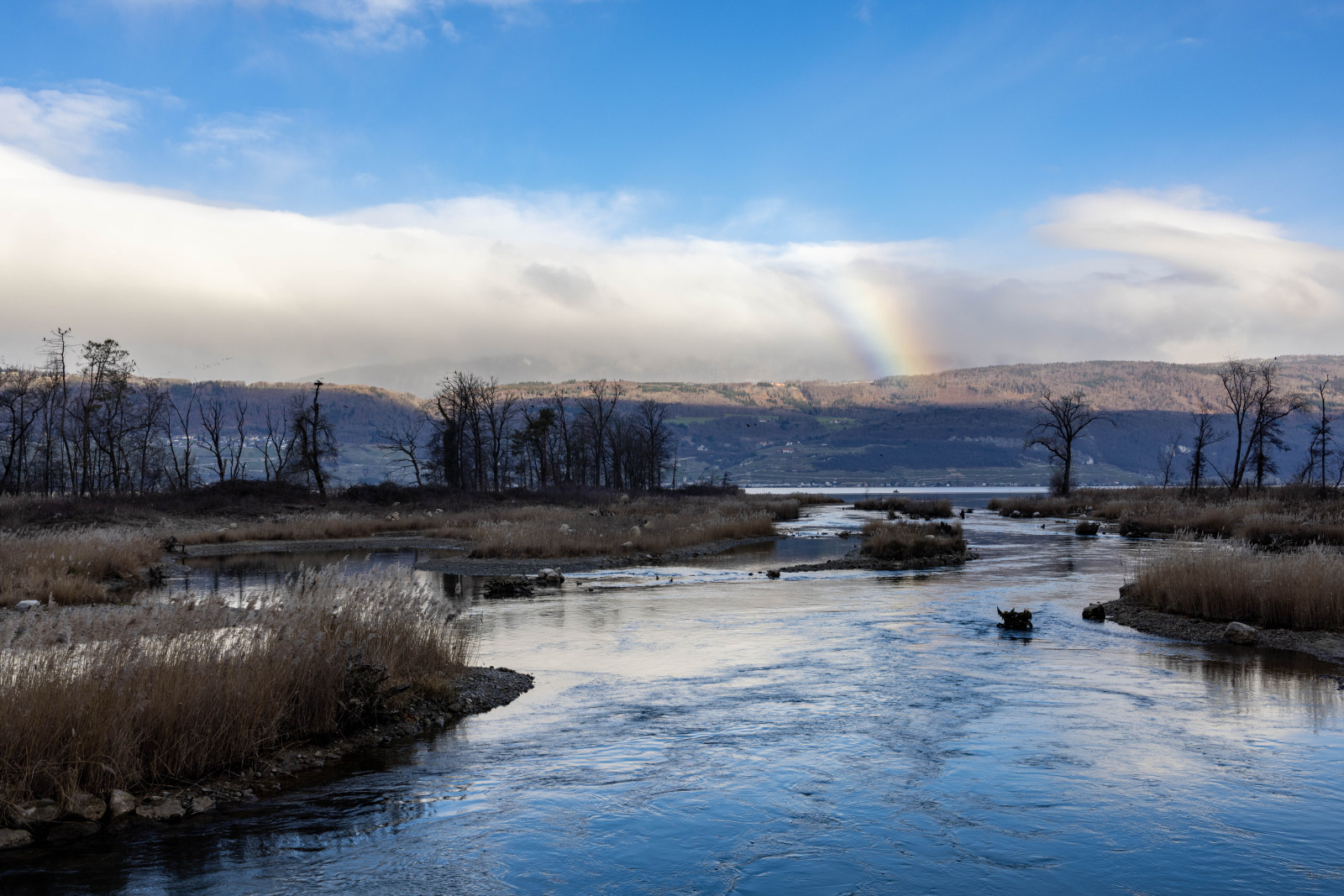
The Hagneck delta is formed by the Hagneck Canal, which directs the river Aare into Lake Biel and serves as a catchment basin for the debris it carries. This creates islands of gravel that attract waders every year to rest during autumn migration. The floodplain forest is characterized by an extraordinary variety of plants and animals. The mainspring of this diversity of species is the regular flooding of the forest. It creates a mosaic of different small habitats. Trees such as the white willow, the black poplar and the black alder grow here, which are adapted to the temporarily high water level. Due to the often high proportion of softwood and trees with coarse bark, this habitat is usually very rich in insects, which in turn attracts specialized birds such as Соловейко західний, Вивільга звичайна, Ополовник звичайний, або синиця довгохвоста and Жовна сива. Beavers and endangered amphibians such as tree frogs and crested newts can live in oxbow lakes and ponds, from which the grass snake also benefits. The herbaceous layer of the floodplain forest is often very species-rich due to the small-scale changes in site conditions and exposure.
Details
Access
The area is less than 1.5 km on foot from Hagneck train station. The Hagneck delta is not accessible for people with walking difficulties. The area is a floodplain of national importance and a nationally important migratory and waterbird sanctuary and is therefore protected.


 ) to insert bird names in your own language. The birdnames will automatically be translated for other users!