Description
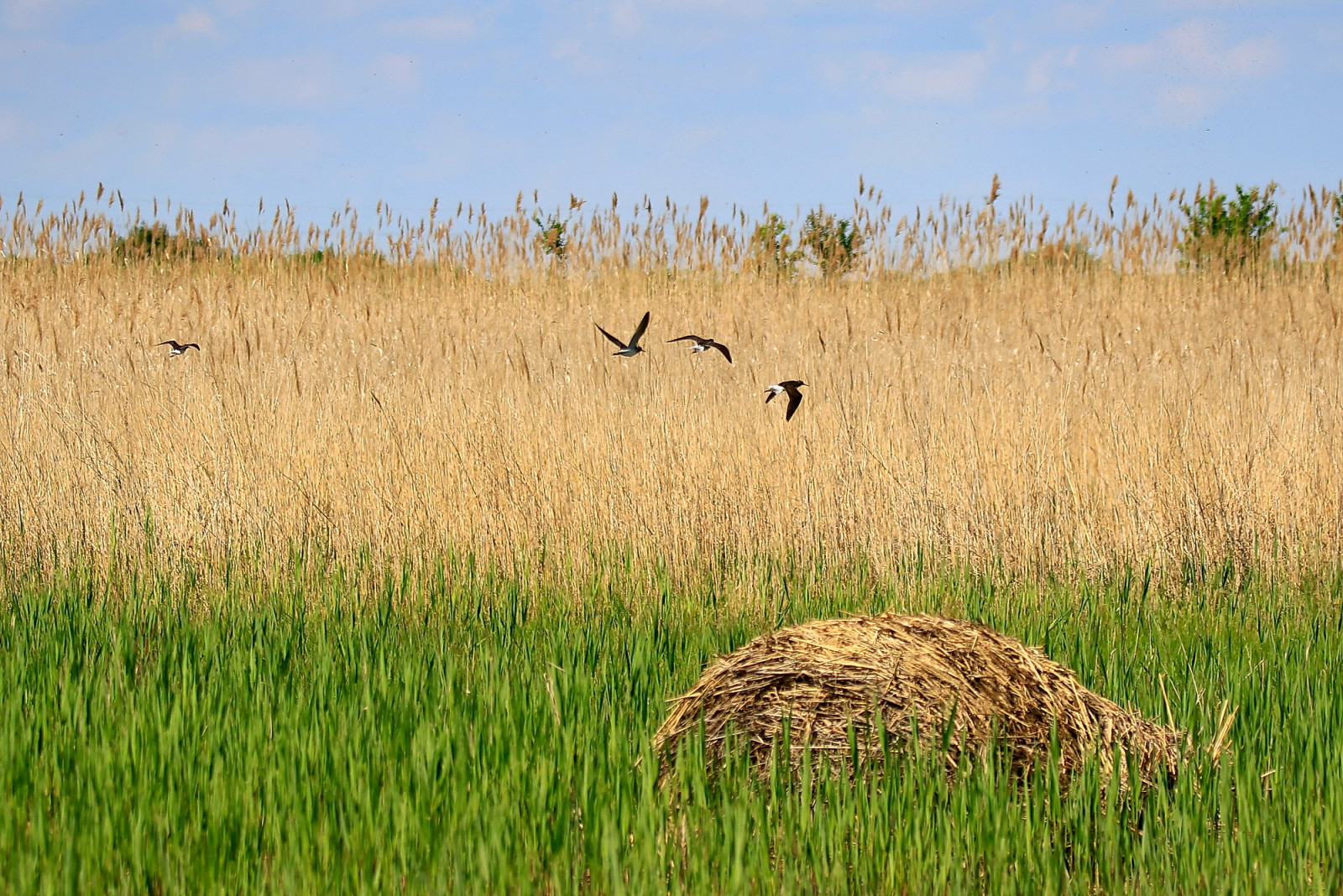
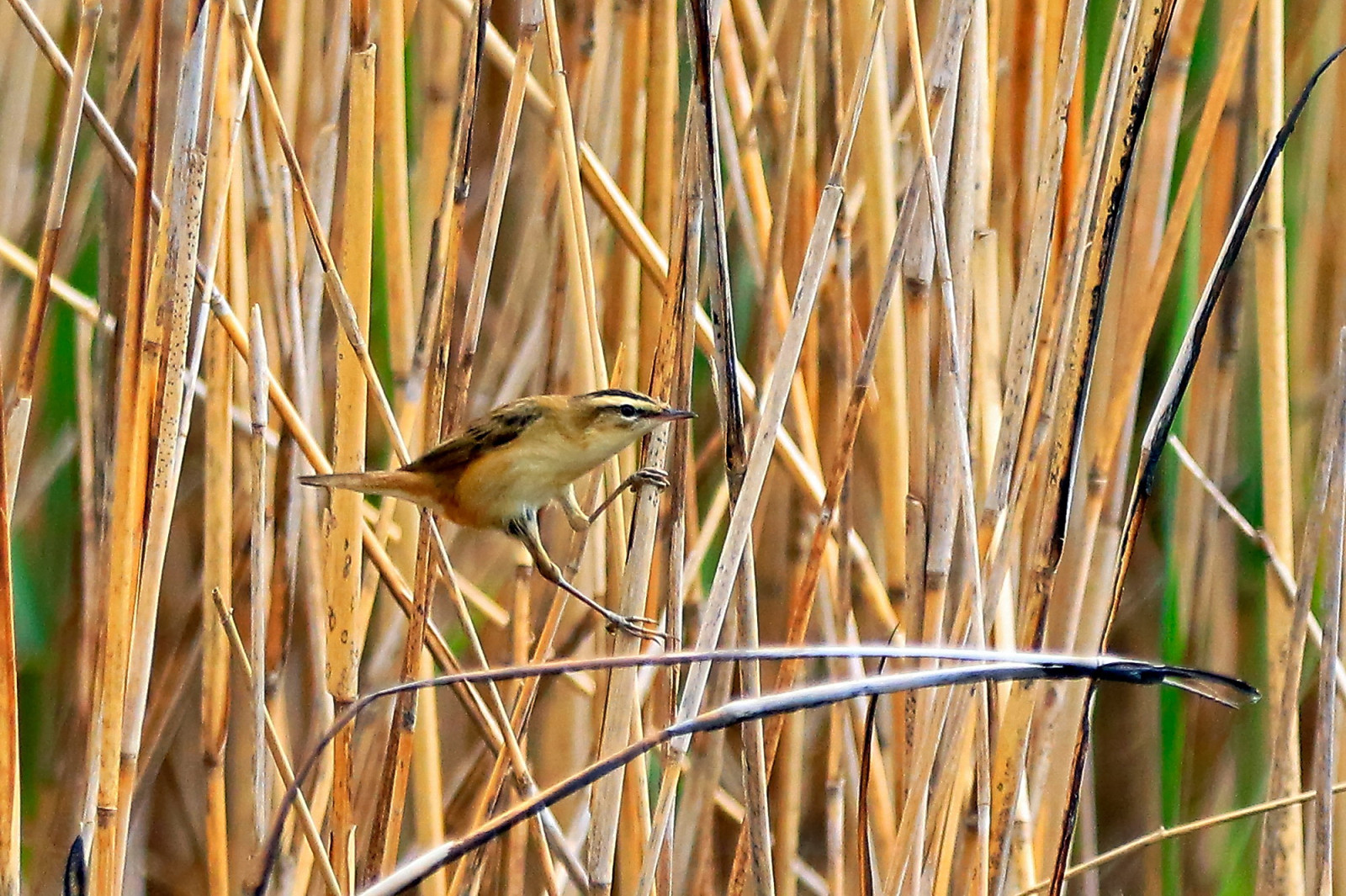
Apart from numerous Лелека білий (about 30 nests in a single village), other birds of include Синьошийка, Кобилочка солов’їна, Очеретянка тонкодзьоба (in March, before the arrival of other reed warblers), Кобилочка-цвіркун, Ремез звичайний, Сутора вусата, або синиця вусата, Вівсянка очеретяна, Сорокопуд терновий and Сорокопуд чорнолобий (in winter replaced by Сірий (Великий) сорокопуд), Одуд, Бджолоїдка звичайна, Сич хатній, breeding Крячок білощокий (plus Крячок чорний and Крячок білокрилий on migration), Коловодник болотяний , Коловодник великий , Коловодник чорний and other waders, Бугай водяний , Квак звичайний, Коровайка бура, Чапля єгипетська, Косар білий, Чернь білоока.
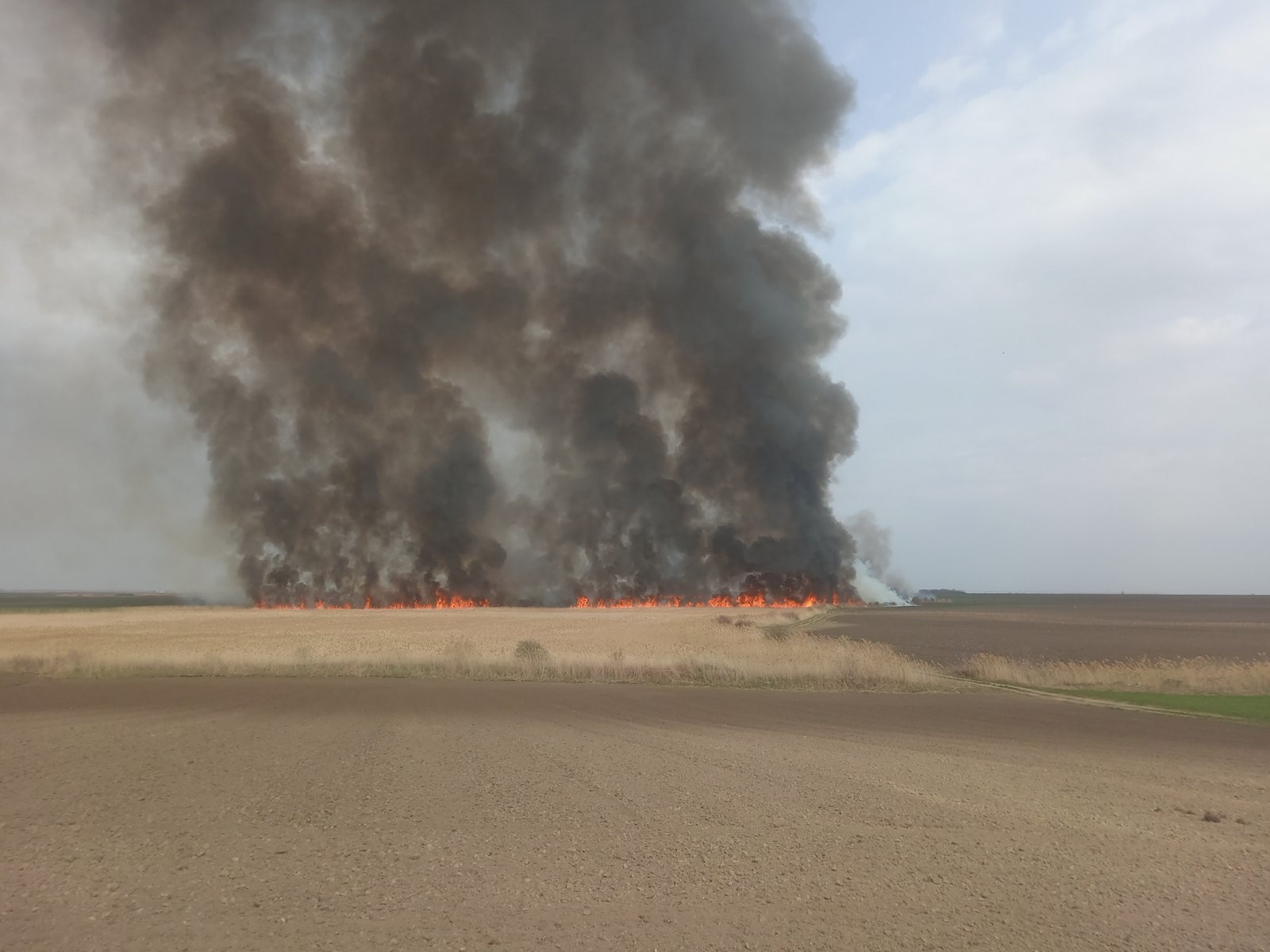
In March 2026, the reedbeds completely disappeared in flames. Only one Moustached Warbler remained singing from a surviving tussock of reeds, the only one. The locals claim that reeds are being burned intentionally because the terrain is being prepared for investment.
These salt marshes are threatened with conversion into a solar power plant! If the "development" plan were to come true, 3,800 hectares of rare salt marsh habitats would be permanently damaged. Over 200 strictly protected species of animals and plants, of which 185 species of birds, have been recorded in this area. Of the total recorded species of birds, 77 of them are in the Red Book of Birds of Serbia (Radišić et al., 2018), 29 are protected and further 153 are strictly protected species, 175 species are on the annexes of the Berne Convention, and 105 species are on the annexes of the Birds Directive.
Photos by Ceda Vuckovic, Josip Saric, Sever Nagulov, Aleksandar Topalov and Dragan Simic.
Details
Access
When you reach the main village junction in Baranda (1), marked by traffic lights, turn northeast and leave the village behind.
For the main lakes west of the road (2) you need permission from the fish farm manager; the management building is the last one on the right hand side (3). Lately, they do not seem very keen to see visitors. I hope that attitude will change, but that is the reason more to act responsibly.
But for the salt marshes east/right of the road (4) you are off the hook and may explore freely (carry plenty of water on hot days). The turn off (the southern "P") is not marked and can be hard to spot. It is in the first bend in the asphalt road north of Baranda, where a dirt track goes right between arable fields towards an ancient kurgan (the highest point in a flat landscape). For driving directions, zoom in on the map and click on the "P" (parking) sign.
The dirt track is rarely passable for ordinary cars, and the marshes are best seen on foot. Strategically erected at the best birding spot, the watchtower has no stairs but a very steep ladder.
Terrain and Habitat
Wetland , Lake , Mud flats , Agriculture , Reedbeds , Scattered trees and bushesConditions
Flat , No shadow , Open landscape , DustyCircular trail
NoIs a telescope useful?
Can be usefulGood birding season
All year roundBest time to visit
Winter , Spring migration , Autumn migration , SpringRoute
Wide path , Unpaved roadDifficulty walking trail
Average walkAccessible by
FootBirdwatching hide / platform
YesExtra info
Also, the salt marshes are “the hunting ground of the local hunting club. Therefore, primarily for your safety, and also so that the locals know that you are not poachers, in autumn/winter you must announce your arrival. If you arrive early in the morning or at dawn, announce your arrival the day before. The phone number is 060 0879805 (Aleksandar Veselinov).”


 ) to insert bird names in your own language. The birdnames will automatically be translated for other users!