
Description
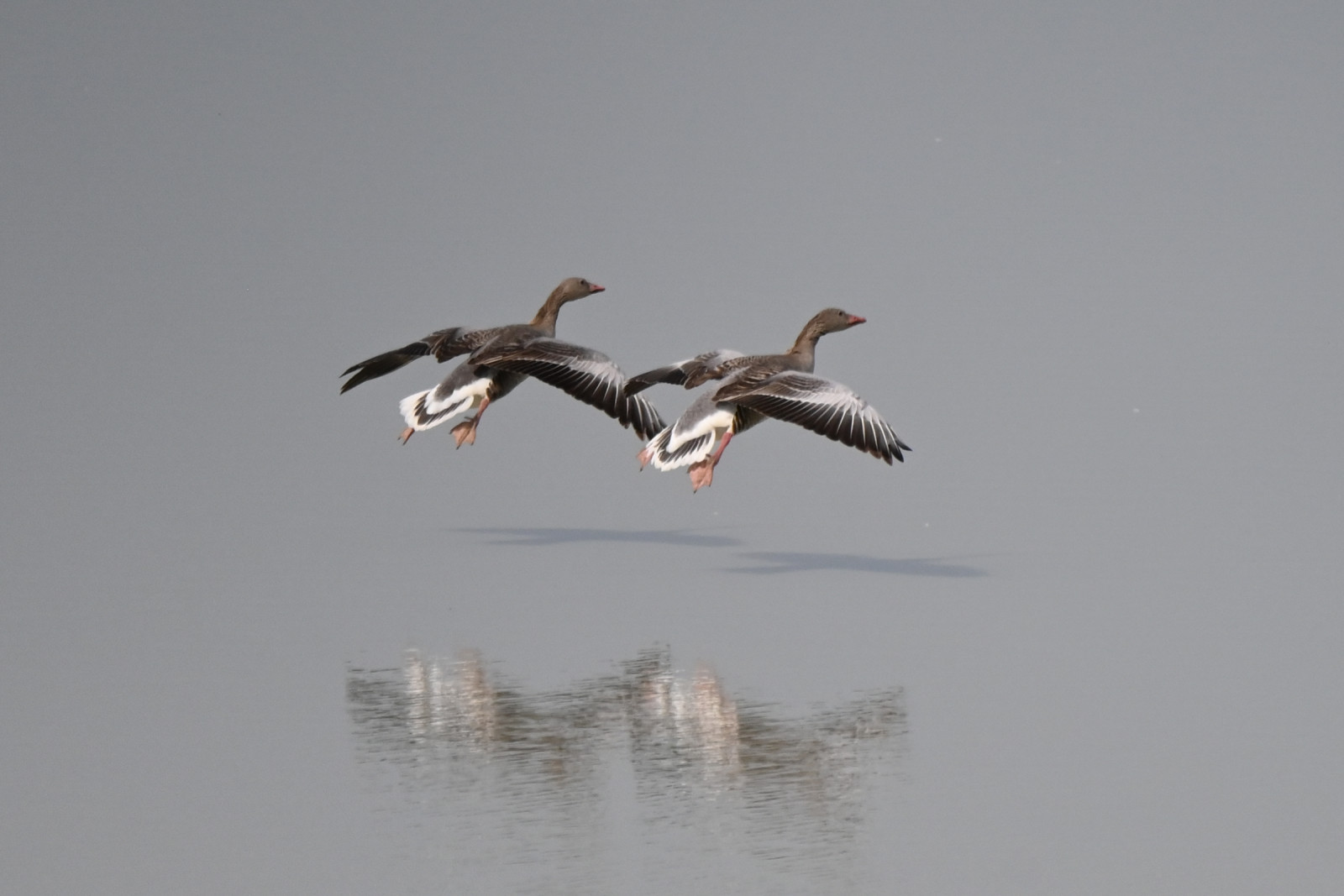
In spring, it is primarily the migrating ducks, waders, gulls, and terns, as well as many breeding birds, that attract visitors to the colourfully blossoming area. Meanwhile, the southward migration of waders (in particular) in the hot and dry summers, though richer as far as individuals are concerned, traditionally draws less attention. Only in late autumn does the Lange Lacke experience its next inrush of nature enthusiasts, when thousands of nordic geese (mainly beločela gos and siva gos) return to roost every evening, landing clamorously around dusk. If conditions are good (no closed snow cover and sufficient open water for drinking, bathing, and sleeping), the geese remain in the area until spring and offer observers plenty of opportunity to scan the flocks for rare species (mala gos, rdečevrata gos, grivasta gos).
Details
Access
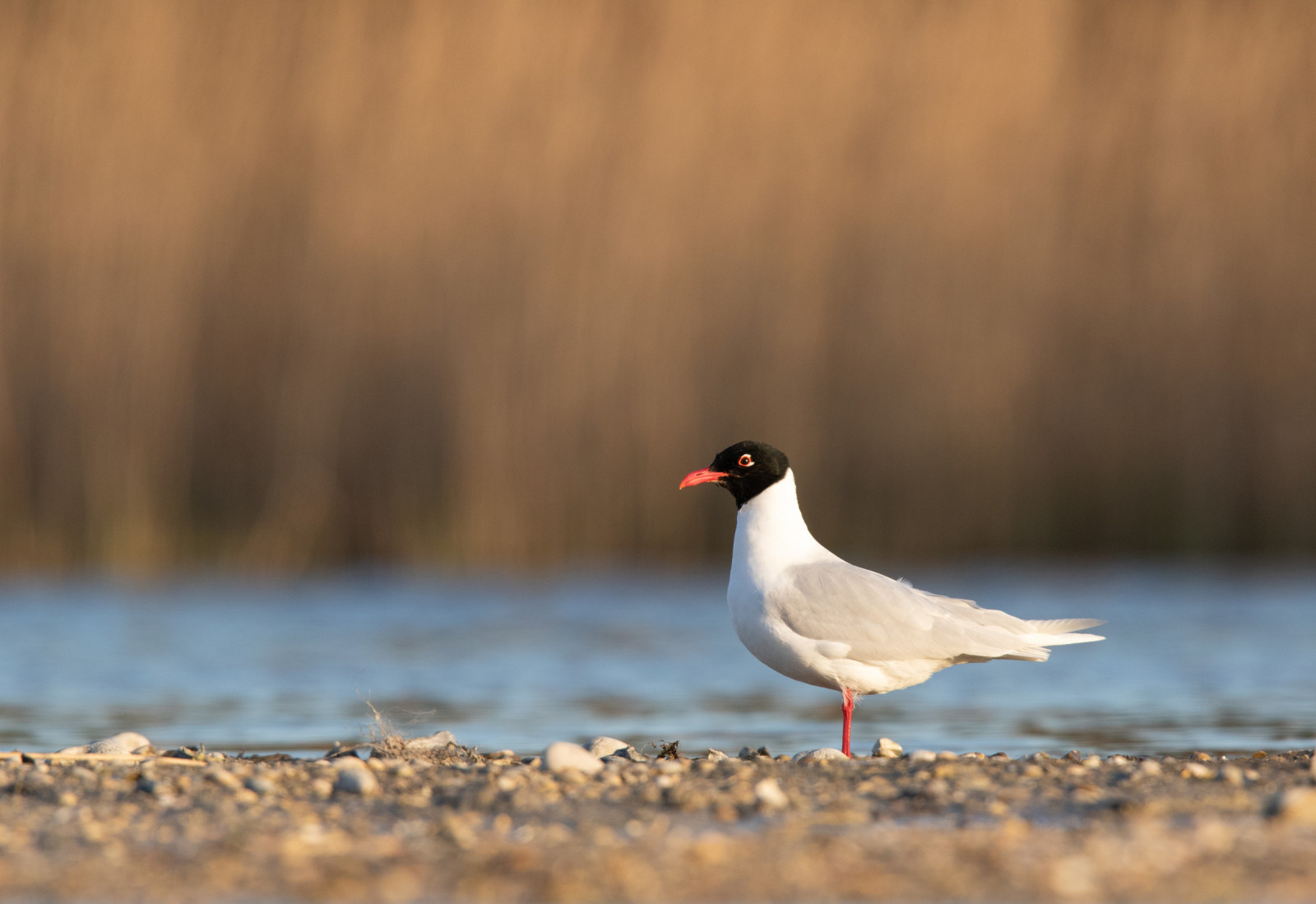
The 8 km-long, entirely flat circuit route can be reached from different sides. Depending on available time, the position of the sun, and current water levels, it is also possible to visit just part of the Lange Lacke area. The starting point for this route is the parking area of the Nationalpark-Stüberl. A short path leads to an observation tower and to the gravel path that leads all the way around the lake - this path can be accessed by walking or cycling. Follow this path to the east. The tower is useful to judge if parts of the Lange Lacke have fallen dry. The peninsula on the southern shore is home to a colony of rečni galeb during the breeding season, which is also often used by črnoglavi galeb. At suitable water levels, the shallow areas here are also good for observing waders (togotnik, beloceli deževnik, spremenljivi prodnik). The observation tower 2 on the south-eastern shore offers a good view of the eastern part of the Lange Lacke. In winter, this is also a good place for scanning the huge flocks of geese. The surrounding meadows are often frequented by veliki škurh. After running close to the road for a little stretch, the path then turns north and continues for about 250 m beside an old windbreak , which is particularly attractive for thrushes in winter. While the “Lukas-Hoffmann-Naturpfad” can be followed on foot, bicyclists need to take a slight detour.
The observation tower in the north-east of the circuit 4 offers a view of almost the entire "Östliche Wörthenlacke". This saline lake is a popular place for various ducks, geese, and waders, and often still holds water once the Lange Lacke has completely dried out. labod grbec occurs here in particularly large numbers. The high rabbit density occasionally attracts kraljevi orel and sokol morilec, and mali sokol is a regular winter guest. A number of sabljarka often rear their young on the "Katschitzllacke" (also known as the "Östliche Hutweidenlacke") to the west of the tower. After about 700 m, one reaches the "Westliche Wörthenlacke" where high water levels allow close views on priba, rdečenogi martinec, mali deževnik or črni martinec.
Terrain and Habitat
Wetland , Plain , Steppe , GrasslandConditions
Flat , Open landscape , No shadowCircular trail
YesIs a telescope useful?
YesGood birding season
All year roundBest time to visit
Spring migration , Autumn migrationRoute
Unpaved roadDifficulty walking trail
EasyAccessible by
Foot , Bicycle , WheelchairBirdwatching hide / platform
YesExtra info
Take enough water with you!


 ) to insert bird names in your own language. The birdnames will automatically be translated for other users!