Opis
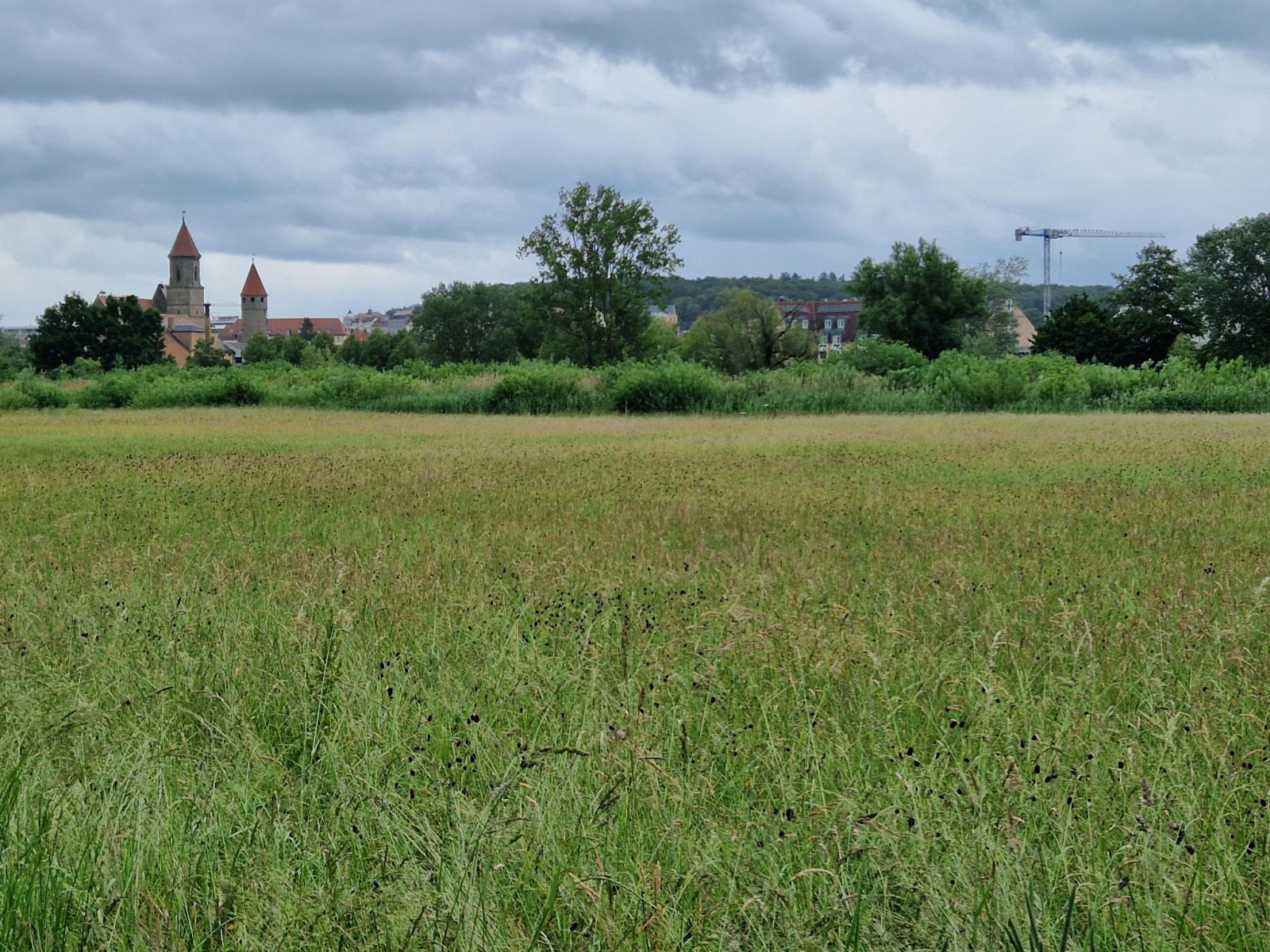
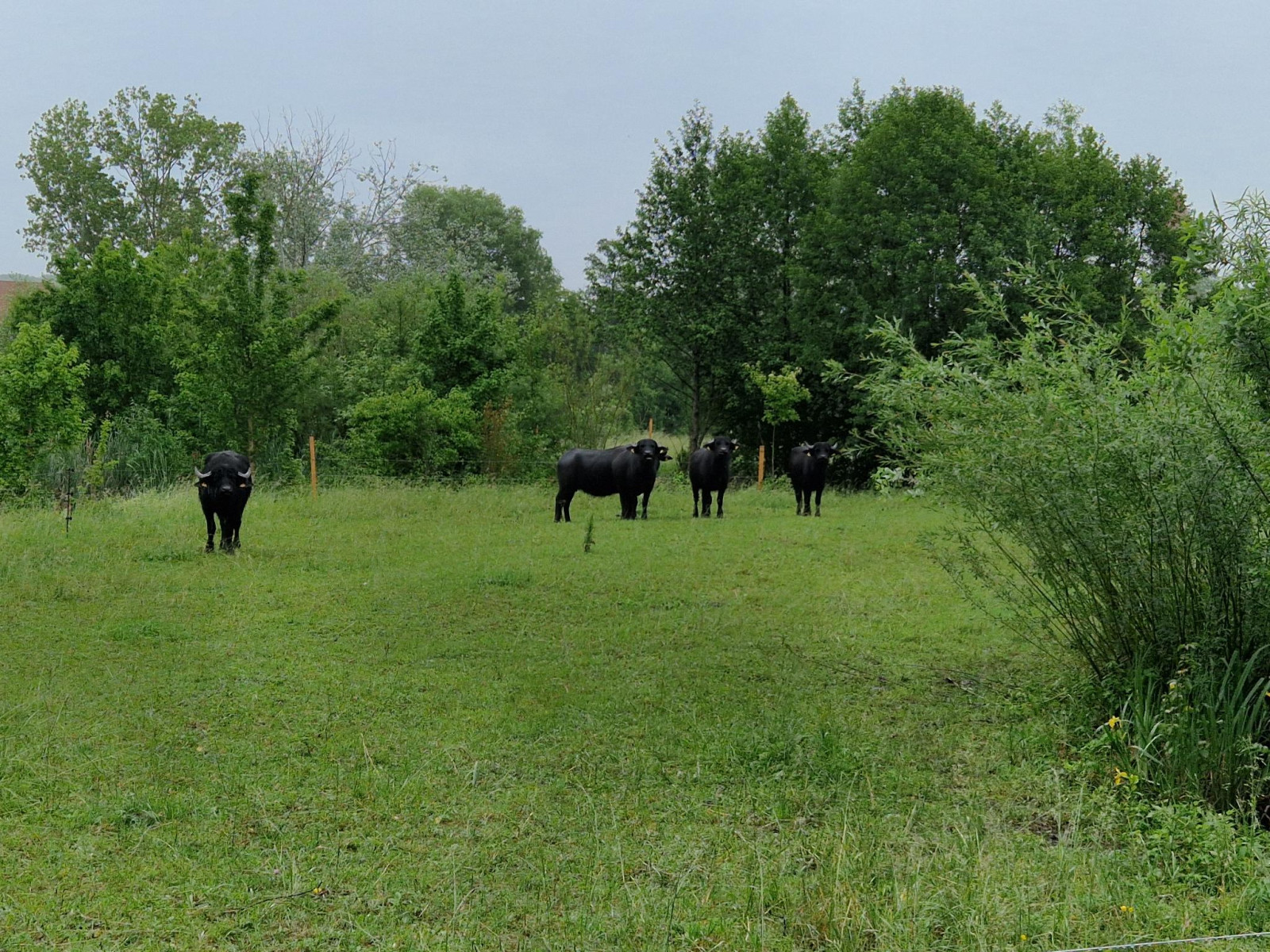
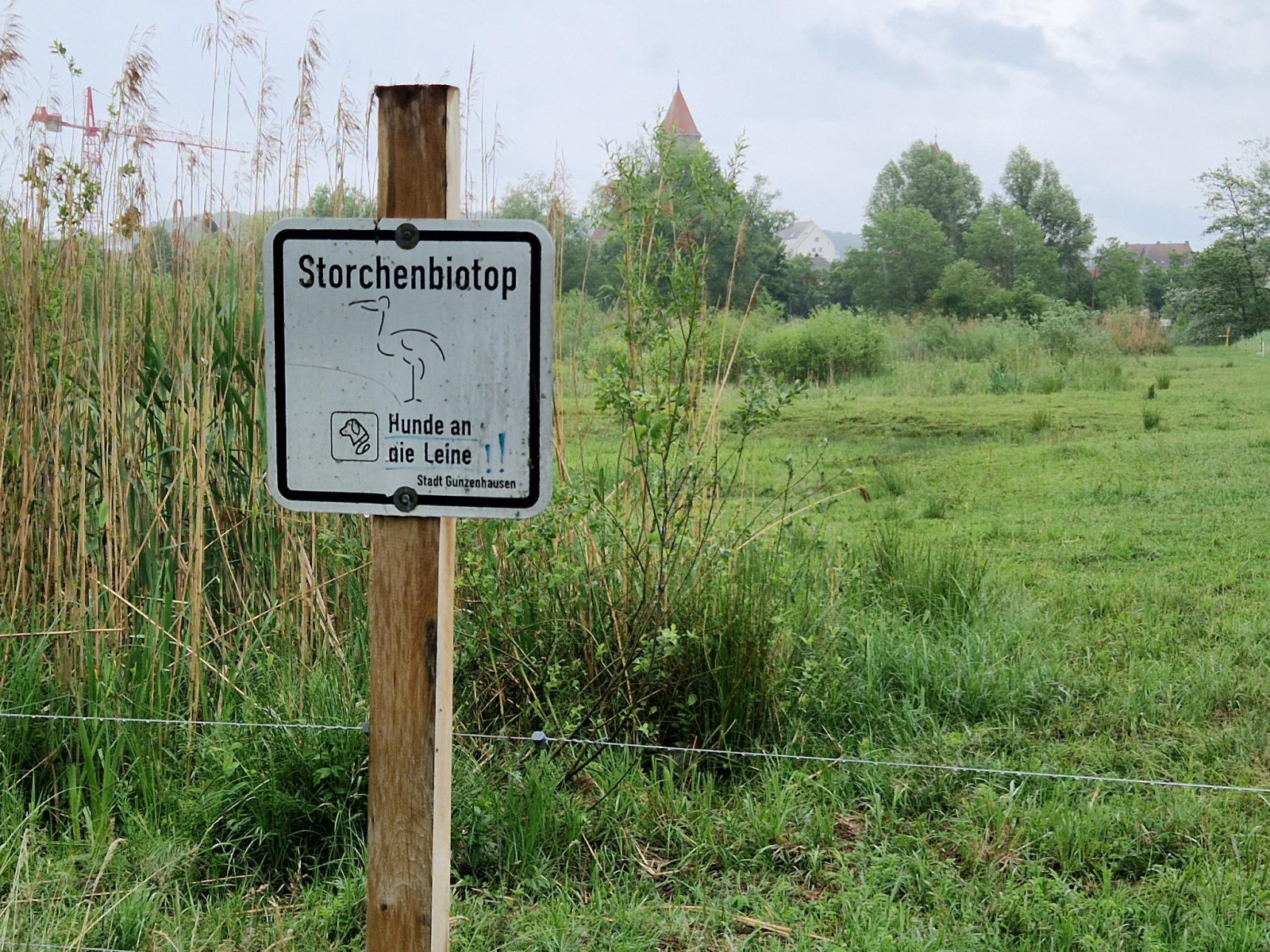
The roughly 6-hectare bocian biały biotope is part of a renaturation project west of Gunzenhausen, which also serves as flood protection. Ponds, streams, bushes, and reed beds alternate throughout the area. The section located east of the river (1), close to the old town, is designed as a local recreation area, with a playground and an observation platform. On the western side (2), nature can unfold relatively undisturbed; since 2025, water buffalo have been grazing there to prevent scrub encroachment.
The biotope was originally created for bocian biały, which breed on the chimney of a nearby inn (3) and find food here. At the inn, the nesting activity can even be followed via a camera. After having almost disappeared as a breeding bird in the last century, the bocian biały has now become frequent in the region, and can be observed here particularly well. Other meadow-breeding species also readily make use of the habitat. Breeding of the czajka has been confirmed. Within a short time, the potrzos has also settled, and in the towers of the nearby old town, there is a breeding colony of kawka. Observations of rarer species such as the strumieniówka (so far one record) and meadow-breeding birds should not be long in coming – their absence up to now may simply be due to limited observation effort. Thanks to the nearby Altmühlsee (see the observation areas "Vogelinsel Altmühlsee" and "Altmühlsee - Lake Area"), there are also occasional records of lake-bound rarer species such as czapla nadobna, ślepowron, and bielik.
The area is a small, easily accessible gem in the Altmühl Valley, which is so important for meadow-breeding birds. While not all recent political decisions were in favor of sustainable development along the Altmühl, this initiative by the city of Gunzenhausen, the landscape conservation association, and environmental organizations shows what sustainable landscape design of the future can look like.
Szczegóły
Dostęp
Storchenbiotop Gunzenhausen borders directly on the town of Gunzenhausen. The area is located at a popular cycling path. There is also a parking nearby (press "P" on the map to get directions). The circular route shown on the map is about 2,5 km.
Teren i siedlisko
Tereny podmokłe , Rzeka , Trzcinowiska , Rolnictwo/uprawy , Rzadkie drzewa i krzewy , Łąka , Miasto/wieśWarunki
PłaskiTrasa dookoła
TakCzy luneta będzie przydatna ?
Może być przydatnaUdany sezon obserwacyjny
Wiosna , Jesień , LatoNajlepszy czas na wizytę
WiosnaTrasa
Droga utwardzona , Szeroka ścieżkaPoziom trudności szlaku pieszego
ŁatwyDostępne
Pieszo , Rower , Wózek inwalidzkiCzatownia/platforma obserwacyjna
NieDodatkowe informacje
Those who spend more time in the region can cycle along the Altmühl from Treuchtlingen (see "Schambachried") to Ornbau (see "Wiesmet"). The stork biotope is just one of many worthwhile sites along this route.




 ) aby wstawić nazwy ptaków w swoim języku ojczystym. Nazwy ptaków zostaną automatycznie przetłumaczone dla innych użytkowników!