Description
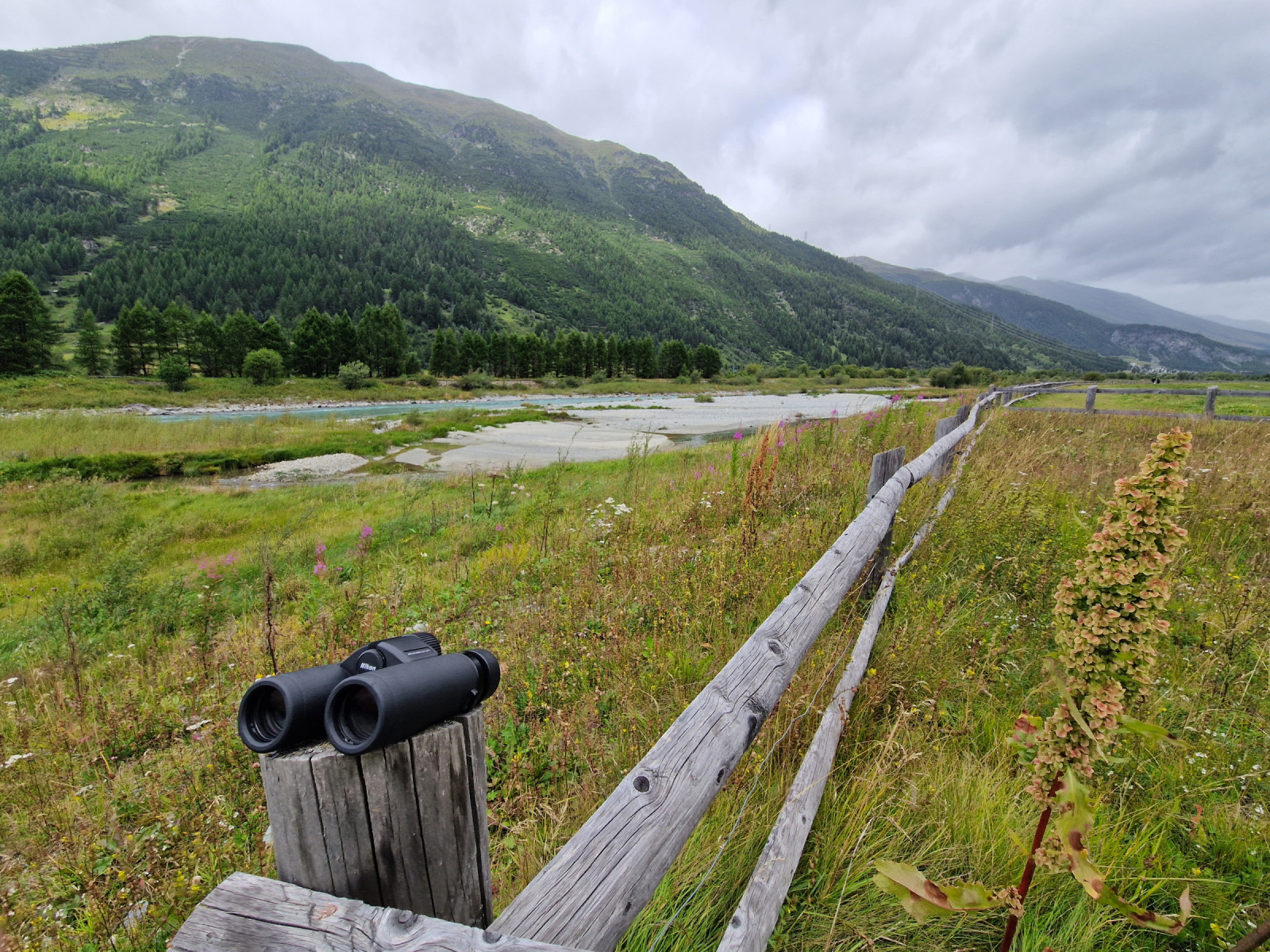
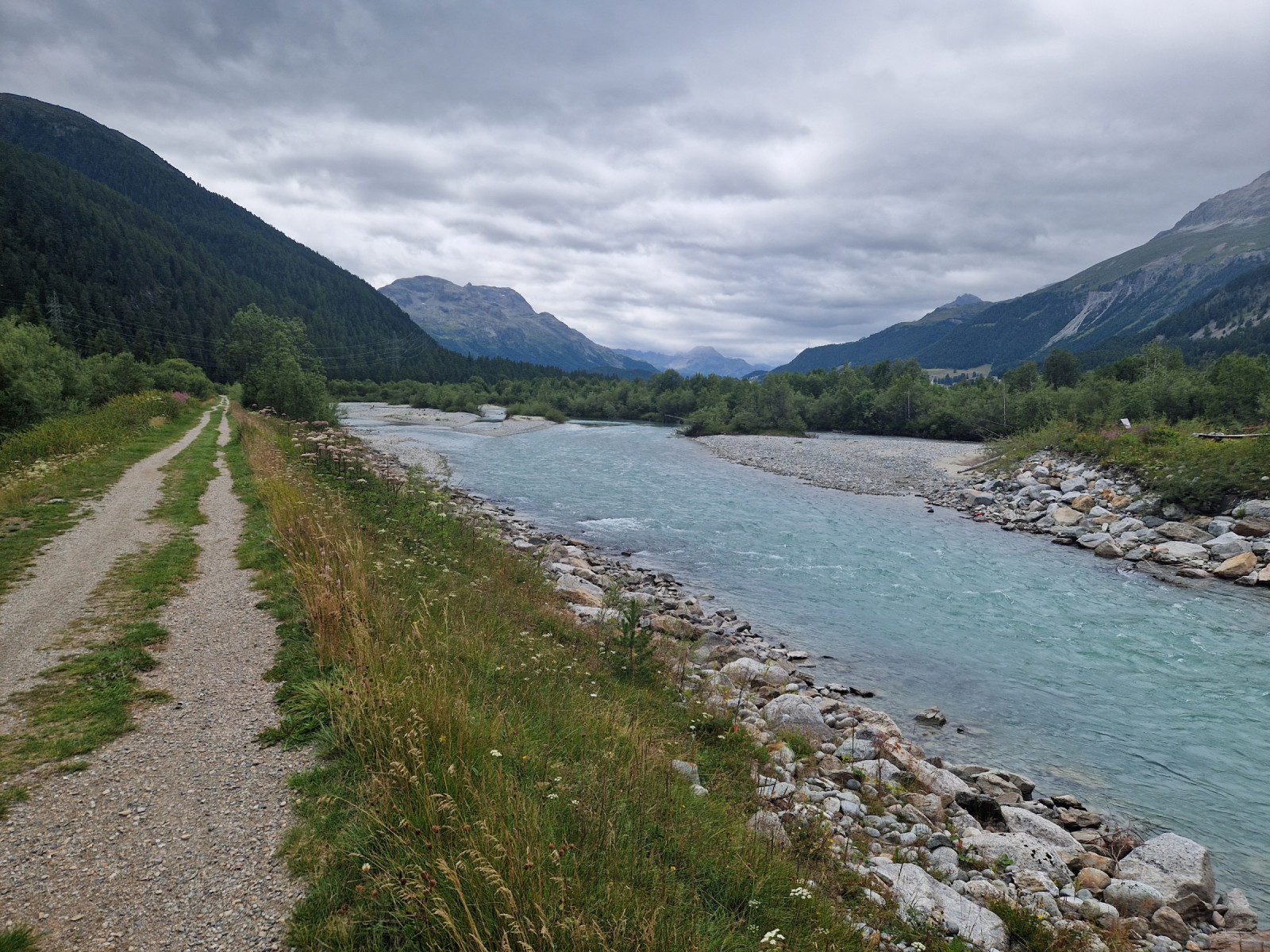
The Inn wetlands near Bever are an ambitious renaturation project that began in 2012. Over a stretch of about 2 kilometers, the river flows in a natural bed up to 90 meters wide, characterized by eroded banks, alluvial forest, and gravel banks. What makes it special is the elevation: the Inn runs through a wide valley floor here at 1,700 meters above sea level and is surrounded by high mountains.
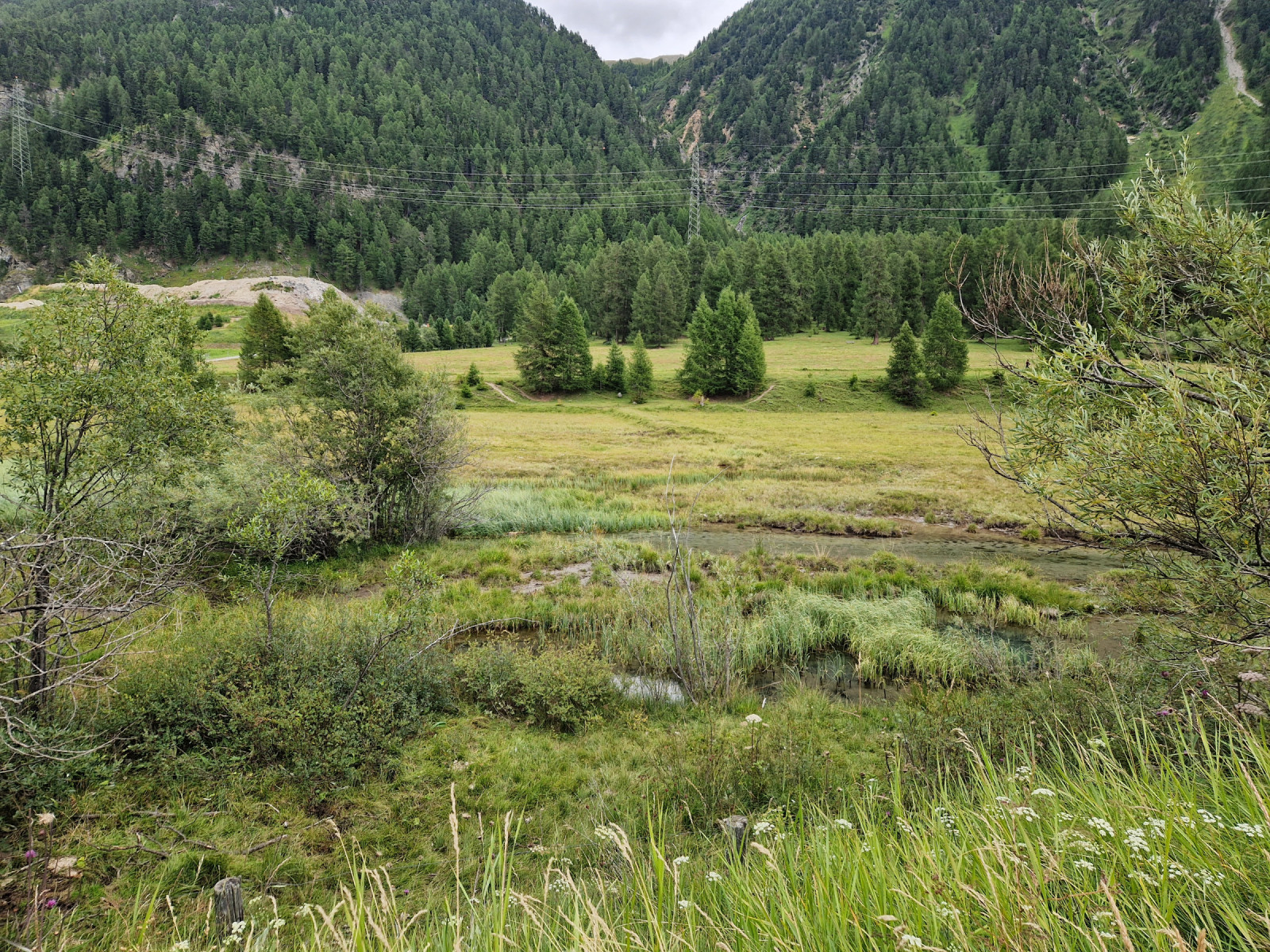
The area consists of two wet meadows (1 and 2), alluvial forest developing along the new inner waters (3, accessible) and on the other side of the river (4, inaccessible), and the Inn itself, which is allowed to follow its natural dynamics from the point where the Beverin joins it (5). From an ornithological perspective, the area is especially interesting in April and early May during spring migration, particularly when bad weather occurs in the Alps. Then, bird migration may stall in the Inn valley (similar to the Bolle di Magadino in the Ticino), and rare species use the meadows, bushes, and waters to rest. This is why the number of bird species observed here is astonishingly high for a montane location - over 210. Grønnstilk, Fiskeørn, Gluttsnipe, Vipe, Knekkand, Brunnakke, Natthegre, and Skogsnipe are among the more frequently seen special species. Numerous rarities have also been documented with one or two sightings, such as Hvitkinnsvartterne, Triel, Sotsnipe, Stylteløper, Svarthodesanger, Rosenstær, and Topphegre.
Later in the year, one can also observe interesting breeding birds. Central to conservation efforts are the gravel banks, which are valuable breeding sites for Strandsnipe and Dverglo. Twenty percent of Switzerland’s Strandsnipe population breeds here. Also noteworthy is the Toppand. The Gravatscha Lake (6) is one of the few places in Switzerland where it regularly raises chicks. The Dvergdykker can also be seen on the lake. It is common in Switzerland but rare in the Grisons and mountainous regions. In the alluvial forest and open pine woods at the edge of the area, the Brunsisik can be found, and the call of the Nøttekråke is regularly heard. The Buskskvett breeds in the meadows, having retreated from intensively farmed lowlands into the mountains. Other breeding birds in the area include Møller, Vendehals, and Tornskate. Until a few years ago, Vaktel breeding was also recorded. Numerous sightings of Enkeltbekkasin have been documented. It’s also worth occasionally looking up: Lammegribb and Kongeørn are sometimes seen soaring over the valley.
Details
Access
The Lake Gravatscha and Inn Wetlands area is most easily reached on foot from Bever. It is also located on the popular and heavily used Inn cycle path between Zernez and St. Moritz. Most of the paths are wheelchair accessible. The circular route shown on the map is about 5 km.
Terrain and Habitat
Forest , Wetland , Plain , Mountain , River , Scattered trees and bushes , Grassland , Valley , PondConditions
FlatCircular trail
YesIs a telescope useful?
YesGood birding season
Spring , SummerBest time to visit
Spring migrationRoute
Wide pathDifficulty walking trail
EasyAccessible by
Foot , Bicycle , WheelchairBirdwatching hide / platform
NoExtra info
Beavers and otters have returned to the renatured river. Before the renaturation, the European adder - the only snake species in the Upper Engadine - lived in the cracks of the dikes; they were later relocated to the new dikes.


 ) to insert bird names in your own language. The birdnames will automatically be translated for other users!