

Beschrijving
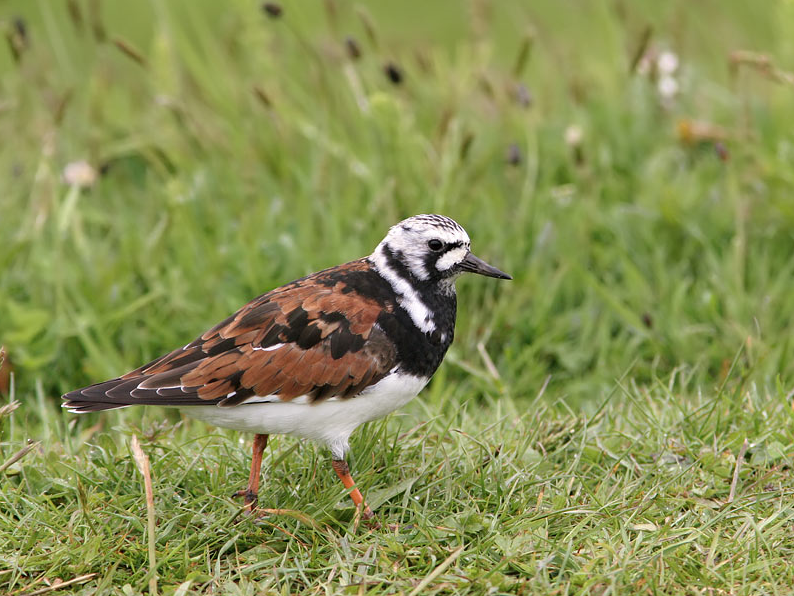
The Porto Pesqueiro in Sada is a medium-small size fishing port, located in the Ría de Betanzos. Numerous birds stop at it to rest and feed. Among them, the gulls stand out, being easy to see Geelpootmeeuw, Kleine Mantelmeeuw, Kokmeeuw, Zwartkopmeeuw, Grote Mantelmeeuw and Zilvermeeuw, as well as the less common Stormmeeuw. There is also an important presence of waders that rest on the rocks of the jetty (sometimes in large numbers) and/or feed on them, with species such as Steenloper, Oeverloper, Bontbekplevier, Bonte Strandloper, Drieteenstrandloper, Kanoet and Tureluur.
Its long jetty, half a km long, allows an unbeatable view of a large part of the estuary (which at this point is about 2.5 km wide). From here you can see numerous sea birds such as Dwergmeeuw, Drieteenmeeuw, Jan-van-gent, Zwarte Zee-eend, Stormvogeltje, Grote Jager, IJsduiker, Roodkeelduiker, Kuifaalscholver, Grote Stern, Grote Zee-eend, Alk, Zeekoet, Papegaaiduiker and Middelste Zaagbek. In addition, many birds can be seen resting on the rafts, especially at high tide, such as Blauwe Reiger, Kleine Zilverreiger, Aalscholver, all the species of gulls also present in the port itself and some terns. This enclave has two records of the snow bunting, one of the royal redstart and during the winter the speculated scoter is regular.
_________________________
Espagnol: El puerto de Sada es un buen lugar tanto para observar las aves que recalan en él como para poder tener una gran visión de toda la ría desde el espigón. El puerto de Sada es un puerto pesquero de mediano-pequeño tamaño, que se encuentra en la Ría de Betanzos. Numerosas aves recalan en él para descansar y alimentarse. Entre ellas destacan las gaviotas, siendo fácil ver Geelpootmeeuw, Kleine Mantelmeeuw, Kokmeeuw, Zwartkopmeeuw, Grote Mantelmeeuw y Zilvermeeuw, además de la menos común Stormmeeuw. También hay una presencia importante de limícolas que descansan en las rocas del espigón (a veces en gran número) y/o se alimentan en ellas, con especies como Steenloper, Oeverloper, Bontbekplevier, Bonte Strandloper, Drieteenstrandloper, Kanoet y Tureluur.
Su largo espigón, de medio km de longitud, permite una inmejorable visión de gran parte de la ría (que en este punto tiene una anchura de unos 2,5 km). Desde aquí se pueden ver numerosas aves propiamente marinas como Dwergmeeuw, Drieteenmeeuw, Jan-van-gent, Zwarte Zee-eend, Stormvogeltje, Grote Jager, IJsduiker, Roodkeelduiker, Kuifaalscholver, Grote Stern, Grote Zee-eend, Alk, Zeekoet, Papegaaiduiker, Middelste Zaagbek... Además, se observan muchas aves descansando en las bateas, especialmente con la marea alta, como Blauwe Reiger, Kleine Zilverreiger, Aalscholver, todas las especies de gaviotas presentes también en el propio puerto, algunos charranes. Este enclave cuenta con dos citas de escribano nival, una de colirrojo real y durante el invierno es regular el negrón especulado.
Details
Toegang
The Porto Pesqueiro in Sada can be easily accessed by car through Avenida del Puerto, which leads directly from the center of the town of Sada to the port. Once there it is easy to park and you can also explore a large part of the port in the vehicle. Click on a P in the map for directions.
_________________________
Espagnol: Se puede acceder fácilmente en coche a través de la Avenida del Puerto, que lleva diractamente desde el centro de la villa de Sada hasta el puerto. Una vez allí es fácil aparcar y también se puede recorrer gran parte del puerto en el vehículo. Haga clic en una P en el mapa para obtener direcciones.
Terrein en leefgebied
ZeeOmstandigheden
VlakRondlopende wandeling mogelijk?
NeeTelescoop meenemen?
Kan handig zijnWanneer hier vogels kijken?
Het hele jaarToptijd voor dit gebied
WinterRoute
Verharde weg , Breed padZwaarte wandeling
GemakkelijkToegankelijk via
Te voet , Fiets , Auto , Boot , RolstoelVogelkijkhut aanwezig?
NeeExtra info
It is advisable to look out and walk around the breakwater area that overlooks the sea, as well as the breakwater area that surrounds the wastewater treatment plant.
_________________________
Espagnol: Es recomendable asomarse y pasear por la zona del espigón que da al mar, así como a la zona de escollera que rodea la depuradora de aguas residuales.


,_Etangs_de_Stavelot,_Belgien_(38631119665) Frank Vassen.jpg)

 ) om vogelnamen snel in te voeren via een aanklikbare lijst.