

Description
Baltrum is a very small island in the Wadden Sea National Park. Please always stay on the signposted paths, observe the quiet zone rules of the National Park and do not flush birds.
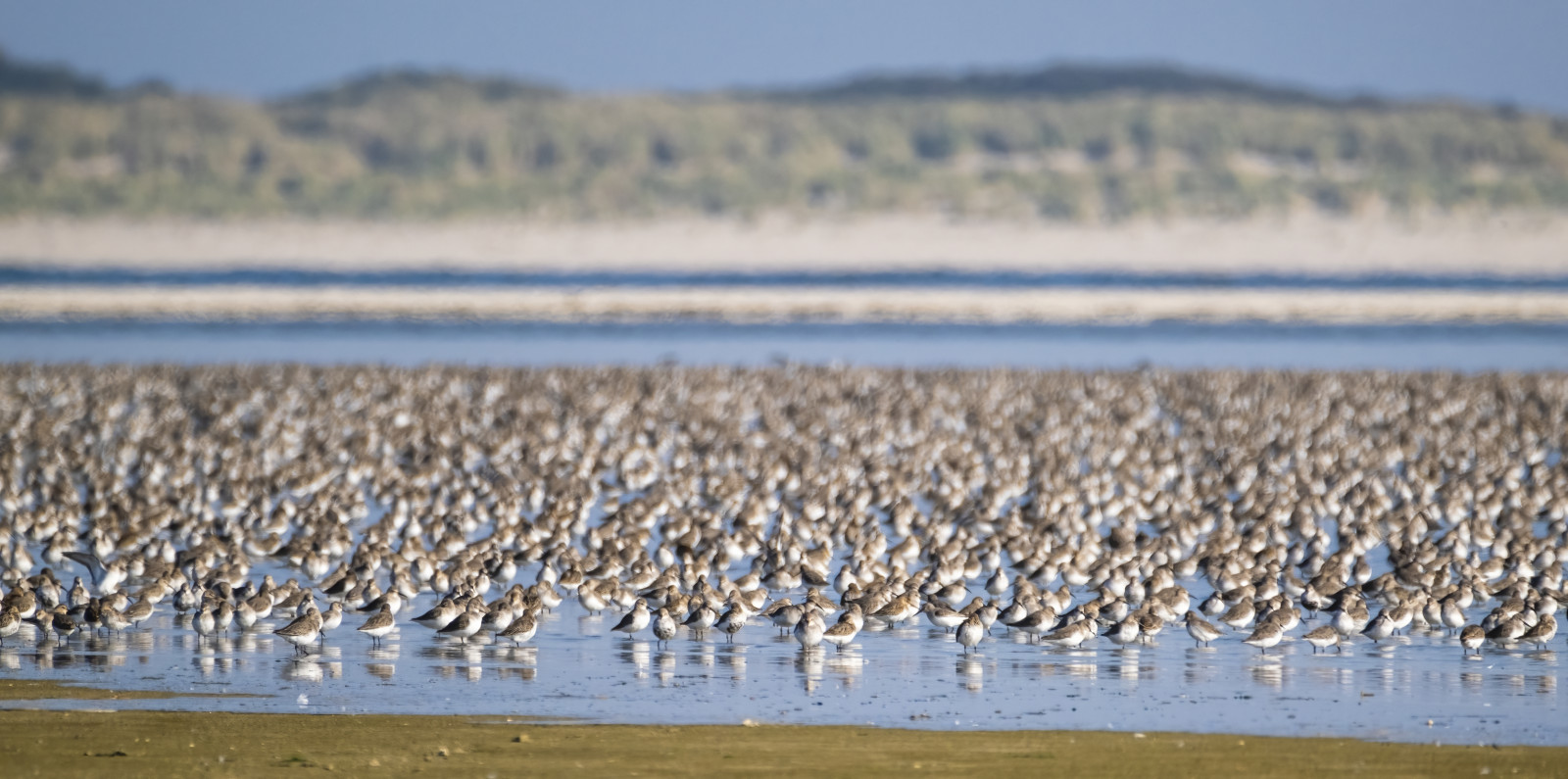
On the south side the island faces the mudflats of the Wadden Sea and there are three main points to watch wading birds in the mudflats. The first one is right east of the harbour and I recommend watching birds with rising tide (best 2-3 hours before high tide) as the water slowly drives the birds towards the watcher (or photographer). East of this point is a high tide resting place, especially for thousands of Oštrigar. Overall other main birds here are Riđa muljača, Crvenonoga Prutka, Zlatar Pijukavac, Grivasta guska, Utva, and Veliki Pozviždač. In this area be careful not to get to close to the resting place of the birds (there is no hide).
If you walk east along the "Heller" (Wadden Sea Side) you can see the breeding colonies of Riječni Galeb and Dugokljuna Čigra in the salt marshes east of the airport. The area is not accessible, but you can see the birds shuttling food from the sea, if you place yourself on one of the benches along the main path. As you pass further east take careful looks at the meadows along the way, where you can see birds like Poljska Ševa, Planinska ševa, Livadna Trepetljka, Drozd Bravenjak, Mali Drozd, Čvorak or Bijela strnadica (dependent on season). Also large flocks of Grivasta guska, Sjevernomorska guska or Siva Guska can be seen feeding, especially in winter. Eja Močvarica, Eja Strnjarica, Škanjac, Vjetruša, or Sivi Sokol can be seen hunting.
Going further east past the campground there is a path that goes south to the edge of the mudflats. I find this place better with receding tides (2-3 hours after high tide). If you bring your spotting scope, you can see birds feeding in the mudflats (all kinds of gulls and geese, the wading birds mentioned before and also Rđasti Žalar or Žalar Cirikavac). Going back on the main path and following it further east there are some ponds on the north side of the path, where Utva breeds. In the dunes east of those ponds there are the breeding grounds for Galeb Klaukavac and Mali tamnoleđi galeb (do not enter the dunes outside of paths here!).
When the path reaches the east end of the island (best time: high tide!), stop on the top of the last dune and watch south. You should be able to see hundreds of Veliki Pozviždač at the high tide resting place. Crossing the dune, you will sea the high tide resting place for Žalar Cirikavac, Rđasti Žalar, Zlatar Pijukavac and further Oštrigar.
You can now turn northwards and then westwards along the beach. In the breeding season watch for the few pairs of breeding Kulik Blatarić, normally the areas are cordoned off with small fences by National Park service (do not enter there, but you can watch from there). Along the surf you can see the hectic movements of Bijeli Žalar and all species of gull appearing here ( Galeb Klaukavac, Mali tamnoleđi galeb, Veliki tamnoleđi galeb, Burni Galeb, Riječni Galeb). Once you come back to the fortified sea wall, you can see Kameničak, Morski žalar, Oštrigar and Grivasta guska feeding on the water's edges or resting on the structures during high tide (large resting place for Kameničak on the rocky seawall just above the surf west of the flood gate, if you follow the main promenade). Just outside the coastal protection structures there are almost always Gavka swimming.
The promenade is a good place for seawatching, where you can spot Crna patka, Bluna, Tankokljuna njorka or Oštrokljuna njorka flying far out to the sea. In the right weather conditions and seasons also rarities can be spotted (be careful, though, as there is no wind protection in the most promising weather of a storm from north-west...).
In the center of the island there is also a breeding area for a very small number of Modrovoljka. Best chances are the path from the waterworks past the main observation dune through the birch forest towards the sea.
Details
Access
Baltrum can be reached by ferry from Neßmersiel harbour (times are dependent on tides). Parking is in Neßmersiel (day parking at the harbour or for longer stays I recommend the parking just behind the dyke). All parking needs to be paid (at the harbour in machines, behind the dyke with the provider Assing at the opening times). There are very few free parking places near the entry of the Assing car park, but you will only find a space off season.
There are two ferry providers: Baltrum-Linie (the larger ships, normally going 2 times a day - 30 minutes crossing time) and Töwerland Express (a small, more expensive express ferry, which goes a bit more often and is much faster, 5-15 minutes depending on the seas).
All routes on the island have to be done on foot (or bicycle, but transportation of bikes to the island is expensive and discouraged and there is no bike rental).
Terrain and Habitat
Scattered trees and bushes , Grassland , Lake , Beach , Mud flats , Dunes , Sea , Wetland , Reedbeds , City/villageConditions
Flat , Sandy , Wet , Open landscape , Dry , High water possible , No shadow , SlipperyCircular trail
YesIs a telescope useful?
YesGood birding season
All year roundBest time to visit
Spring migration , Autumn migrationRoute
Paved road , Unpaved road , Narrow trailDifficulty walking trail
Average walkAccessible by
Foot , BicycleBirdwatching hide / platform
NoExtra info
There is a National Park Information Center (Gerzeitenhaus) that offers information on local nature (including birds) and at times also guided walks to watch birds (please check their schedules).
Please observe all rules of the National Park and allow especially migrating birds undisturbed rest and feeding. Do not enter the mudflats without a guide as they are dangerous otherwise.
If you cross over with Baltrum-Linie you will be able to see the seal colony at the east end of Norderney Island (port side of the ferry). Töwerland Express will most likely cross more directly and you will not be able to see it (but be much faster on the island).


 ) to insert bird names in your own language. The birdnames will automatically be translated for other users!