


Charger images
Les formats d'image autorisés sont de type jpeg, png ou gif
La taille maximale du fichier doit être de 20MB
.JPG)
 (1) (1) (1).JPG)
Fairly small cliffs facing the Wash bay area and home to a breeding colony of Fulmar boréal.
The Hunstaton Cliffs are located on the northern side of Hunstanton and face the Wash bay area. The cliffs are coloured white and red and are famous for their fossils and, of course, the breeding colony of Fulmar boréal. The number of breeding pairs peaked in 1995 with about 200 pairs, but nowadays, the number is averaged around 100 pairs. They can be seen from the beach, sitting on their ledges or from the top where you can see them flying away and coming in from the sea.
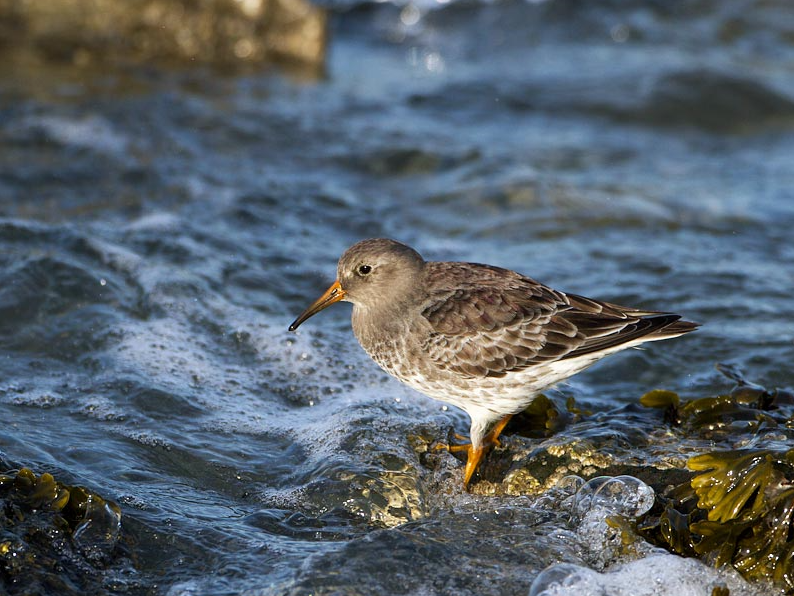
The beach, especially during low tide, is a great place for many shorebird species, like gulls and waders. Large flocks tend to stay and forage for prey on the tidal mudflats. Common species are Huîtrier pie, Bécasseau maubèche, Barge rousse and Chevalier gambette. The scattered rocks are a great place for Bécasseau violet.
From the clifss, you'll have a perfect view over the bay. You can find species like Mouette tridactyle, Fou de Bassan, Cormoran huppé and even skuas and shearwaters, with a bit of luck. Flocks of scoter, both Macreuse noire and Macreuse brune, can be found and small numbers of Plongeon catmarin are present.
The area is easy accessable due to the parking lot on top of the cliffs and the pathway down to the beach. You can walk over the beach towards the cliffs and find the Fulmar boréal there, mostly by sound.
 ) Insérez les noms d'oiseau dans votre langue. Ils seront automatiquement traduits pour les autres usagers !
Votre feedback sera transmis à l’auteur.rice de cette zone et à l’équipe éditoriale de Birdingplaces, qui l’utiliseront pour améliorer la qualité des informations. (Vous souhaitez publier un commentaire visible en bas de page ? Fermez cette fenêtre et choisissez l’Option 1 : « Publier un commentaire, un conseil ou une observation ».)
Veuillez fournir des suggestions d'améliorations ou d'ajouts au texte de ce site ornithologique.
Veuillez fournir vos suggestions d'améliorations ou d'ajouts à la carte.
Veuillez fournir des suggestions d'améliorations ou d'ajouts à la liste des oiseaux.
Cliquez sur l'icône de l'oiseau () Insérez les noms d'oiseau dans votre langue. Ils seront automatiquement traduits pour les autres usagers !