


Charger images
Les formats d'image autorisés sont de type jpeg, png ou gif
La taille maximale du fichier doit être de 20MB
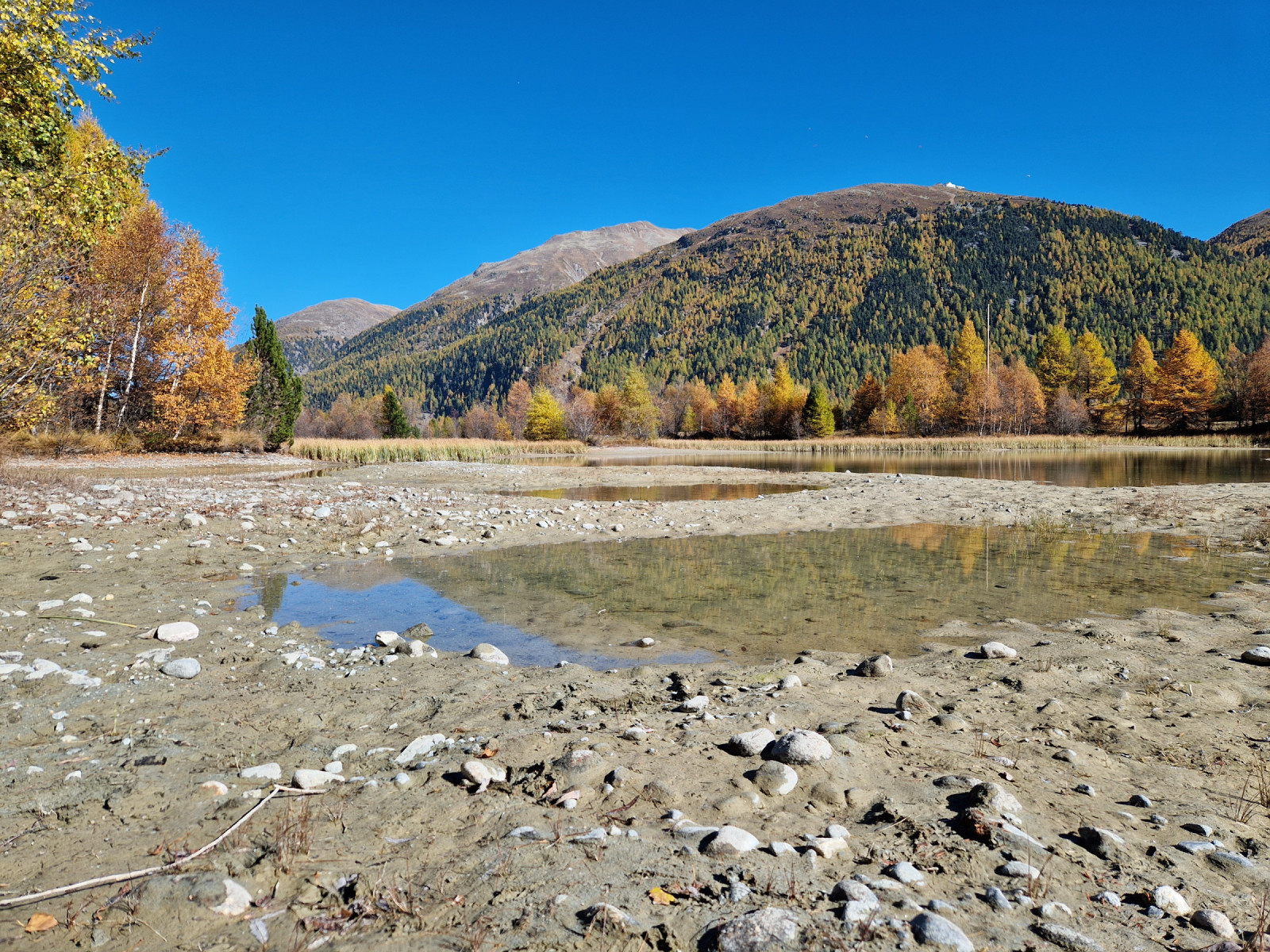
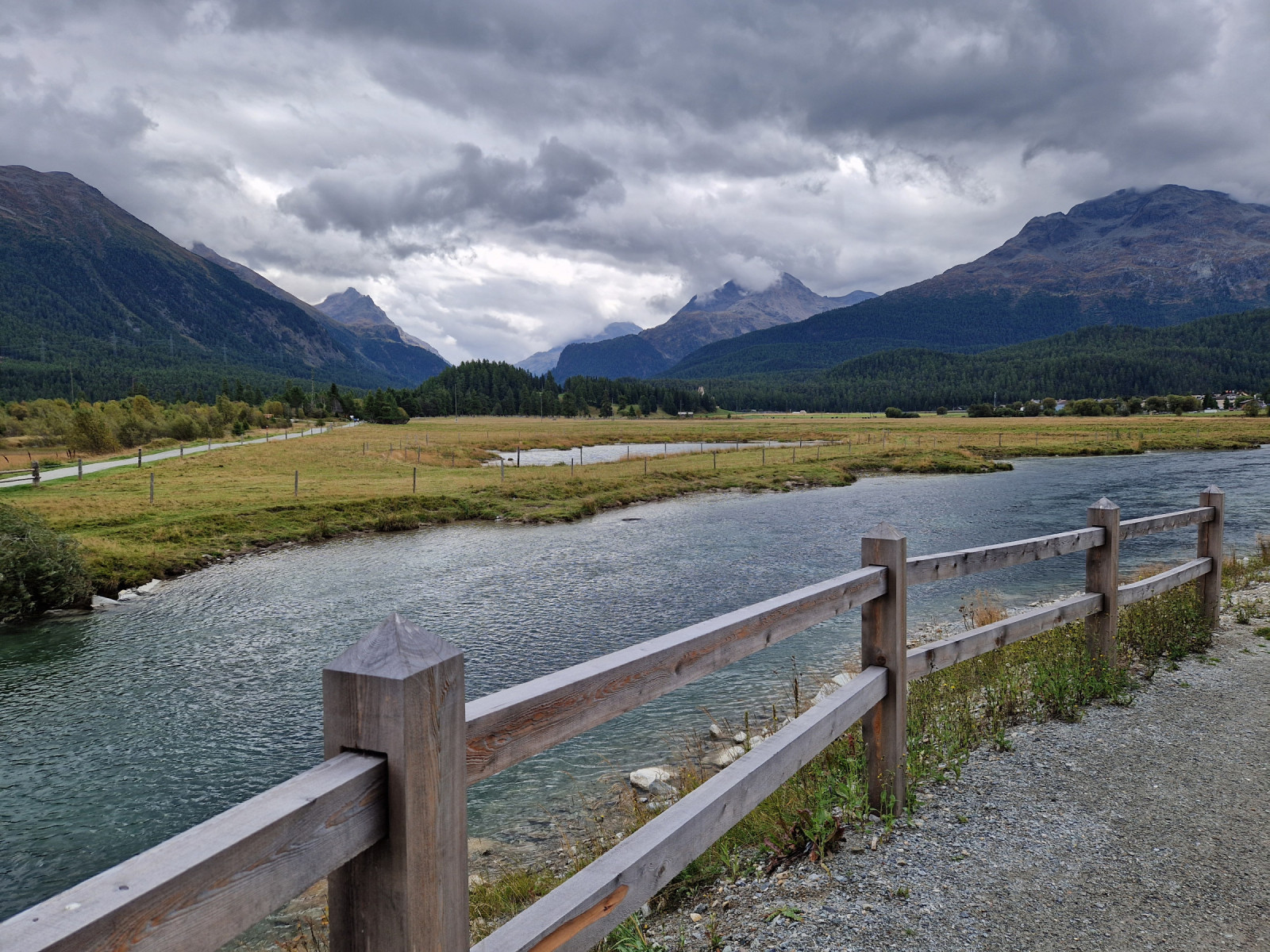
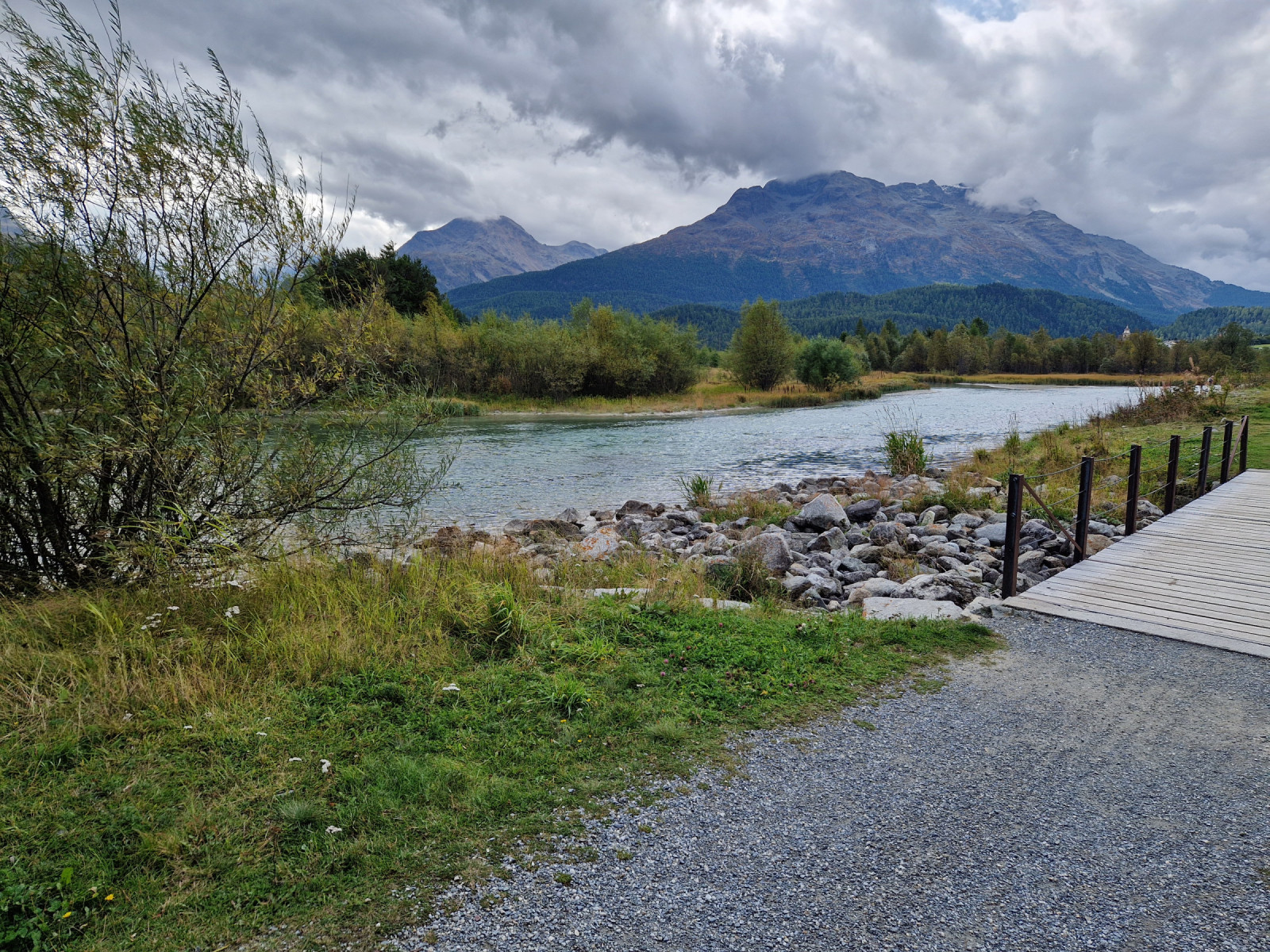
Area with diverse habitats for breeding birds and migration hotspot at high altitude.
Similar to the Inn floodplains at Bever, the floodplains between Samedan and Celerina lie in a wide mountain valley at 1,700 m in the Upper Engadin.
The route first leads through fields and a horse paddock dotted with trees (1). From the viewpoint, there’s a good view of the golf course—larger than the wetlands themselves—and it may be worth scanning briefly with a scope. Next come shallow ponds (2) where the Martin-pêcheur d'Europe often hunts, and where resting ducks and waders are likely to be found. The surrounding bushes offer stopover sites for songbirds. On the way back, ducks, Bergeronnette des ruisseaux, and Cincle plongeur can be observed along the Inn (3). Towards Samedan (4), the river’s varying flow speeds and oxbow channels form a mosaic of habitats with shallow and deep waters, sandbanks, and deadwood. The redesigned riverbanks serve as orientation landmarks for migrating songbirds.
The mix of trees, shrubs, and extensively grazed meadows provides breeding grounds for Sizerin cabaret, Rougequeue à front blanc, Pie-grièche écorcheur, Fauvette babillarde, and Tarier des prés. The aquatic habitats are among the few in Switzerland where the Fuligule morillon breeds. Cincle plongeur, Râle d'eau, and Grèbe castagneux have also nested here.
Of the roughly 180 species recorded, most appear during migration. In spring, when bad weather hits the Alps, the trees and bushes fill with resting songbirds. Autumn also offers some opportunities. Rossignol philomèle, Bruant ortolan, and Gorgebleue à miroir are seen occasionally, while the sighting of a Gobemouche nain remains exceptional. Bergeronnette printanière and Pipit farlouse are noted regularly, and even a Pipit à gorge rousse once appeared. Among the foraging Corneille noire, a Corneille mantelée or hybrid may be spotted.
Regular waders include Bécassine des marais, Vanneau huppé, and Chevalier culblanc, with Chevalier sylvain and Combattant varié more rarely. The record of a Bécassine double shot in 1973 remains unique.
Other rarities include a Goéland marin shot in 1920, a Traquet oreillard seen (and surviving the observation) in 1985, and more recent sightings of Bruant des neiges, Guifette moustac, and Hirondelle rousseline.
The area is best reached from Celerina train station, but can also be accessed from Samedan train station. It is also located on a popular bike trail.
A tip for train travellers from Celerina: the station has only one platform, and the train to St. Moritz usually arrives first. It then waits for the train to Chur to arrive. Only after the train to St. Moritz has departed can you cross the tracks to board the train to Chur.
 ) Insérez les noms d'oiseau dans votre langue. Ils seront automatiquement traduits pour les autres usagers !
Votre feedback sera transmis à l’auteur.rice de cette zone et à l’équipe éditoriale de Birdingplaces, qui l’utiliseront pour améliorer la qualité des informations. (Vous souhaitez publier un commentaire visible en bas de page ? Fermez cette fenêtre et choisissez l’Option 1 : « Publier un commentaire, un conseil ou une observation ».)
Veuillez fournir des suggestions d'améliorations ou d'ajouts au texte de ce site ornithologique.
Veuillez fournir vos suggestions d'améliorations ou d'ajouts à la carte.
Veuillez fournir des suggestions d'améliorations ou d'ajouts à la liste des oiseaux.
Cliquez sur l'icône de l'oiseau () Insérez les noms d'oiseau dans votre langue. Ils seront automatiquement traduits pour les autres usagers !