



Charger images
Les formats d'image autorisés sont de type jpeg, png ou gif
La taille maximale du fichier doit être de 20MB
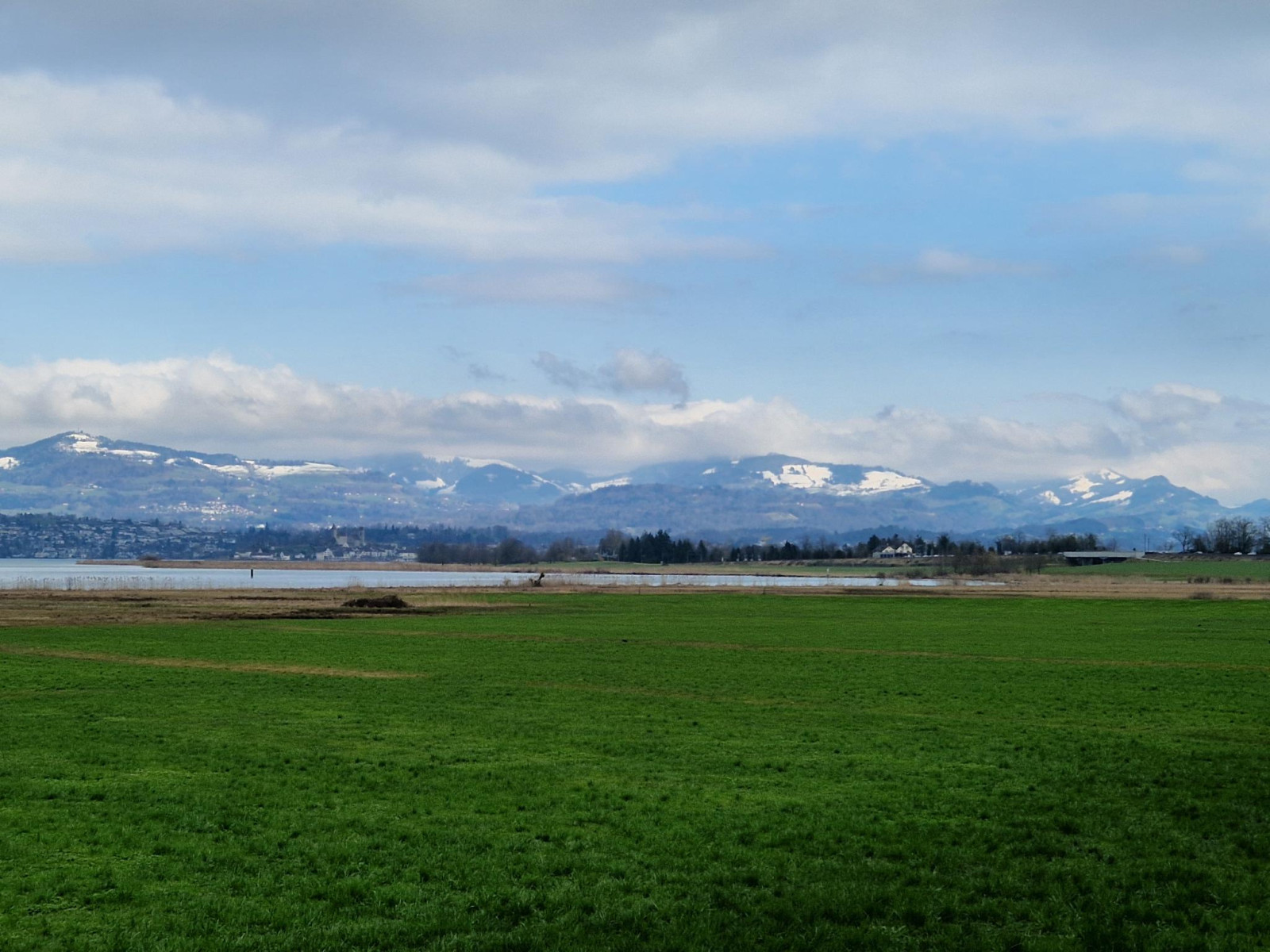


Ecologically valuable and well-protected breeding area for Vanneau huppé and Courlis cendré where a large number of other species can also be observed.
An impressive 260+ species have been recorded in Frauenwinkel, the most important nature reserve of Lake Zurich. The reserve consists of two reeds (beautifully named „Üsser Sack“, 1, and „Inner Sack“, 2), a large zone of shallow water (3) and two islands, Ufenau (4) and Lützelau (5), which are open to the public. The nearby Kiesinsel ("gravel island"; 6) outside of the reserve, which is home to a colony of Sterne pierregarin and Mouette rieuse, is also worth mentioning.
The protected meadow areas are located on a gently sloping hillside. In the upper areas, they consist of litter meadows that merge into reeds towards the lake. Thanks to the work of the Frauenwinkel Foundation, the meadows are now extensively farmed again. The main target species are the Vanneau huppé, which now breeds here again, and the Courlis cendré, which last bred in Switzerland at this location in 2006. The great pressure from recreational users and the limited size of the site (350 hectares) prevent this species from breeding. To minimise disturbances, the area is largely closed to visitors. Walls made of wide wooden planks along the path prevent the birds from noticing humans, but also prevent good observation opportunities for birdwatchers along most of the way.
In winter, the bay is the most interesting area: Tadorne de Belon, Harle huppé, Fuligule nyroca, Grèbe esclavon, Macreuse brune, Plongeon arctique, Plongeon catmarin, and the rare Plongeon imbrin may be spotted on the lake. Amongst the Goéland leucophée one might discern a Goéland cendré, Goéland brun, and the rare Goéland argenté (even a Goéland marin returns regularly to the lake). In the reeds close to the water, Bécassine des marais might be seen next to Courlis cendré and Oie cendrée. A Busard Saint-Martin sometimes flies over the fields in search for food, and a Pie-grièche grise perches on the bushes.
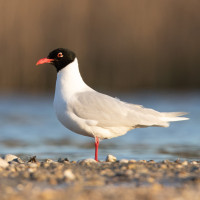
In the breeding season, Eider à duvet, Sterne pierregarin, Sarcelle d'été, Mouette mélanocéphale, and Mouette pygmée (although non-breeding) can be observed on the lake. A Tarier pâtre or a Pie-grièche écorcheur might sit in the bushes, and Rousserolle turdoïde breeds in the reeds. The main attractions are, of course, Courlis cendré and Vanneau huppé with its spectacular courtship flights.
Apart from those two species and the Bécassine des marais, waders are relatively rare, but Chevalier culblanc, Bécasseau variable, Combattant varié, Chevalier aboyeur, and Chevalier gambette are possible to see during migration, and Chevalier guignette practically year-round. Yet, other places in the area are better suited for migration watch (see, for example, the entry "Stampf Rapperswil-Jona").
Amongst the rarities found here, Phalarope à bec large, Oedicnème criard, Barge à queue noire, and Guifette leucoptère are most notable; Cormoran pygmée spent several months here in 2000, 2002 und 2012.
Frauenwinkel is best reached by public transport: the train station Pfäffikon (coming from Zurich) is right next to the start of the path, the train station Hurden (coming from Rapperswil) is near the other end. If arriving by car, you can either park at Pfäffikon train station or Seedamm Hotel, but the parking lots might be busy.
The area can be explored on foot, wheelchair or by bike. The path leads alongside the road and railroad track. Most of the time, the wooden planks obstruct the view, though. Ufenau island can be reached by cruise ship from April onwards or by boat taxi (see the link), Lützelau can be reached by shuttle from June through September (booking in advance necessary, see the link).
 ) Insérez les noms d'oiseau dans votre langue. Ils seront automatiquement traduits pour les autres usagers !
Votre feedback sera transmis à l’auteur.rice de cette zone et à l’équipe éditoriale de Birdingplaces, qui l’utiliseront pour améliorer la qualité des informations. (Vous souhaitez publier un commentaire visible en bas de page ? Fermez cette fenêtre et choisissez l’Option 1 : « Publier un commentaire, un conseil ou une observation ».)
Veuillez fournir des suggestions d'améliorations ou d'ajouts au texte de ce site ornithologique.
Veuillez fournir vos suggestions d'améliorations ou d'ajouts à la carte.
Veuillez fournir des suggestions d'améliorations ou d'ajouts à la liste des oiseaux.
Cliquez sur l'icône de l'oiseau () Insérez les noms d'oiseau dans votre langue. Ils seront automatiquement traduits pour les autres usagers !