


.jpg)
Charger images
Les formats d'image autorisés sont de type jpeg, png ou gif
La taille maximale du fichier doit être de 20MB
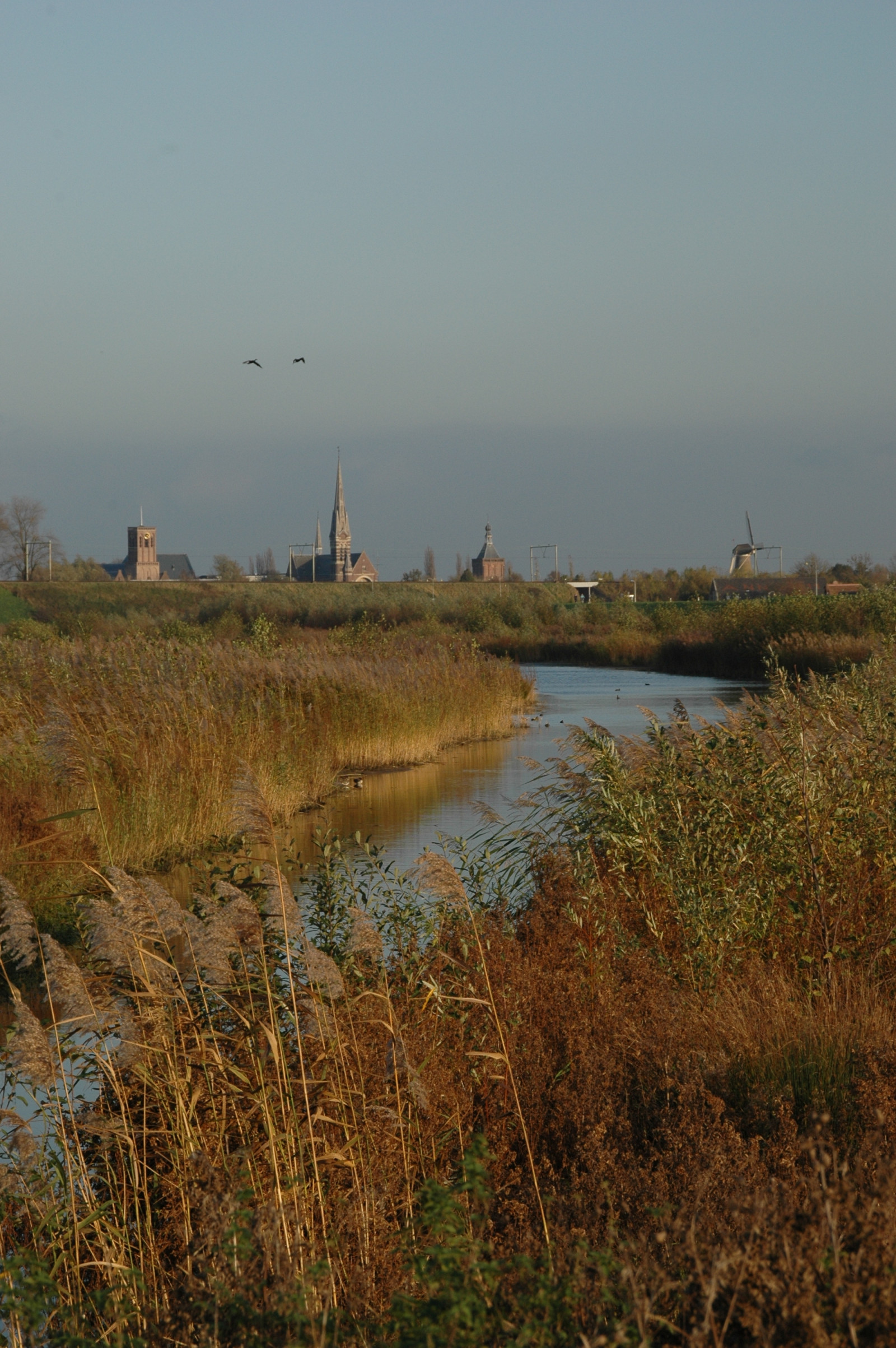
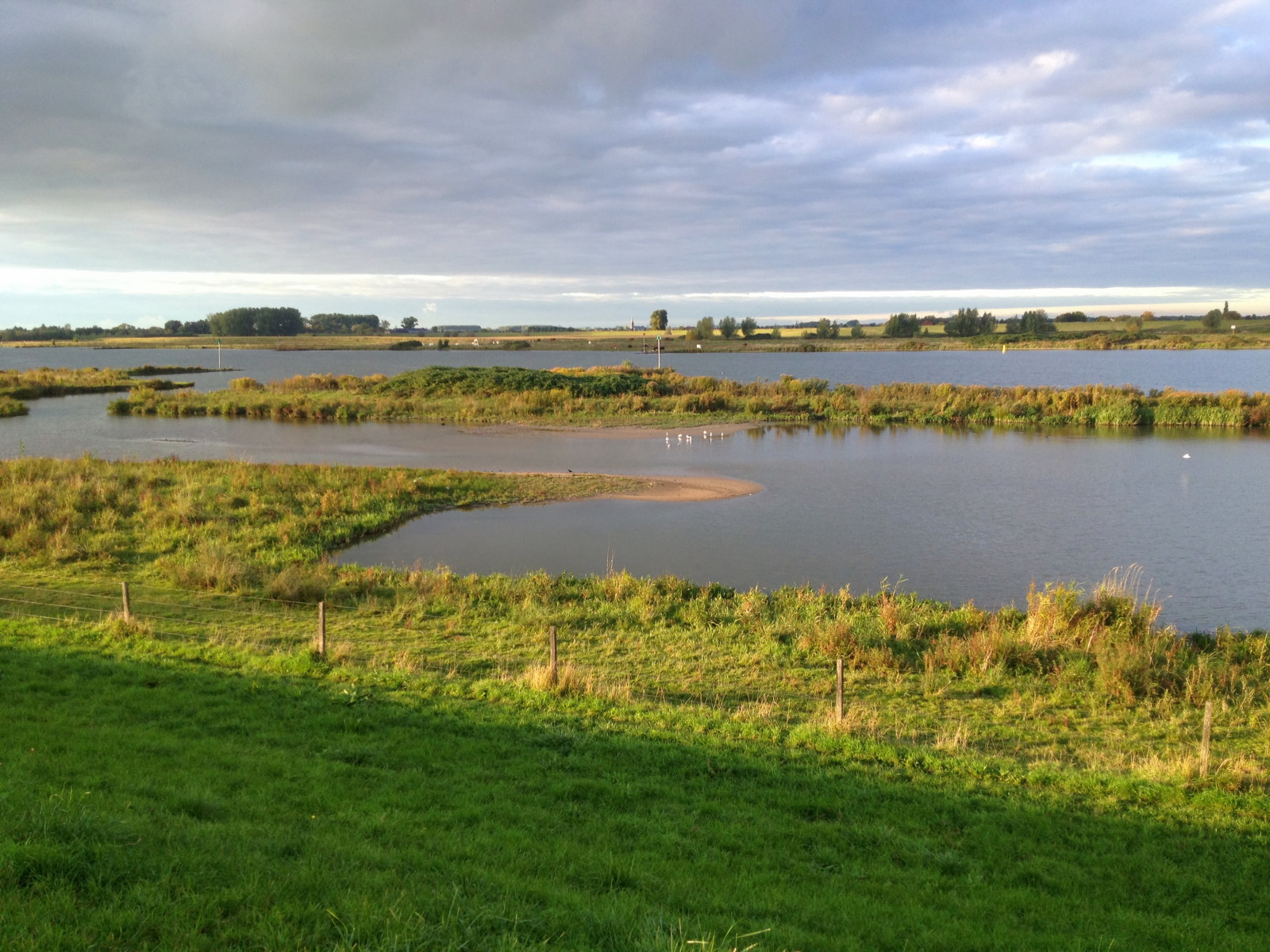

The floodplains to the west of the railway embankment at Culemborg have a varied bird population.
De Baarsemwaard and Goilberdingerwaard are nature development areas with a varied bird population. The floodplains were partly excavated around 2000 as a measure to lower the water level. In addition, oxbows, marshes and herb-rich grasslands with hawthorn thickets have been created. The area is extensively grazed. Next to Fort Werk aan't Spoel is an old orchard. Fort Everdingen is located on the west side.
The oxbows in the Baarsemwaard and the lake in the Goilberdingerwaard with its characteristic sawtooth-shaped bank attract many waterfowl all year round. Of the many duck species here Nette rousse can be mentioned as a special feature. In the summer, a colony of Sterne pierregarin resides on concrete bunkers from WWII. There are also several pairs nesting Bernache nonnette. Foraging here include Guifette noire and Spatule blanche.
The sandy summer dikes with hawthorn thickets in combination with rough riparian vegetation and willow bushes are a Valhalla for songbirds: Pouillot fitis, Pouillot véloce, Fauvette à tête noire, Chardonneret élégant, Verdier d'Europe, Linotte mélodieuse, Rousserolle verderolle and Fauvette grisette. The reed strips along the oxbows are also breeding grounds for Locustelle tachetée, Phragmite des joncs, Rousserolle effarvatte, Gorgebleue à miroir and Bouscarle de Cetti. The Busard des roseaux hunts here. There is always a chance of a Butor étoilé. Even Blongios nain has been a guest. In winter one sometimes sees a wandering group of Panure à moustaches and you hear several Râle d'eau calling.
Pipit farlouse, Tarier pâtre, Chevalier gambette and Huîtrier pie breed in the grasslands of the Goilberdingerwaard. In autumn, the wettest parts are often a place to see Bécassine des marais. The orchard and the adjoining forts and farms also contribute to the varied birdlife, including Pigeon colombin, Chevêche d'Athéna, Chouette hulotte, Hibou moyen-duc and Cigogne blanche. The Martin-pêcheur d'Europe breeds near the forts and often fishes in the oxbows.
The shallow lagoons of the Baarsemwaard are a good place at low tide to see plastering waders such as Avocette élégante, Barge à queue noire, Petit Gravelot, Grand Gravelot and sometimes sandpipers. Marouette ponctuée has also been seen here. Hirondelle de fenêtre collect clay to build nests in the adjacent residential area.
_________________________
Nederlands: De Baarsemwaard en de Goilberdingerwaard zijn natuurontwikkelingsgebieden in eigendom van Het Geldersch Landschap. Deze uiterwaarden ten westen van de spoordijk bij Culemborg, aan weerszijden van Werk aan het Spoel hebben een gevarieerde vogelbevolking. De oevers van de Lek tot aan de zomerdijk zijn in beheer bij Rijkswaterstaat. De uiterwaarden zijn omstreeks 2000 deels afgegraven als waterstandverlagende maatregel. Daarbij zijn strangen, moeras en kruidenrijke graslanden met meidoornstruwelen gecreëerd. Het gebied wordt extensief begraasd. Naast fort Werk aan’t Spoel ligt een oude boomgaard. Aan de westzijde ligt Fort Everdingen.
De strangen in de Baarsemwaard en de plas in de Goilberdingerwaard met kenmerkende zaagtandvormige oever trekken veel watervogels aan het hele jaar door. Van de vele eendensoorten hier kan als bijzonderheid Nette rousse genoemd worden. Op betonnen bunkers uit WOII zit zomers een kolonie van Sterne pierregarin. Ook nestelen er meerdere paartjes Bernache nonnette. Op trek fourageren hier onder meer Guifette noire en Spatule blanche.
De zandige zomerdijken met meidoornstruweel in combinatie met ruige oevervegetatie en wilgenbosjes zijn een walhalla voor zangvogels: Pouillot fitis, Pouillot véloce, Fauvette à tête noire, Chardonneret élégant, Verdier d'Europe, Linotte mélodieuse, Rousserolle verderolle en Fauvette grisette. De rietstroken langs de strangen zijn daarnaast broedplaatsen voor Locustelle tachetée, Phragmite des joncs, Rousserolle effarvatte, Gorgebleue à miroir en Bouscarle de Cetti. De Busard des roseaux jaagt hier. Er is altijd kans op een Butor étoilé. Zelfs Blongios nain is er gast geweest. In de winter ziet men er soms een zwervend groepje Panure à moustaches en hoor je meerdere Râle d'eaulen roepen.
In de graslanden van de Goilberdingerwaard broeden Pipit farlouse, Tarier pâtre, Chevalier gambette en Huîtrier pie. Op de natste delen zitten in de herfst vaak Bécassine des maraispen. De boomgaard en de aanliggende forten en boerderijen dragen eveneens bij aan de gevarieerde vogelstand, waaronder Pigeon colombin, Chevêche d'Athéna, Chouette hulotte, Hibou moyen-duc en Cigogne blanche. De Martin-pêcheur d'Europe broedt bij de forten en vist vaak in de strangen.
De ondiepe lagunes van de Baarsemwaard zijn bij laag water een goede plek om in het voorjaar pleisterende steltlopers te zien zoals Avocette élégante, Barge à queue noire, Petit Gravelot, Grand Gravelot en soms strandlopers. Hier is ook Marouette ponctuée gezien. Hirondelle de fenêtre verzamelen er klei om nesten te bouwen in de aangelegen nieuwbouwwijk.
There is a parking at Fort Werk aan't Spoel, where there is also a place to eat and drink. From there you can walk into the Goilberdingerwaard. A walk in the Baarsemwaard can start from the railway bridge or at the monument. Circular walk is only possible including the dike. From the dike there is a good view of the floodplains everywhere. Beautiful is the view from the railway dike (take the stairs). The indicated paths on the map inside the area are not accesible.
_________________________
Nederlands: Er is parkeergelegenheid bij Fort Werk aan't Spoel, waar ook een eet- en drinkgelegenheid is. Vandaar kan men de Goilberdingerwaard inlopen. Een wandeling in de Baarsemwaard kan starten vanaf de spoorbrug of bij het monument. Rondwandeling is alleen mogelijk inclusief de dijk. Vanaf de dijk is overal goed zicht op de uiterwaarden. Heel mooi is het uitzicht vanaf de spoordijk (neem de trap). De op de kaart aangegeven paden binnen het gebied zijn niet toegankelijk!
 ) Insérez les noms d'oiseau dans votre langue. Ils seront automatiquement traduits pour les autres usagers !
Votre feedback sera transmis à l’auteur.rice de cette zone et à l’équipe éditoriale de Birdingplaces, qui l’utiliseront pour améliorer la qualité des informations. (Vous souhaitez publier un commentaire visible en bas de page ? Fermez cette fenêtre et choisissez l’Option 1 : « Publier un commentaire, un conseil ou une observation ».)
Veuillez fournir des suggestions d'améliorations ou d'ajouts au texte de ce site ornithologique.
Veuillez fournir vos suggestions d'améliorations ou d'ajouts à la carte.
Veuillez fournir des suggestions d'améliorations ou d'ajouts à la liste des oiseaux.
Cliquez sur l'icône de l'oiseau () Insérez les noms d'oiseau dans votre langue. Ils seront automatiquement traduits pour les autres usagers !