


Charger images
Les formats d'image autorisés sont de type jpeg, png ou gif
La taille maximale du fichier doit être de 20MB


This 375 ha large wetland is the largest connected reed area in Luxembourg and is a great area for birdwatching,
The 375 ha large wetland reserve Schlammwiss in Uebersyren is an important migratory stopover for a great amount of birds, which use the wetlands to refill their reserves. The area has marshes, patches of forest, agricultural lands and orchards and Schlammwiss has with almost 20 hectares one of the biggest reed banks in Luxembourg.
The main bird species using the reed banks are Rousserolle effarvatte, Rousserolle verderolle and Bruant des roseaux. Beside the breeding birds the reed banks are a stopover place for Gorgebleue à miroir, Rémiz penduline, Panure à moustaches, Locustelle luscinioïde, Rousserolle turdoïde, Phragmite des joncs and Phragmite aquatique. In the open areas between the reedbeds and the surrounding farms you can find birds like Tarier pâtre, Pie-grièche écorcheur, Chardonneret élégant, Fauvette grisette and Locustelle tachetée and during migration Caille des blés, Tarier des prés and Traquet motteux.
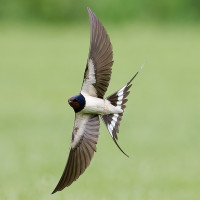
About 40.000 Hirondelle rustique with Hirondelle de rivage arrive every year around August-September in the reed banks of Schlammwiss and create a natural spectacle that attracts predators like Faucon hobereau, Faucon pèlerin, Épervier d'Europe and some owls. Futhermore big groups of Étourneau sansonnet - about 20.000 each year - and Pipit spioncelle – about 100 each year – are using the reeds as sleeping or over wintering place too. As well small groups of Bergeronnette grise, Bergeronnette printanière and Bruant jaune are using the reed as sleeping place.
Park in the village and explore on foot. There is also a bird ringing station allowing important research and studies about biodiversity and nature conservation. The bird-ringing station Uebersyren offers guided tours, see the link below.
 ) Insérez les noms d'oiseau dans votre langue. Ils seront automatiquement traduits pour les autres usagers !
Votre feedback sera transmis à l’auteur.rice de cette zone et à l’équipe éditoriale de Birdingplaces, qui l’utiliseront pour améliorer la qualité des informations. (Vous souhaitez publier un commentaire visible en bas de page ? Fermez cette fenêtre et choisissez l’Option 1 : « Publier un commentaire, un conseil ou une observation ».)
Veuillez fournir des suggestions d'améliorations ou d'ajouts au texte de ce site ornithologique.
Veuillez fournir vos suggestions d'améliorations ou d'ajouts à la carte.
Veuillez fournir des suggestions d'améliorations ou d'ajouts à la liste des oiseaux.
Cliquez sur l'icône de l'oiseau () Insérez les noms d'oiseau dans votre langue. Ils seront automatiquement traduits pour les autres usagers !