


Charger images
Les formats d'image autorisés sont de type jpeg, png ou gif
La taille maximale du fichier doit être de 20MB
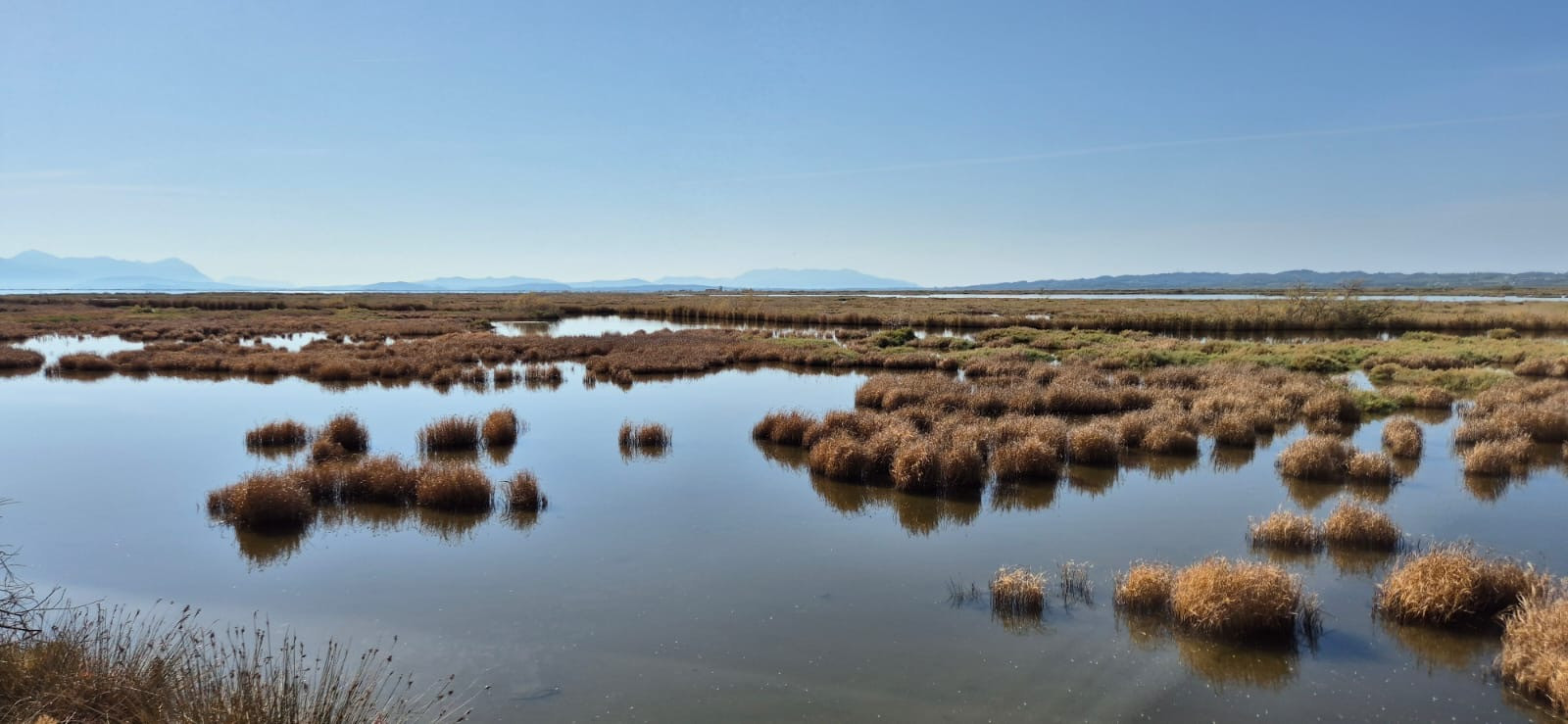
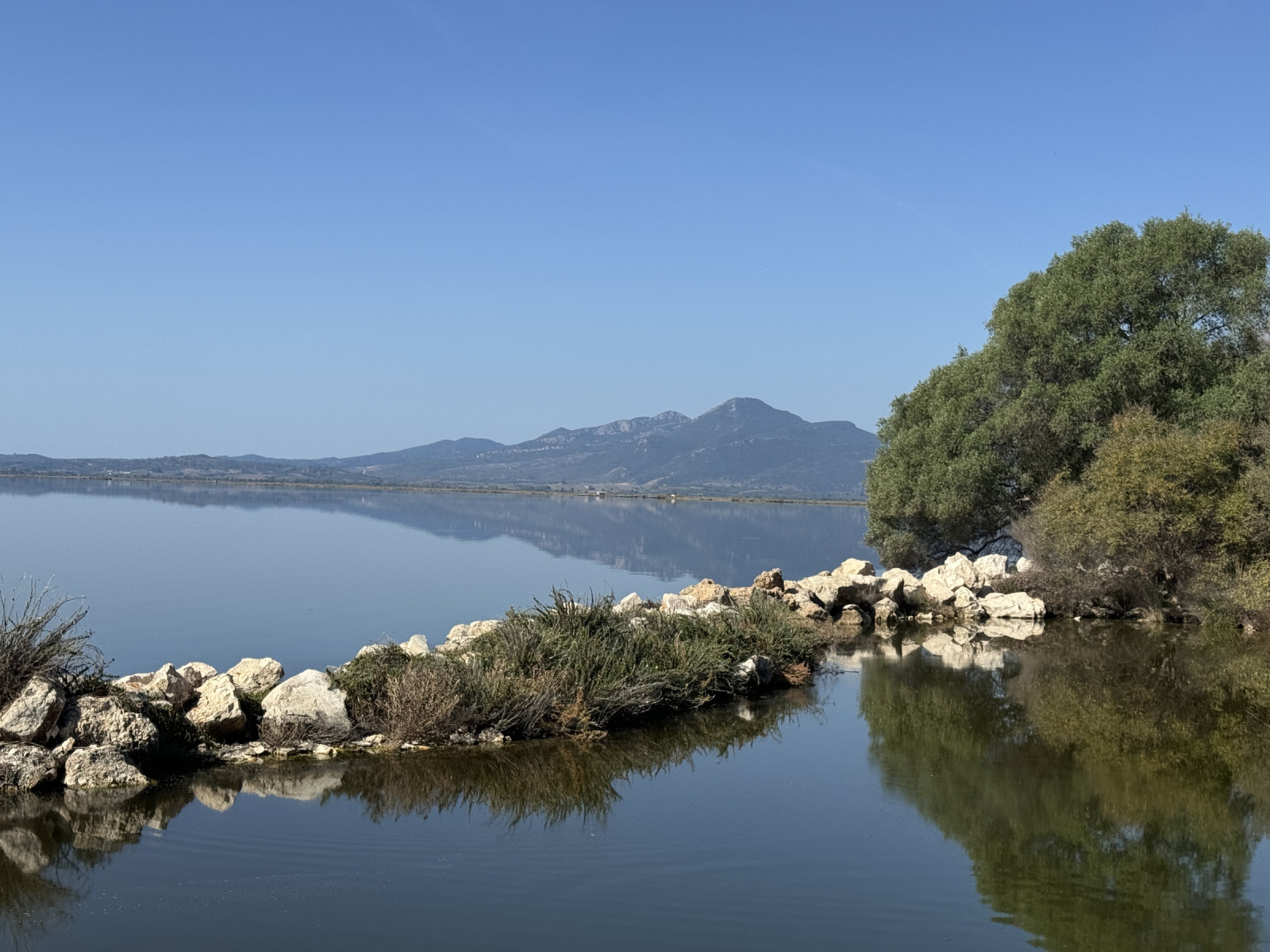
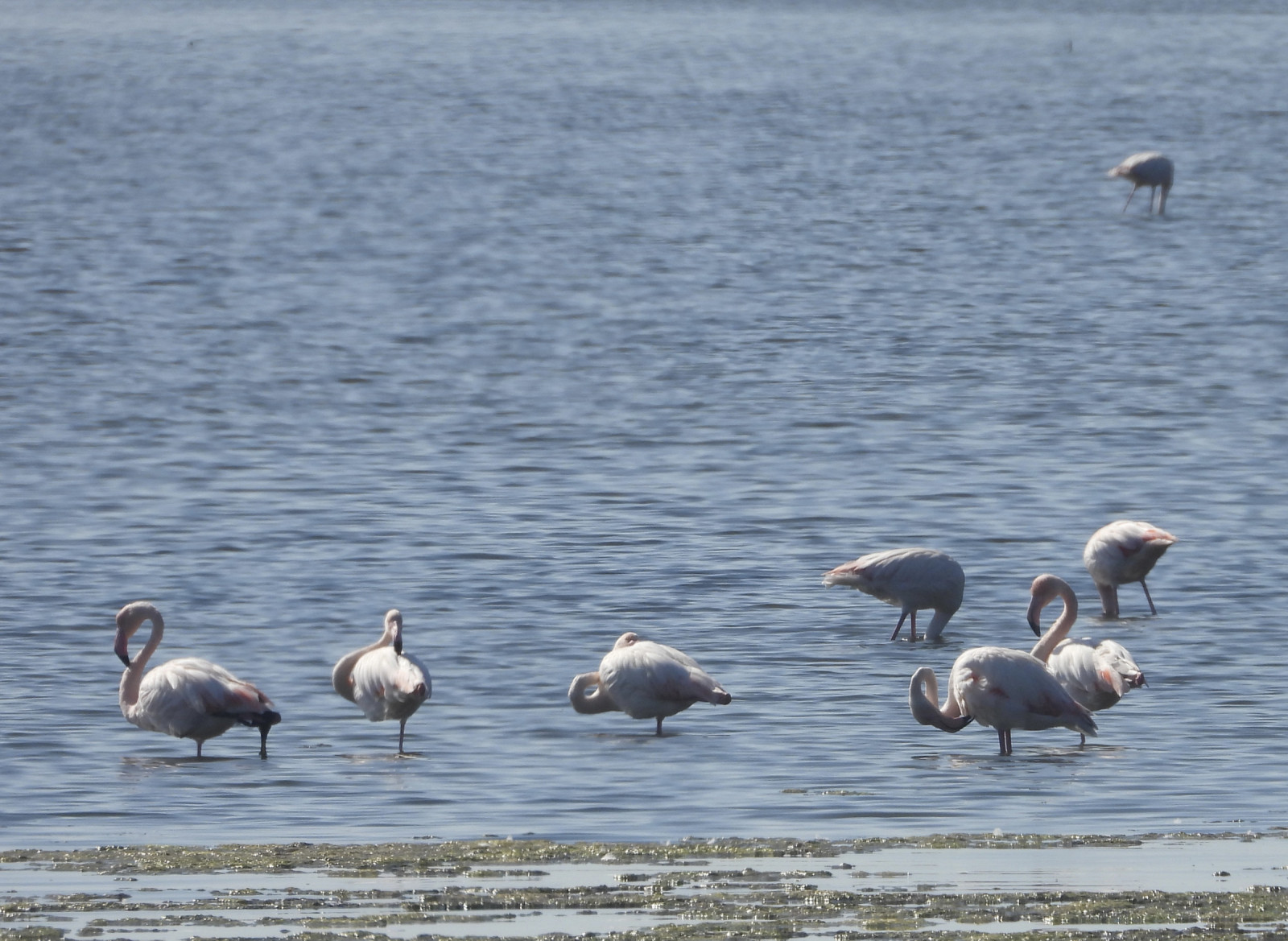
About 300 bird species have been recorded in Amvrakikos National Park.
The interconnected Rodia and Tsoukalio lagoonal complex of the northern Amvrakikos Gulf is formed in the delta of the river Louros, with Rodia being the largest Greek marsh while the innermost and more restricted water body of the two, with less saline waters than Tsoukalio. About 300 bird species have been recorded in Amvrakikos National Park, out of a total of over 450 species of the Hellenic avifauna.
The northern section, the embankment along the river Louros (1) offers mostly sweetwater birds (e.g. Ibis falcinelle, Spatule blanche), is heavily potholed and overgrown. By 2x4, mostly impassable after rains - visiting after a heavy shower, I was forced the retreat.
The dirt track between Strongyli and Vigla (2) starts with a narrow 50 metres section only to widen into a proper macadam, interesting for its songbirds, numerous Fauvette mélanocéphale, Traquet motteux and Monticole bleu. A well surfaced track and quite a productive section.
It ends with productive shorebird shallows (3) in front of Vigla (also Flamant rose and the Pélican frisé). From Vigla follow asphalt to the east until you reach the main road from Arta. Turn right (south) there and continue until you reach the sea, with a small bridge over the canal at your right, continuing into the embankment protecting the Tsoukalio lagoon.
Try to follow the dirt track along the embankment (4) as long as your car allows you to. This is the area for saltwater shorebirds (Gravelot à collier interrompu, Huîtrier pie), terns, gulls, and more flamingos.
Wintering species recorded in large numbers in Αmvrakikos include the Grande Aigrette, the Flamant rose, the Spatule blanche, the Tadorne de Belon, the Canard siffleur, the Harle huppé, the Bécasseau variable, the Chevalier gambette, as well as Milan noir and Milan royal (source https://amvrakikosalliance.net/biodiversity/bird-fauna/).
The Amvrakikos Wetlands National Park was founded on March 21, 2008 by Joint Ministerial Decree 11989/2008 (Government Gazette 123/D‘/21-03-2008).
The village of Petra, gateway to the western lagoons of Rodia and Tsoukalio, lies some 60 km or about an hour’ drive from either the northern Ionian resort of Parga or the southern resort of Lefkada. Be aware that the final road section Louros to Petra is winding and waiting for accidents to happen due to overspeeding.
Check the cliff by the main road to Arta (5), opposite to the turn off to Petra: sometimes it holds Sittelle de Neumayer. Click on the "P" in the map for directions.
To be properly explored, Rodia and Tsoukalio lagoons require at least one full day or, better, two days.
A detailed description of the wider area is to be found in the Birding in Greece – Travel Guide to birdwatching sites in Greece (2014) by Vlachos, Trigou & Stavrakas (check the links below), as well as the Birdwatching in Northern Greece (2023) by Steve Mills.
Landscape photo: morning near the village of Strongili by Marion Schneider & Christoph Aistleitner / Wikimedia Commons.
 ) Insérez les noms d'oiseau dans votre langue. Ils seront automatiquement traduits pour les autres usagers !
Votre feedback sera transmis à l’auteur.rice de cette zone et à l’équipe éditoriale de Birdingplaces, qui l’utiliseront pour améliorer la qualité des informations. (Vous souhaitez publier un commentaire visible en bas de page ? Fermez cette fenêtre et choisissez l’Option 1 : « Publier un commentaire, un conseil ou une observation ».)
Veuillez fournir des suggestions d'améliorations ou d'ajouts au texte de ce site ornithologique.
Veuillez fournir vos suggestions d'améliorations ou d'ajouts à la carte.
Veuillez fournir des suggestions d'améliorations ou d'ajouts à la liste des oiseaux.
Cliquez sur l'icône de l'oiseau () Insérez les noms d'oiseau dans votre langue. Ils seront automatiquement traduits pour les autres usagers !