


Charger images
Les formats d'image autorisés sont de type jpeg, png ou gif
La taille maximale du fichier doit être de 20MB
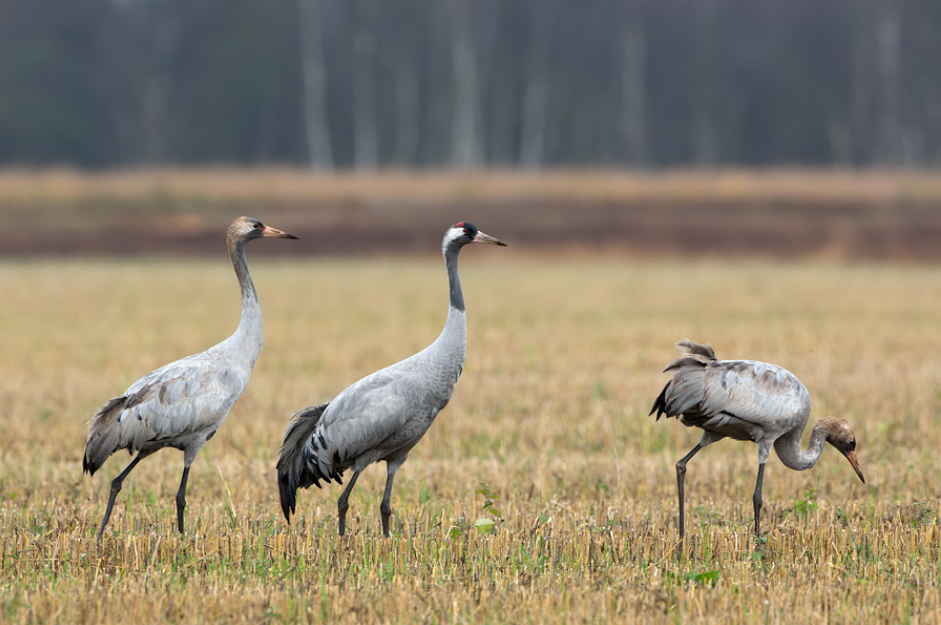

Another great Grue cendrée watching spot in the surroundings of Diepholz. In autumn tens of thousands of birds gather. But they also breed here.
The large open areas of industrial peat with sprinkled areas that have already been rewetted offer thousands of cranes a peaceful and safe sleep places in the Great Moor near Uchte. In autumn 2008 11,000 cranes stayed here - the biggest number determined for this area. The large-scale cultivated land in the vicinity of the Great Moor is well suited as a food area for the birds. Cranes have also been breeding in Uchter Moor since 2009. Hiding in trouble-free, wet moorland, they start building their nest in March. The incubation period for the two eggs is approximately 30 days. Just a few days after hatching, the whole family makes small excursions through the bog and the edge of the bog.
You can visit the north and south side of the Uchter Moor. See for parking places and location of the watchtowers the map.
The areas around Diepholz are famous for the gathering of Grue cendrée every autumn. Diepholz has 24,000 hectares of peat bogs in eleven different areas. Between the areas are small villages and lots of corn fields and grassland. Most visitors are gathered around a few large observation towers, and the rest of the area is usually quiet. The thousands of birds gather here in Germany during the Grue cendrée migration to fat up for their trip to the more southern wintering grounds. During this period, the number may reach in the tens of thousands. During te day the birds are foraging (feeding) on the different corn fields in the area and in the evening they fly in great numbers to their sleeping places in the peat bogs around Diepholz. The best time of the year, with the biggest amounts of Grue cendrée is during the last two weeks of october, and the first week in november.
 ) Insérez les noms d'oiseau dans votre langue. Ils seront automatiquement traduits pour les autres usagers !
Votre feedback sera transmis à l’auteur.rice de cette zone et à l’équipe éditoriale de Birdingplaces, qui l’utiliseront pour améliorer la qualité des informations. (Vous souhaitez publier un commentaire visible en bas de page ? Fermez cette fenêtre et choisissez l’Option 1 : « Publier un commentaire, un conseil ou une observation ».)
Veuillez fournir des suggestions d'améliorations ou d'ajouts au texte de ce site ornithologique.
Veuillez fournir vos suggestions d'améliorations ou d'ajouts à la carte.
Veuillez fournir des suggestions d'améliorations ou d'ajouts à la liste des oiseaux.
Cliquez sur l'icône de l'oiseau () Insérez les noms d'oiseau dans votre langue. Ils seront automatiquement traduits pour les autres usagers !