



Charger images
Les formats d'image autorisés sont de type jpeg, png ou gif
La taille maximale du fichier doit être de 20MB


The Lido des Aresquiers is a must-go for anyone visiting the Montpellier area during passerine migrations. The site is at its best in spring.
Lido des Aresquiers consists of a long 5 km straight stretch of sandy beach between brackish ponds and the Mediterranean Sea, partly covered with grasses and tamarisks. It is the first land seen by migrants from Africa in spring and the last land before crossing the Mediterranean in autumn. Both passages are worth a visit, although spring (mid April to mid May) is best. In autumn, the passage expands from late August to late October (avoid windy days).
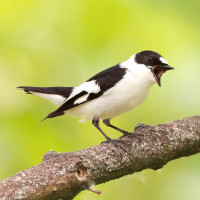
All insectivorous passerines can occur there, with good numbers of Pouillot véloce, Pouillot fitis, all common warbler species, passages of swallows and swifts. Raptors (incl. Bondrée apivore) not before early May. Faucon hobereau from mid April, Busard cendré and Balbuzard pêcheur. Common species that can be expected anytime between mid April and mid May include Rougequeue à front blanc, Fauvette grisette, reed warblers, Gobemouche noir and Gobemouche gris. Uncommon migrants seen several times per season include Pouillot siffleur, Torcol fourmilier and shrikes.
With light southerly winds and clear weather, there are good chances of a fallout including local rarities. In mid April, Fauvette de Moltoni is uncommon but regular. Hypolaïs ictérine (after mid-May), Pipit à gorge rousse (April) and Bruant ortolan are recorded every year. More irregularly, Faucon kobez or Faucon d'Éléonore, Busard pâle, Pouillot véloce sibérien (mostly in autumn ). Gobemouche à collier can be seen.
The site also has its share of megas, including Engoulevent à collier roux, Fauvette de l'Atlas and Pouillot oriental.
The ponds and marshes around can host small numbers of waders, gulls, terns and herons.
Lido des Aresquiers is located 25 km south of Montpellier. The red marker on the map locates Mas d'Ingril, the westernmost site of interest. Expect a 40 minute drive from Montpellier. The site can also be reached safely by bike.
Mas d'Ingril is a former pasture now changed into a wasteland with tamarisk. It has one of the area's best rarities record. It won't take long before you know whether there has been a fall of migrants. However, a rarity can occur even in empty days, so take some time to circle around the pasture and check the ponds even if they do not look birdy. Also remind that this area can be empty while other places around are full of birds, and inversely.
The nearby parking lot itself is a good spot for passerines. Walk slowly eastwards, checking bushes on the way. You can move as far as you want, or drive east for a couple of km to the next parking lot, left just after the bridge over the canal. This will lead you to the Aresquiers beach. Walk along the bushes on the seashore, as far as you wish. A good plan is to walk east for a few km until a path that allows crossing the marshes to join the track along the canal and move back to the bridge. This can be done in 2-4h, depending on bird activity.
Take mosquito repellent with you. In warm, sunny days, many people are heading to the beach, act discrete with your binoculars. At Mas d'Ingril, dogs sometimes wander freely and may be a nuisance.
 ) Insérez les noms d'oiseau dans votre langue. Ils seront automatiquement traduits pour les autres usagers !
Votre feedback sera transmis à l’auteur.rice de cette zone et à l’équipe éditoriale de Birdingplaces, qui l’utiliseront pour améliorer la qualité des informations. (Vous souhaitez publier un commentaire visible en bas de page ? Fermez cette fenêtre et choisissez l’Option 1 : « Publier un commentaire, un conseil ou une observation ».)
Veuillez fournir des suggestions d'améliorations ou d'ajouts au texte de ce site ornithologique.
Veuillez fournir vos suggestions d'améliorations ou d'ajouts à la carte.
Veuillez fournir des suggestions d'améliorations ou d'ajouts à la liste des oiseaux.
Cliquez sur l'icône de l'oiseau () Insérez les noms d'oiseau dans votre langue. Ils seront automatiquement traduits pour les autres usagers !