Charger images
Les formats d'image autorisés sont de type jpeg, png ou gif
La taille maximale du fichier doit être de 20MB
1-1.jpg)
-1.jpg)
Popular area for recreation, including fishing and boating, but the area still has a good array of shorebirds and seabirds.
Two Rocks is a refuge for many shorebirds some of which are very uncommon to scarce in the Perth region. These include Sanderling, Grey-tailed Tattler, Common Sandpiper and occasionally Ruddy Turnstone, Greater Sand Plover, Bar-tailed Godwit, and Grey Plover. There have also been reports of Eastern Curlew, Terek Sandpiper, Hooded Plover, and Pacific Golden Plover which are rather scarce in Perth metro.
The Sanderlings can often be seen foraging amongst the large piles of seaweed which accumulate between the two large rocks south of the harbour and are sometimes joined by tattlers and common sandpipers (which otherwise generally forage along the rockwall). In the harbour there can also be large numbers of resting Pied Cormorant, Silver Gull, and Greater Crested Tern and small numbers of Little Pied Cormorant, Little Black Cormorant, Australasian Darter and Pacific Gull.
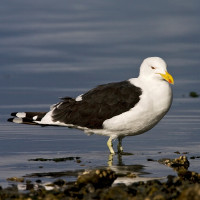
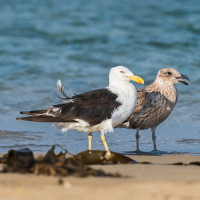
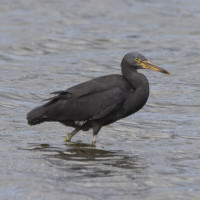
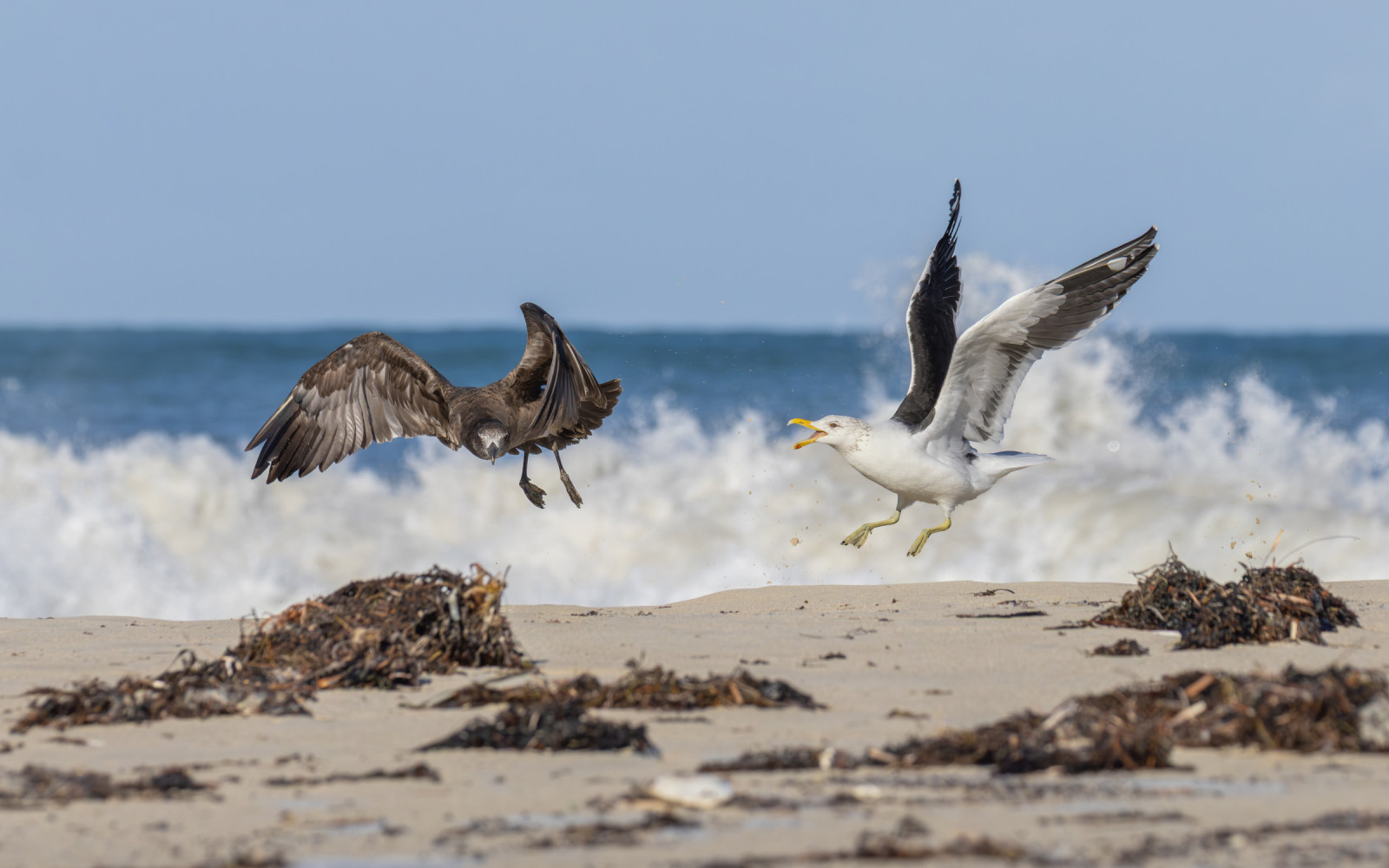
Two Rocks is also the only area in Perth known to regularly report Kelp Gull which have been reported in the area since February 2023. occasionally Eastern Reef Egret can be seen in the harbour. When there are moderate to strong westerly winds various seabirds can be seen such as Wedge-tailed Shearwater and Australasian Gannet, and sometimes other seabirds depending on the time of year.
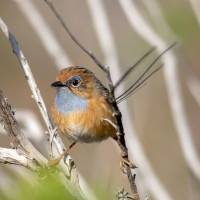
The dune system along Two Rocks also supports good numbers of Spotted Scrubwren, White-winged Fairywren, Purple-backed Fairywren and Singing Honeyeater and even Southern Emuwren which are only found in a few areas in Perth.
Two Rocks and Wreck Point are located 60 km north of Perth. The area can be accessed from the carpark at Wreck Point or in the boat harbour itself, both of which can be accessed by turning off of Two Rocks Road onto Marcon Street. Press a P on the map for directions to a parking spot.
Two Rocks is a highly disturbed beach due to high numbers of people and dogs on the main beach (immediately south of the harbour) and fishermen who often discard fishing gear which poses a significant risk to the local gulls and cormorants. Please pick up and dispose of discarded fishing lines, hooks etc. where possible and report entangled birds to WA Seabird Rescue (08 6102 8464). Red-capped Plovers do breed around Two Rocks so always be mindful of your footing and stay relatively close to the shoreline without flushing the resting/feeding shorebirds (some of which will have just migrated or be preparing to migrate back to the northern hemisphere).
 ) Insérez les noms d'oiseau dans votre langue. Ils seront automatiquement traduits pour les autres usagers !
Votre feedback sera transmis à l’auteur.rice de cette zone et à l’équipe éditoriale de Birdingplaces, qui l’utiliseront pour améliorer la qualité des informations. (Vous souhaitez publier un commentaire visible en bas de page ? Fermez cette fenêtre et choisissez l’Option 1 : « Publier un commentaire, un conseil ou une observation ».)
Veuillez fournir des suggestions d'améliorations ou d'ajouts au texte de ce site ornithologique.
Veuillez fournir vos suggestions d'améliorations ou d'ajouts à la carte.
Veuillez fournir des suggestions d'améliorations ou d'ajouts à la liste des oiseaux.
Cliquez sur l'icône de l'oiseau () Insérez les noms d'oiseau dans votre langue. Ils seront automatiquement traduits pour les autres usagers !