Charger images
Les formats d'image autorisés sont de type jpeg, png ou gif
La taille maximale du fichier doit être de 20MB
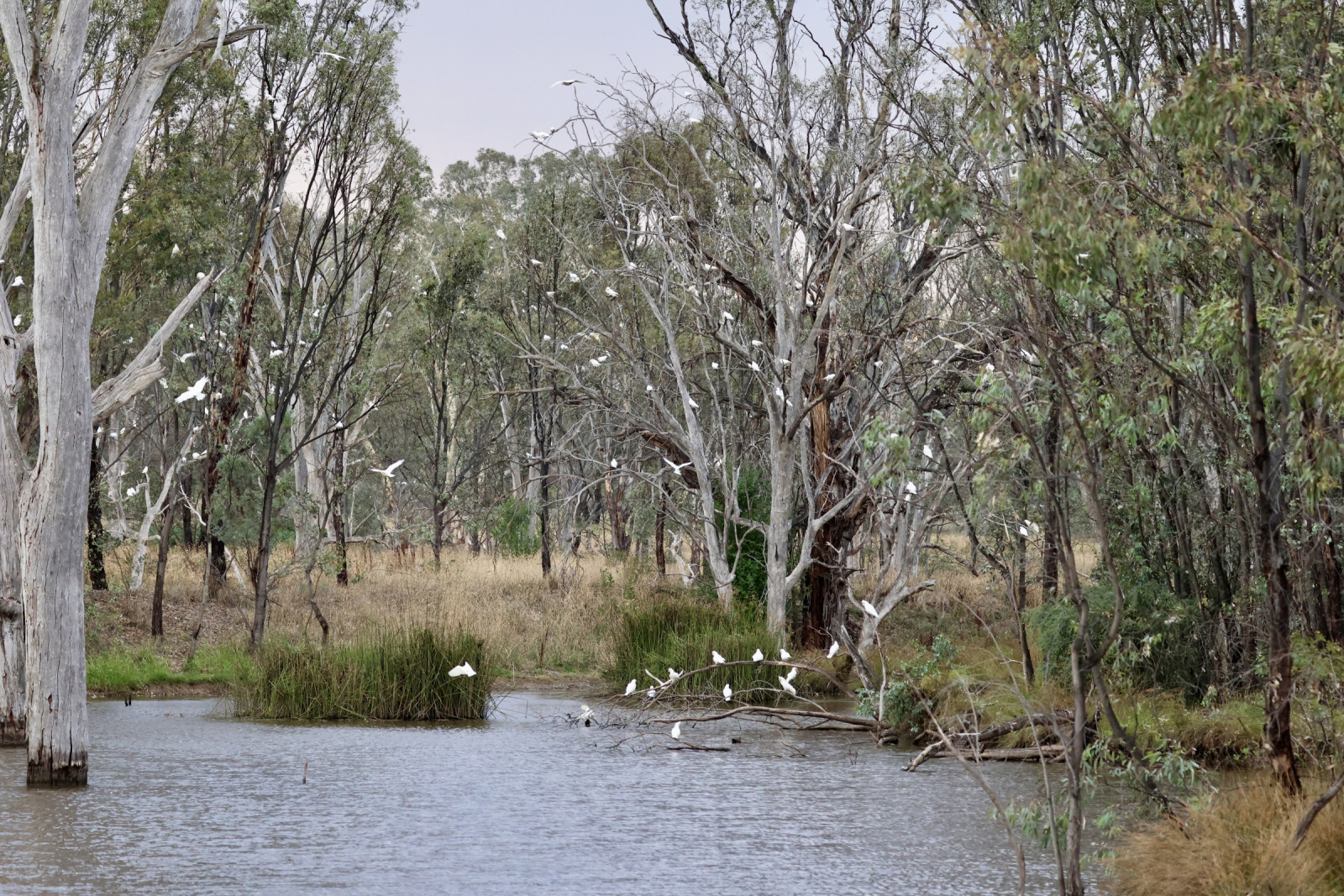
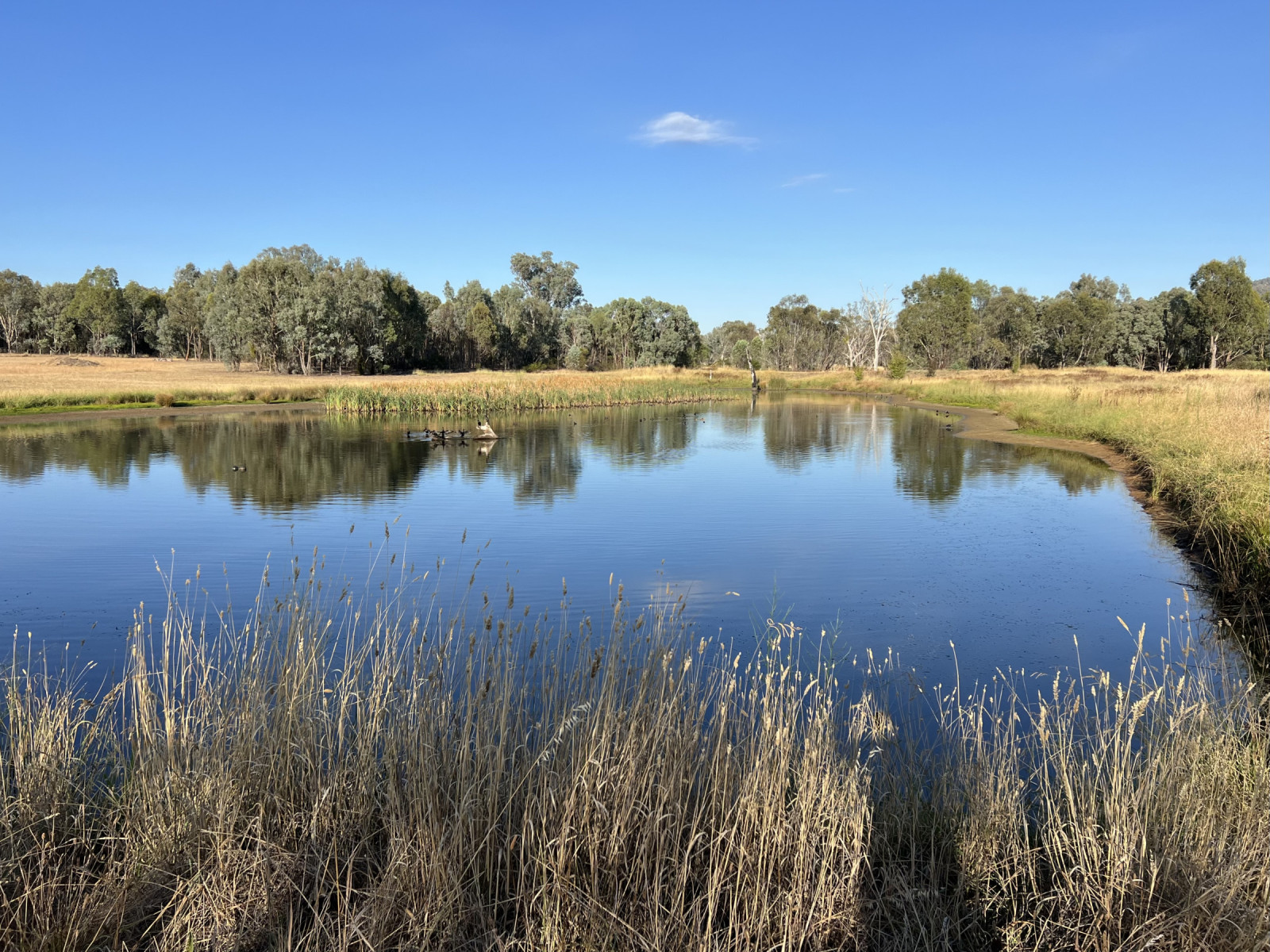
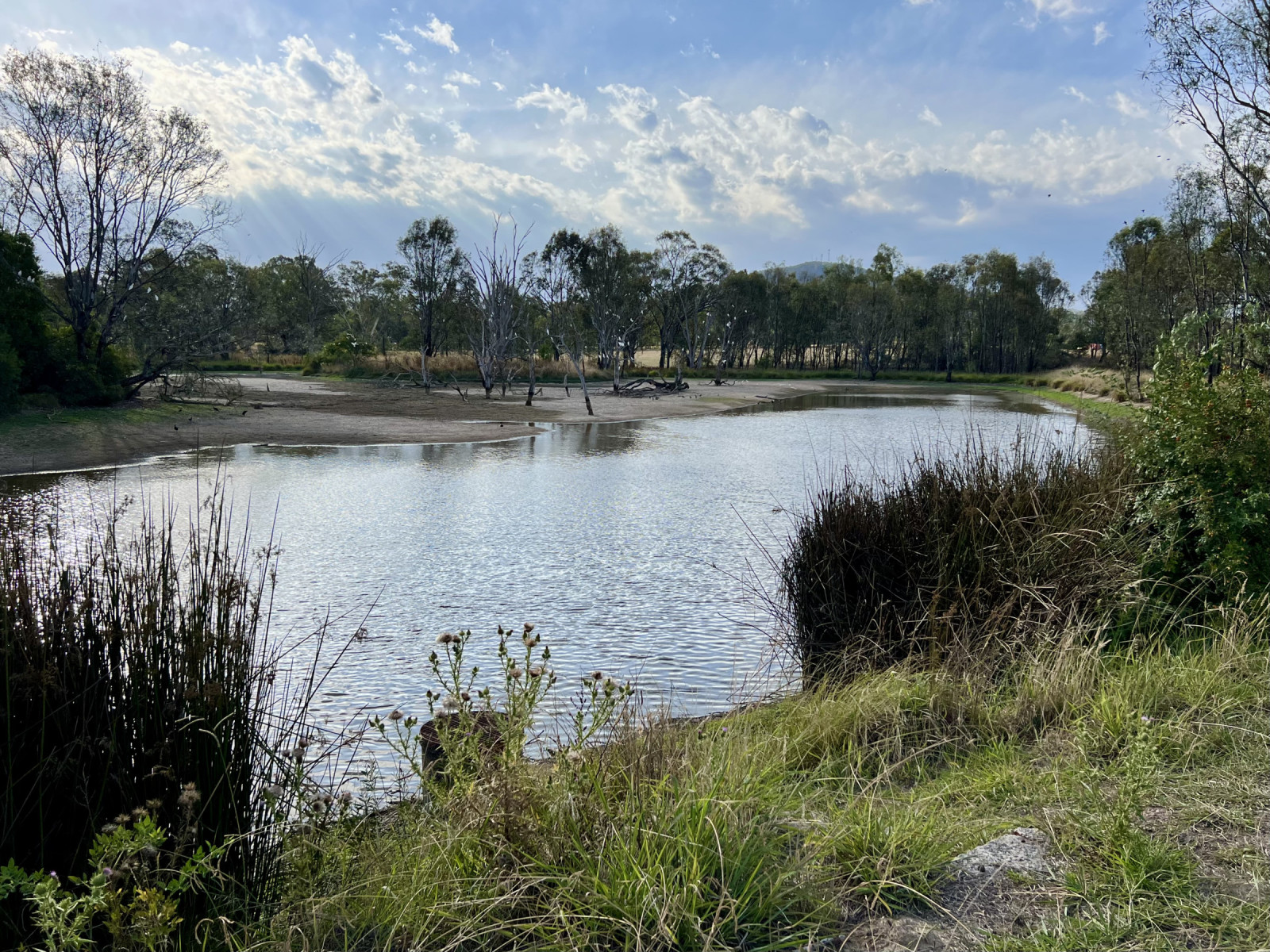
Great place to see waterbirds and bush birds in Albury. Short walking paths provide close views around the constructed ponds.
The David Mitchell Wetlands are a series of constructed wetlands on the Charles Sturt University Albury-Wodonga Campus. The wetlands provide valuable habitat for many waterbirds and waders, and planted trees and shrubs support lots of bush birds.
Over 150 bird species have been recorded from the campus on eBird, making this the second richest hotspot in Albury, after Wonga Wetlands.
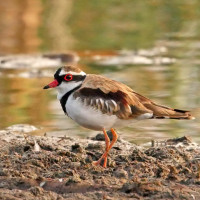
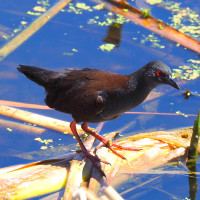
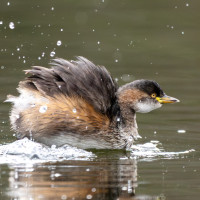
The wetlands usually support large numbers of waterbirds, including Ducks, Cormorants, Egrets, Spoonbills, Pelicans, Coots, Swamphens and Moorhens. Smaller waders such as Black-fronted Dotterel and Latham's Snipe are often seen. This is one of the more reliable places in Albury to see crakes (Australian Spotted, Spotless and Baillon's Crakes) although numbers vary greatly.
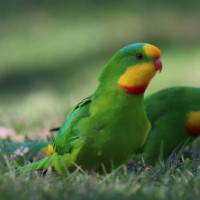
When in flower, ironbarks beside the northern P2 carpark provide food for Rainbow, Musk and Little Lorikeets and, less often, Purple-crowned Lorikeets and even Swift Parrots. Superb Parrots are regularly seen feeding on the ground beside carpark P2.
Brown Quail, Golden-headed Cisticola and Superb Fairywrens can be seen and heard in patches of tall grass.
The wetlands and campus can be accessed from Elizabeth Mitchell Drive. Enter the university at Milawa Drive and park in the northern P2 carpark, beside the trees. From the carpark, walk about 20 m further east along Milawa Drive to where a track heads north through the grass into the trees.
This leads to a short network of gravel walking paths that surround the major wetlands. The paths are not signposted but are easy to follow. The campus is open to the public and can be visited at all times of the year.
Press P on the map to access Google mapping.
 ) Insérez les noms d'oiseau dans votre langue. Ils seront automatiquement traduits pour les autres usagers !
Votre feedback sera transmis à l’auteur.rice de cette zone et à l’équipe éditoriale de Birdingplaces, qui l’utiliseront pour améliorer la qualité des informations. (Vous souhaitez publier un commentaire visible en bas de page ? Fermez cette fenêtre et choisissez l’Option 1 : « Publier un commentaire, un conseil ou une observation ».)
Veuillez fournir des suggestions d'améliorations ou d'ajouts au texte de ce site ornithologique.
Veuillez fournir vos suggestions d'améliorations ou d'ajouts à la carte.
Veuillez fournir des suggestions d'améliorations ou d'ajouts à la liste des oiseaux.
Cliquez sur l'icône de l'oiseau () Insérez les noms d'oiseau dans votre langue. Ils seront automatiquement traduits pour les autres usagers !