Charger images
Les formats d'image autorisés sont de type jpeg, png ou gif
La taille maximale du fichier doit être de 20MB
-CR3_DxO_DeepPRIME.jpg)
-CR3_DxO_DeepPRIME.jpg)
-CR3_DxO_DeepPRIME.jpg)
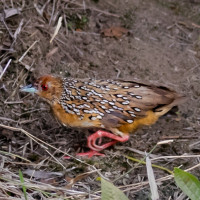
Mixture of native grassland, primary forest and wetland. Argentina's only location for Ocellated Crake.
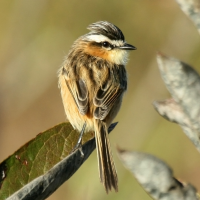
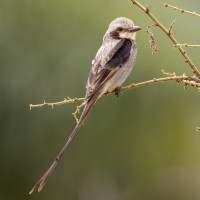
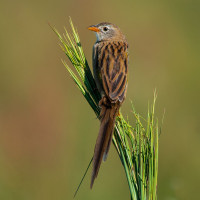
Parque Federal Campo San Juan has been in existence since 2022 and protects around 5,000 hectares of native grassland, primary forest and wetlands. The park is rarely visited, which is surprising given that over 350 bird species have been recorded here. The grasslands are of particular interest, as this habitat has been severely reduced in Argentina. Species such as the Ocellated Crake, Streamer-tailed Tyrant and Sharp-tailed Tyrant can be found here.
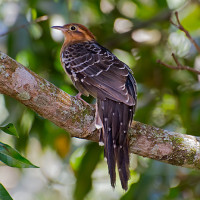
Large parts of the park are covered by forest, where you can find species typical of north-eastern Argentina such as the Southern Antpipit, Surucua Trogon, White-shouldered Fire-eye, Greenish Schiffornis and White-eyed Foliage-gleaner.
Parque Federal Campo San Juan is located close to National Route 12 between Santa Ana and San Ignacio. It is signposted along the RN12. There is no designated parking area. The park is open from 7:00 a.m. to 6:00 p.m., admission is free. The park can be accessed by car, but it is best to visit it on foot. Along the access road to the Visitor Centre, there are several paths that can only be accessed on foot, but it is also recommended to walk parts of the access road to discover as many species as possible.
The park has several footpaths that are designed to allow visitors to explore the area's various habitats as comprehensively as possible. There is a 7 km dirt-road from the entrance gate to the Visitor Centre, but this can become impassable for cars after rainfall and can then only be accessed on foot.
 ) Insérez les noms d'oiseau dans votre langue. Ils seront automatiquement traduits pour les autres usagers !
Votre feedback sera transmis à l’auteur.rice de cette zone et à l’équipe éditoriale de Birdingplaces, qui l’utiliseront pour améliorer la qualité des informations. (Vous souhaitez publier un commentaire visible en bas de page ? Fermez cette fenêtre et choisissez l’Option 1 : « Publier un commentaire, un conseil ou une observation ».)
Veuillez fournir des suggestions d'améliorations ou d'ajouts au texte de ce site ornithologique.
Veuillez fournir vos suggestions d'améliorations ou d'ajouts à la carte.
Veuillez fournir des suggestions d'améliorations ou d'ajouts à la liste des oiseaux.
Cliquez sur l'icône de l'oiseau () Insérez les noms d'oiseau dans votre langue. Ils seront automatiquement traduits pour les autres usagers !