

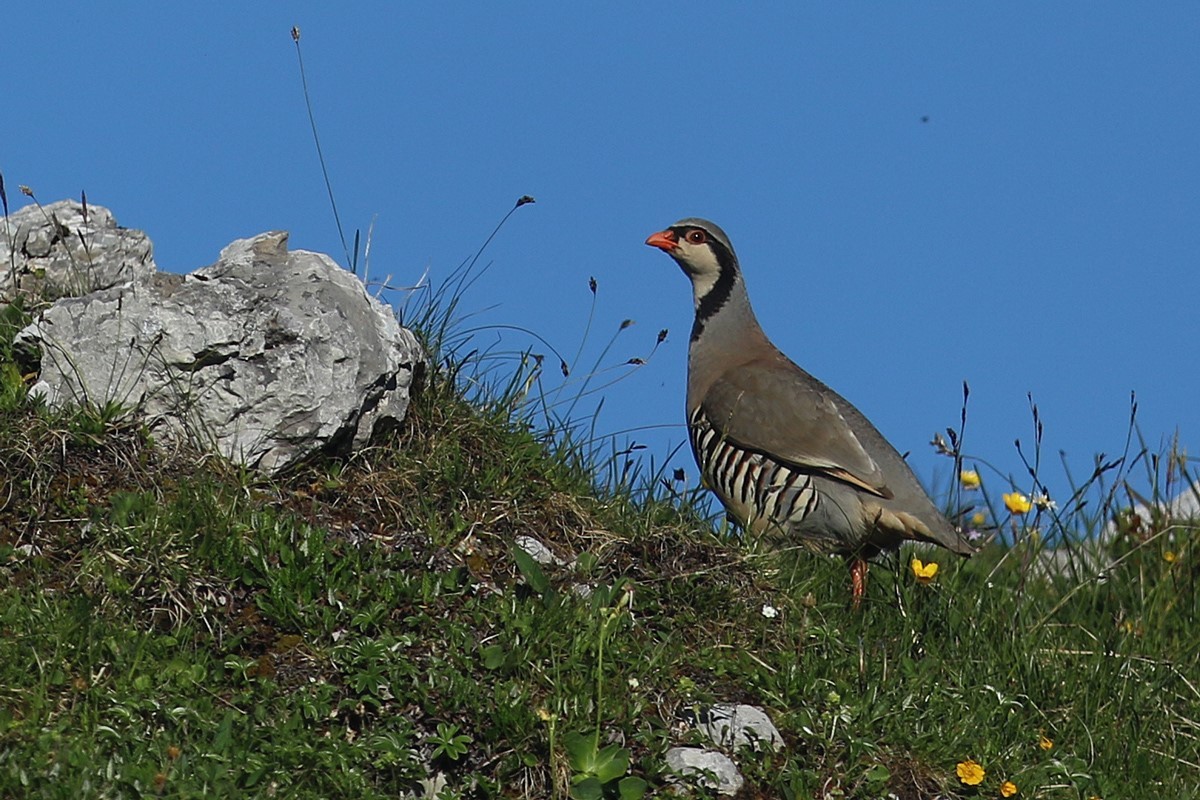
Description
The backbone of this hinterland is the massif of the Akarnanika Mountains (sometimes written as Akarnaniki), with the highest point of the Psili Koryphi at 1,589 m.
35% of the breeding pairs of hanhikorppikotka in mainland Greece nest here (14-15 pairs out of a total of 40-42 pairs), while ~50% of the total population of the species (up to 90 individuals) in mainland Greece overwinters in the area. Rising above the western coast, the imposing cliffs of Tserekas are their main nesting place. They also hold two breeding pairs of maakotka.
Details
Access
Gateway to the Tserekas Cliffs, the village of Paleros (Palairos) lies some 30 km or about half an hour’ drive from the resort island of Lefkada. Click on the "P" in the map for directions.
Although the area is best known for Lefkada, there are several smaller resorts nearby, from Amfilochia, Aktio and Vonitsa on the shores of the Amvrakikos Gulf, to Palairos, Mytikas and Astakos further south.
Terrain and Habitat
Mountain , Canyon/cliff , Scattered trees and bushesConditions
Rocky , Mountainous , DustyCircular trail
NoIs a telescope useful?
YesGood birding season
All year roundBest time to visit
SpringRoute
Unpaved roadDifficulty walking trail
StrenuousAccessible by
CarBirdwatching hide / platform
NoExtra info
#AkarnanikaSOS alert: The already installed wind turbines and the new, irregularly licensed 16 wind stations (of 1 a/c each!), which are just around the corner, threaten irreversible destruction of the most important area for vultures in mainland Greece, portending a bleak future for the critically endangered species. The question is whether the Akarnanika Mountains will remain an extensive natural area with landscapes of wild beauty, and of course a stronghold of raptors, or whether it will become a huge industrial energy production zone and an "ecological trap" for vultures.


 ) to insert bird names in your own language. The birdnames will automatically be translated for other users!