Descripción
Similar to the Inn floodplains at Bever, the floodplains between Samedan and Celerina lie in a wide mountain valley at 1,700 m in the Upper Engadin.
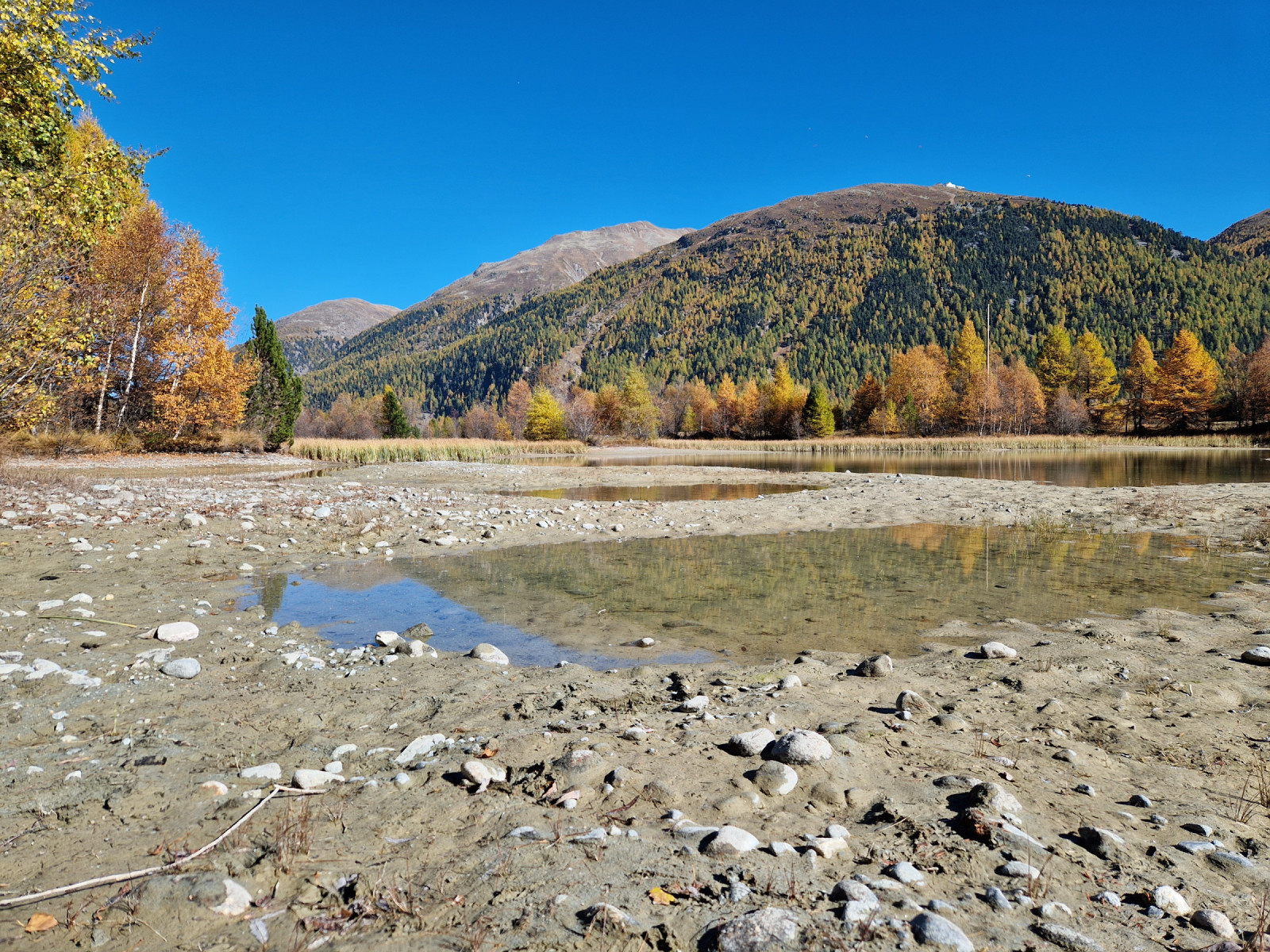
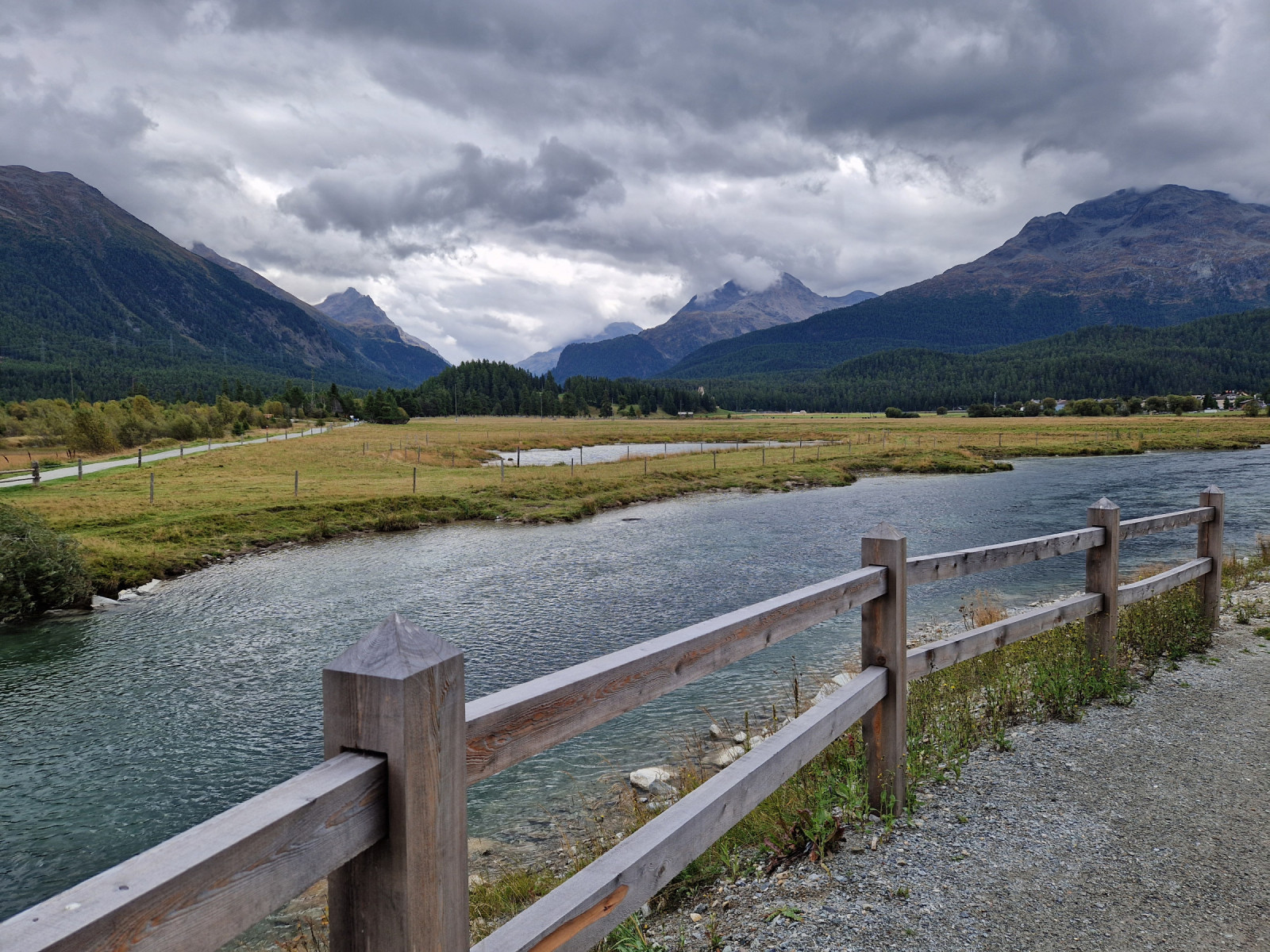
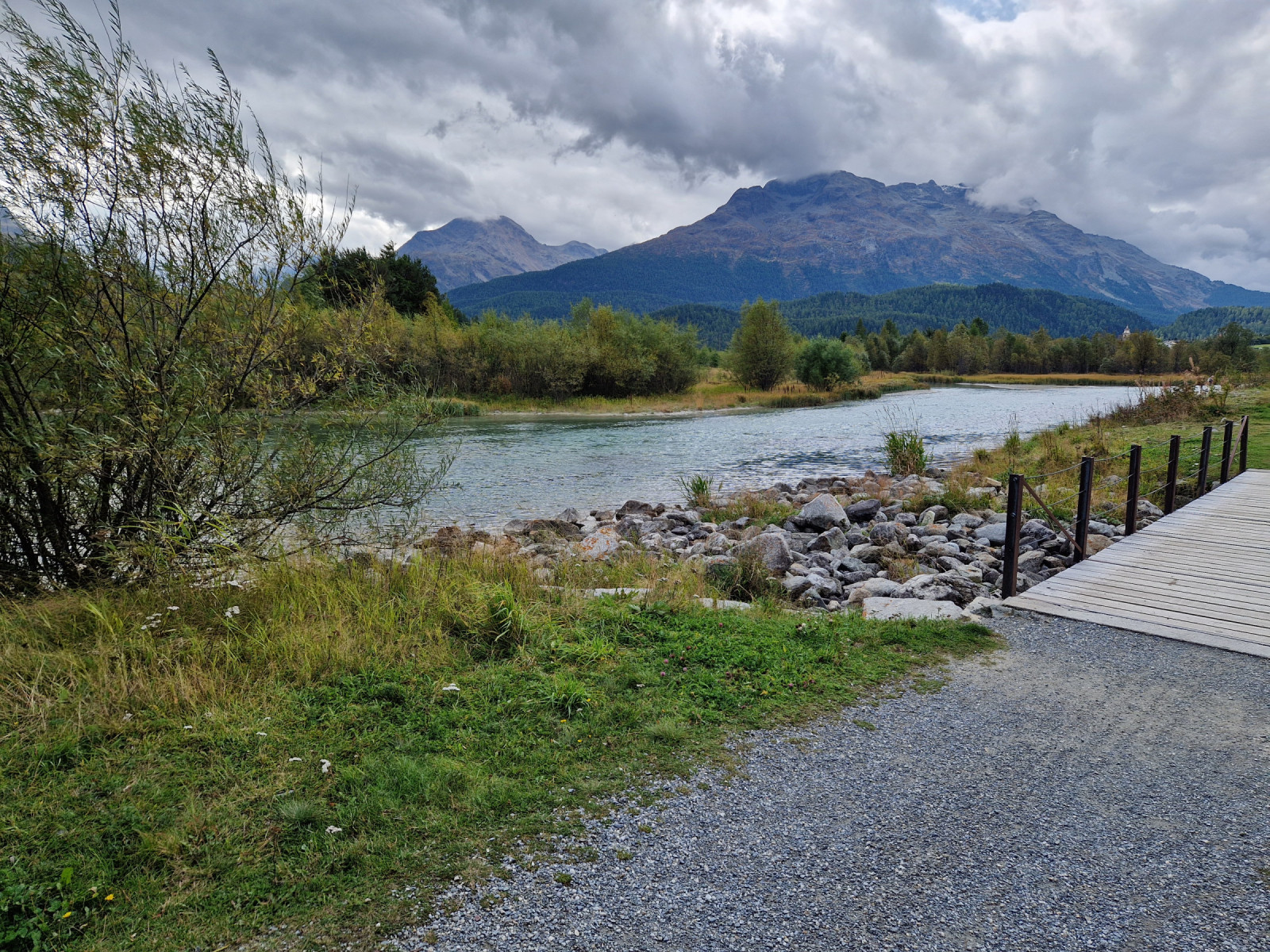
The route first leads through fields and a horse paddock dotted with trees (1). From the viewpoint, there’s a good view of the golf course—larger than the wetlands themselves—and it may be worth scanning briefly with a scope. Next come shallow ponds (2) where the Martín Pescador Común often hunts, and where resting ducks and waders are likely to be found. The surrounding bushes offer stopover sites for songbirds. On the way back, ducks, Lavandera Cascadeña, and Mirlo-acuático Europeo can be observed along the Inn (3). Towards Samedan (4), the river’s varying flow speeds and oxbow channels form a mosaic of habitats with shallow and deep waters, sandbanks, and deadwood. The redesigned riverbanks serve as orientation landmarks for migrating songbirds.
The mix of trees, shrubs, and extensively grazed meadows provides breeding grounds for Pardillo Alpino, Colirrojo Real, Alcaudón Dorsirrojo, Curruca Zarcerilla, and Tarabilla Norteña. The aquatic habitats are among the few in Switzerland where the Porrón Moñudo breeds. Mirlo-acuático Europeo, Rascón Europeo, and Zampullín Común have also nested here.
Of the roughly 180 species recorded, most appear during migration. In spring, when bad weather hits the Alps, the trees and bushes fill with resting songbirds. Autumn also offers some opportunities. Ruiseñor Común, Escribano Hortelano, and Ruiseñor Pechiazul are seen occasionally, while the sighting of a Papamoscas Papirrojo remains exceptional. Lavandera Boyera and Bisbita Pratense are noted regularly, and even a Bisbita Gorgirrojo once appeared. Among the foraging Corneja Negra, a Corneja Cenicienta or hybrid may be spotted.
Regular waders include Agachadiza común, Avefría Europea, and Andarríos Grande, with Andarríos Bastardo and Combatiente more rarely. The record of a Agachadiza Real shot in 1973 remains unique.
Other rarities include a Gavión Atlántico shot in 1920, a Collalba Rubia seen (and surviving the observation) in 1985, and more recent sightings of Escribano Nival, Fumarel Cariblanco, and Golondrina Dáurica.
Detalles
Accesso
The area is best reached from Celerina train station, but can also be accessed from Samedan train station. It is also located on a popular bike trail.
A tip for train travellers from Celerina: the station has only one platform, and the train to St. Moritz usually arrives first. It then waits for the train to Chur to arrive. Only after the train to St. Moritz has departed can you cross the tracks to board the train to Chur.


 ) insertar los nombres de aves en tu propio idioma. ¡Los nombres de las aves serán traducidos automáticamente para otros usuarios!