Descripción
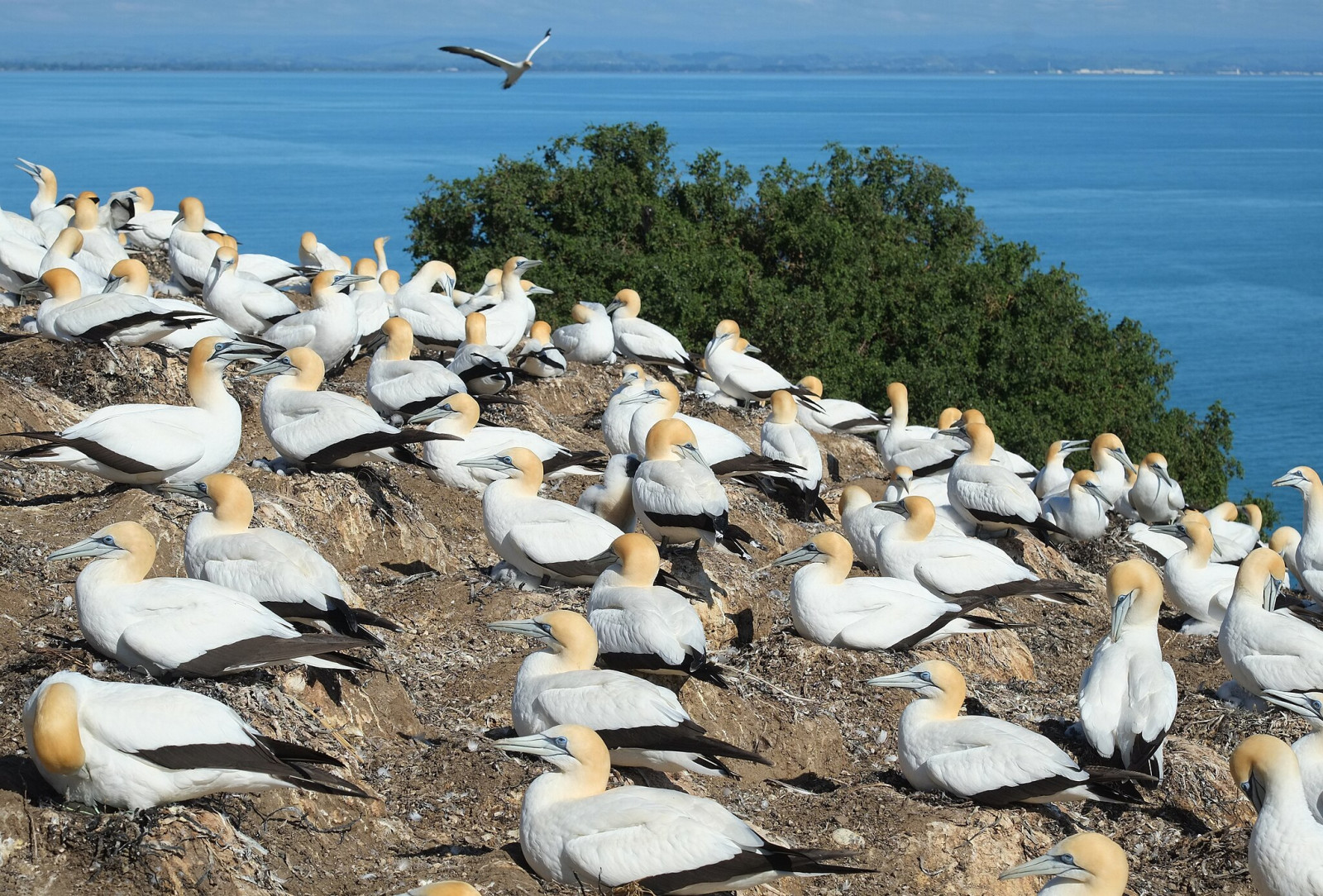
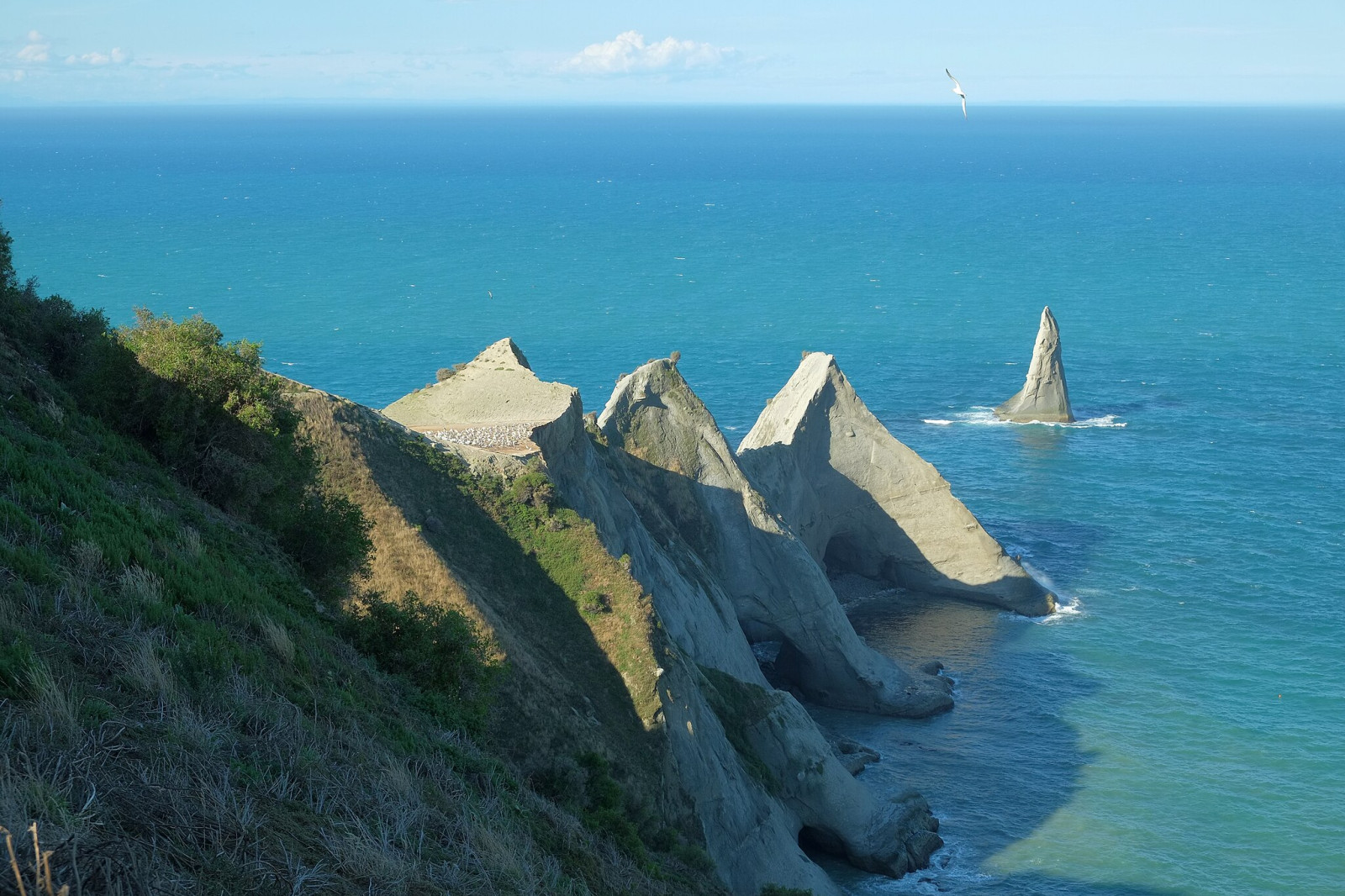
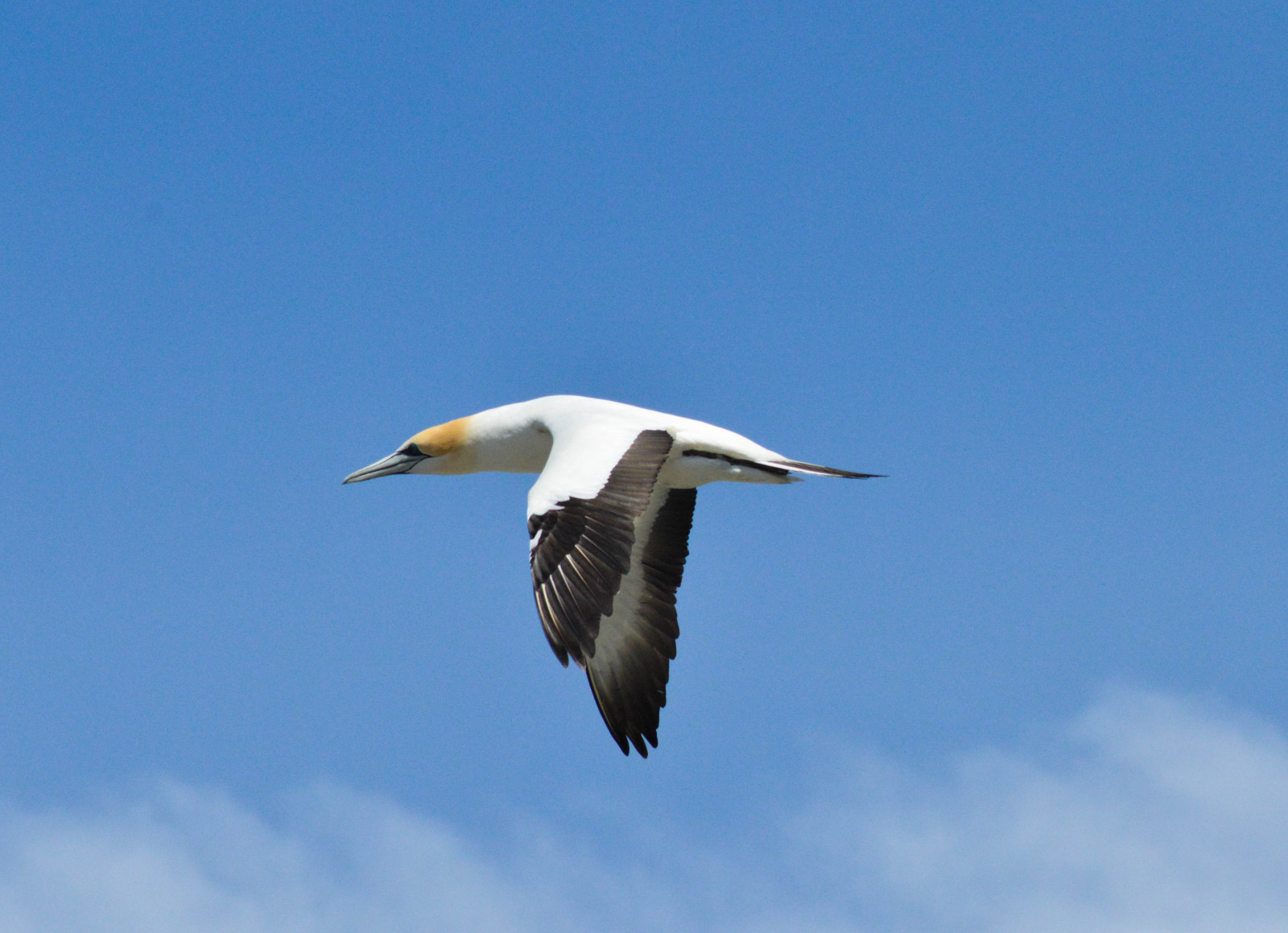
Cape Kidnappers is located at the southern tip of Hawke Bay on New Zealand’s North Island. The rugged headland is home to a huge colony of Australasian Gannet. Over 6,500 breeding pairs nest here. From mid-September to mid-December, you can witness thousands of gannets nesting, courting, and rearing their young, with the juvenile chicks staying as late as May, before migrating to Australia. The site is enclosed by a predator-proof fence, part of the Cape Sanctuary conservation project.
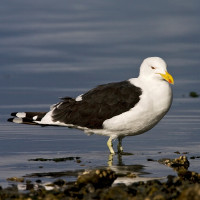
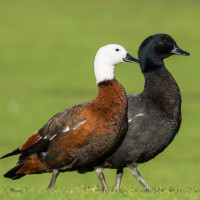
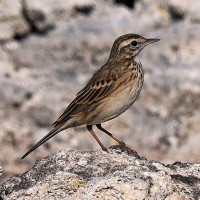
The journey to the colony offers stunning views of the Pacific Ocean and the dramatic cliffs of the Hawke’s Bay coastline and the possibility to observe many other birds. Besides Australasian Gannet, birds you might spot Paradise Shelduck, Brown Teal, Kelp Gull, Silver Gull, Black-billed Gull, White-fronted Tern, New Zealand Pigeon, Australasian Swamphen, Great Cormorant, White-faced Heron, Eurasian Skylark, New Zealand Pipit and Swamp Harrier.
Detalles
Accesso
Cape Kidnappers is located at the southern tip of Hawke Bay on New Zealand’s North Island. It is at the end of an 8 km peninsula that protrudes into the Pacific Ocean, and 20 kilometres south-east of the city of Napier. Road access ends at Clifton, which is the departure point for visiting the colony.
Visitors can reach the cape and gannet colony by private minibus tours via an inland road. Tours run from 1 September – 30 April, starting off at our Te Awanga base. See the link below for more info on times and prices.
Walking along the coast is also possible, but it’s a serious undertaking. The Cape Kidnappers Walking Track is a 19 km return beach route that is only safe during low tide and a round trips takes about 5 hours. Note that the track has seasonal closures: the track to the plateau gannet colony is closed July to mid-October to protect nesting birds.
 Harrier - Circus approximans.jpg)
 ) insertar los nombres de aves en tu propio idioma. ¡Los nombres de las aves serán traducidos automáticamente para otros usuarios!