Descripción
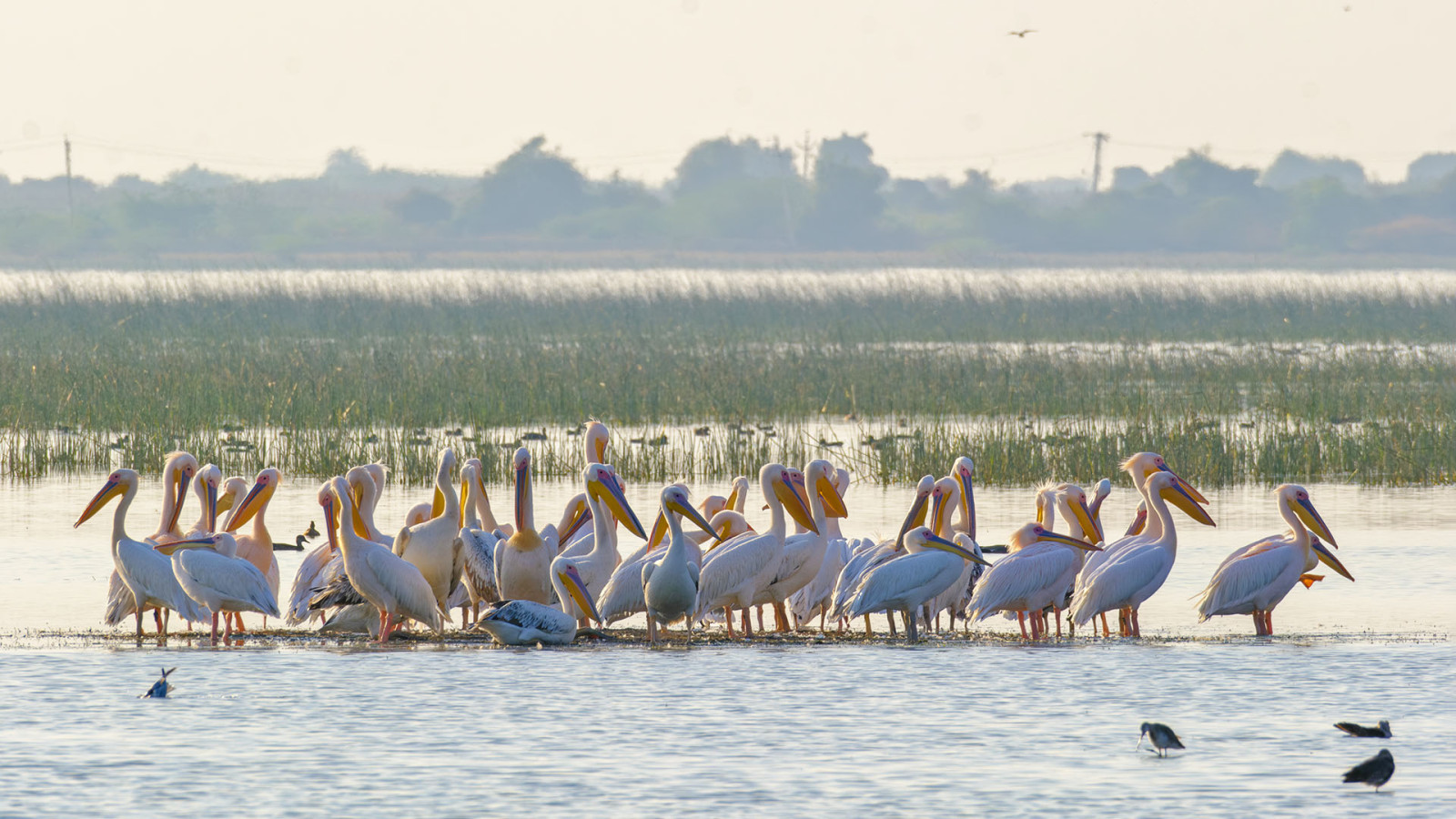
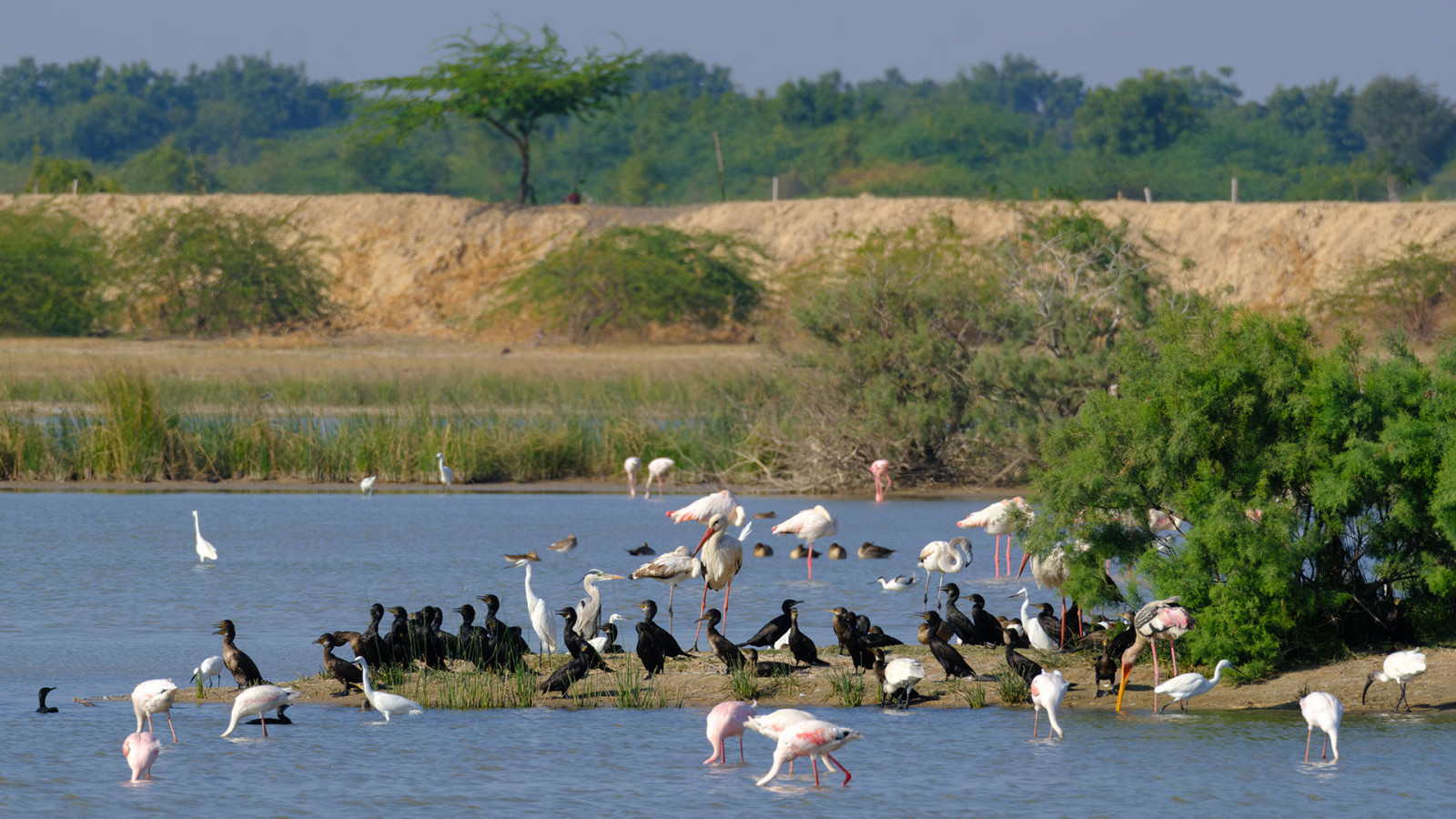
The Little Rann of Kutch (or Little Rann of Kachchh) is a crucial site on the migration route of various avian species and is a paradise for birdwatchers, especially during the winter months. Over 350 species of birds have been recorded in and around the sanctuary. Water birds include large numbers of Greater Flamingo and Lesser Flamingo, Dalmatian Pelican, Great White Pelican, Common Crane, Demoiselle Crane and various species of ducks and waders.
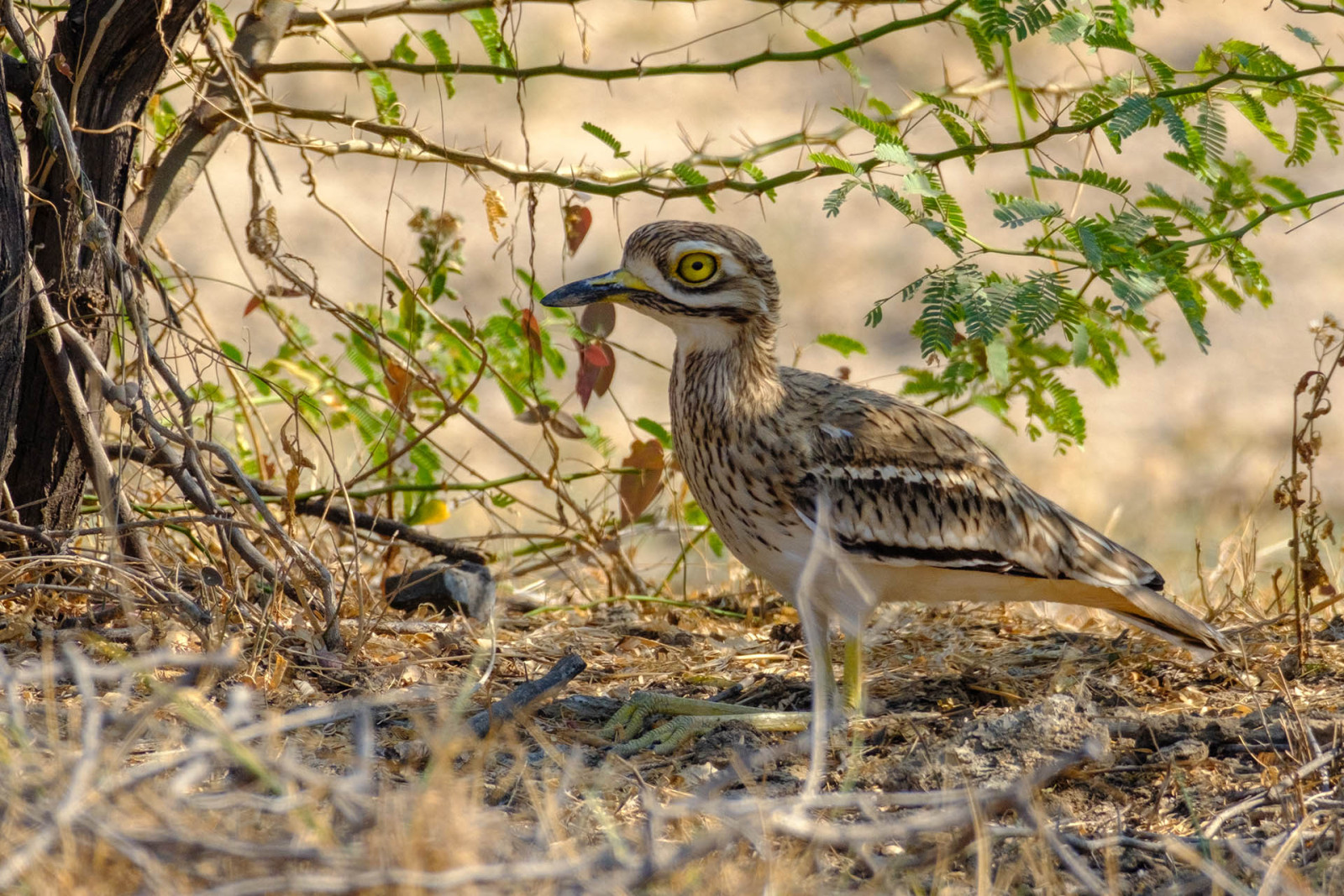
The Rann is a significant wintering ground for birds of prey. Species like the Imperial Eagle, Greater Spotted Eagle, Tawny Eagle, Short-toed Snake Eagle, Pallid Harrier, and Peregrine Falcon are frequently sighted. And the scrub and dry areasof the Rann are also good for terrestrial birds such as White-browed Bushchat, Indian Courser, Cream-coloured Courser, Chestnut-bellied Sandgrouse and various species of larks, pipits, wheatears and quails.
The Little Rann of Kutch is also the only place where the Indian Wild Ass (Equus hemionus khur), a rare subspecies of the Asiatic wild ass, can be found.
Detalles
Accesso
The best way to explore the vast expanse of the Little Rann of Kutch is via an open jeep safari with an experienced local guide, as the terrain is challenging. The ideal time for birding is between November and February. During this period, the climate is pleasant, and the water levels in the creeks and wetlands are optimal, drawing immense numbers of migratory birds from the Himalayas, Central Asia, and Europe.
Terreno y habitat
Árboles y arbustos dispersos , HumedalCondiciones
Plano , Arenoso , Pantanoso , Resbaladizo , Sin sombra , Paisaje abierto , PolvorientoCamino circular
No¿Se necesita telescopio?
SíBuena época para el avistamiento de aves
Primavera , InviernoMejor momento para visitar
InviernoRuta
Camino sin asfaltarCamino difícil de andar
FácilAccesible vía
CocheEscondite de observación / plataforma
NoInformación extra
Early mornings and late evenings offer the best opportunities for sightings when birds are most active. Dress in layers, as temperatures can vary significantly between day and night. Use a hat, sunglasses, and sunscreen to protect from the strong sun.


 ) insertar los nombres de aves en tu propio idioma. ¡Los nombres de las aves serán traducidos automáticamente para otros usuarios!