

Beschreibung
Lochwinnoch wetland is a mixture of broadleaved woodland, open water and marshy areas with some floating fen. In Spring Haubentaucher perform their courtship rituals. Schilfrohrsänger and Feldschwirl can be heard singing from the wetter areas of the reserve. Also Fitis, Zilpzalp, Gartengrasmücke, Mönchsgrasmücke, Klappergrasmücke and Dorngrasmücke in the woods. Wasserralle can be heard squealing from the reedbed areas.
In Autumn you can see large gatherings of Rauchschwalbe, often roosting in the wetland vegetation, preparing for their long southward journeys. Flocks of Rotdrossel and Wacholderdrossel arrive to strip the trees of their wild fruits. Look up and you might catch sight of mixed flocks of tits, Wintergoldhähnchen and Waldbaumläufer in the woodland.
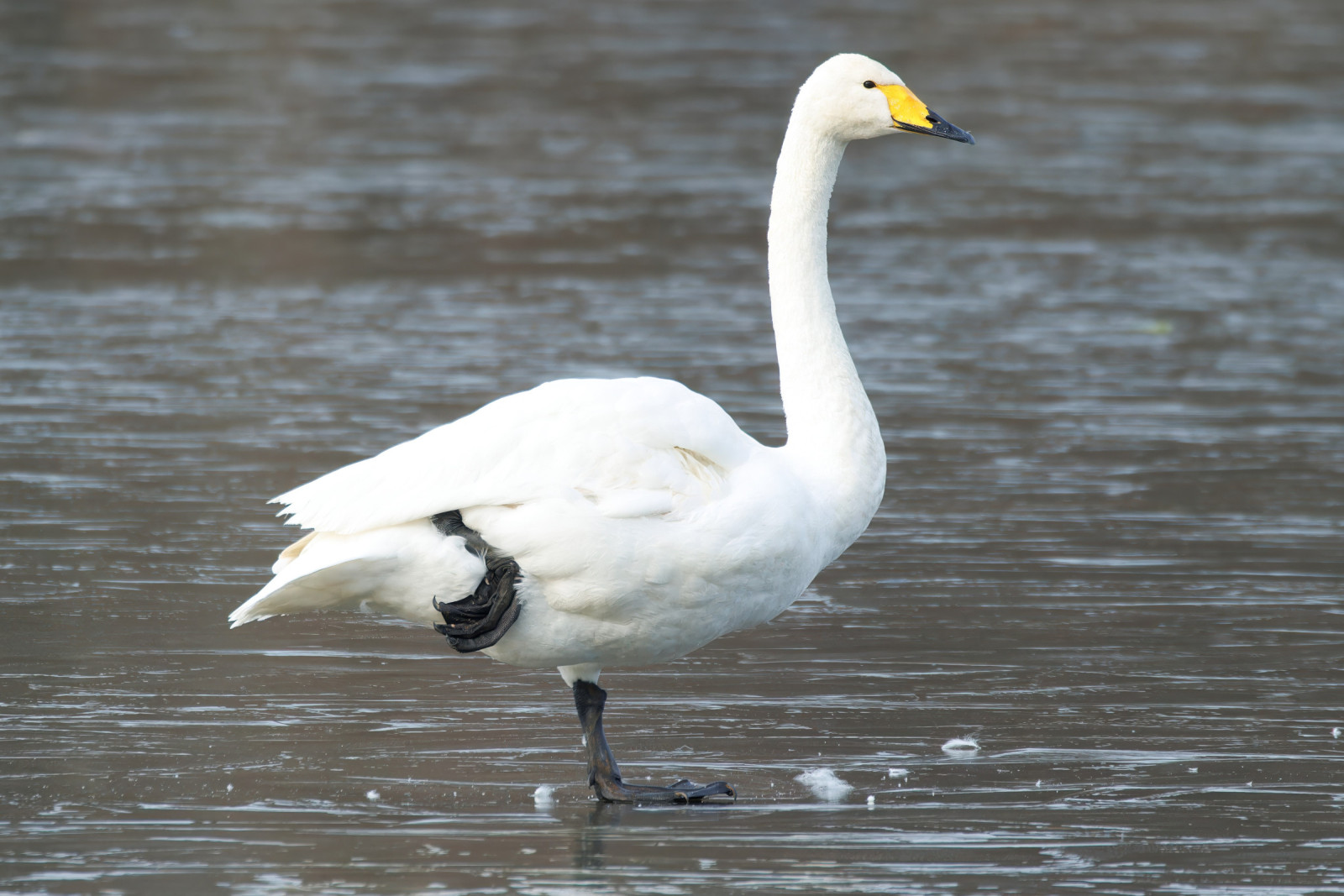
In Winter a wide variety of ducks arrive along with variable numbers of Singschwan. At this time of year there are frequent sightings of Kornweihe and other birds of prey. Eisvogel are present, often affording excellent views.
Kiebitz and Bekassine are seen regularly on the scrape built behind the visitor centre, which can be viewed from inside, including from the viewing tower upstairs. The scrape also attracts Uferschnepfe and other waders, such as Rotschenkel, Alpenstrandläufer, Großer Brachvogel, Sandregenpfeifer, Regenbrachvogel and sandpipers. Lachmöwe breed on the floating platforms on Aird Meadow. On the south side of the area Barr Loch also attracts good numbers of Haubentaucher, ducks and swans.
Details
Zugang
By train: Lochwinnoch railway station is situated 400 metres south-east of the visitor centre.
By bus: Nearest bus stops are on the A737 at Roadhead roundabout (at grid reference: NS 350 586, 750 metres south-east of the reserve entrance) and on the A760 at Newton of Barr (at NS 366 577, 1.2 km north-west of the entrance).
By bike: National Cycle Route 7 runs through the reserve, adjacent to the A737.
By road: The reserve is located 18 miles south-west of Glasgow, beside the A760 Largs Road, which is off the A737 Irvine Road (easily reached from the M8 at Junction 28A). Car parking facilities are available.
There is a visitor centre and different hides and trails to explore the area.




 ) Tragen Sie die Vogelnamen in Ihrer Sprache ein. Sie werden automatisch für andere Nutzer übersetzt!