Beschreibung
Similar to the Inn floodplains at Bever, the floodplains between Samedan and Celerina lie in a wide mountain valley at 1,700 m in the Upper Engadin.
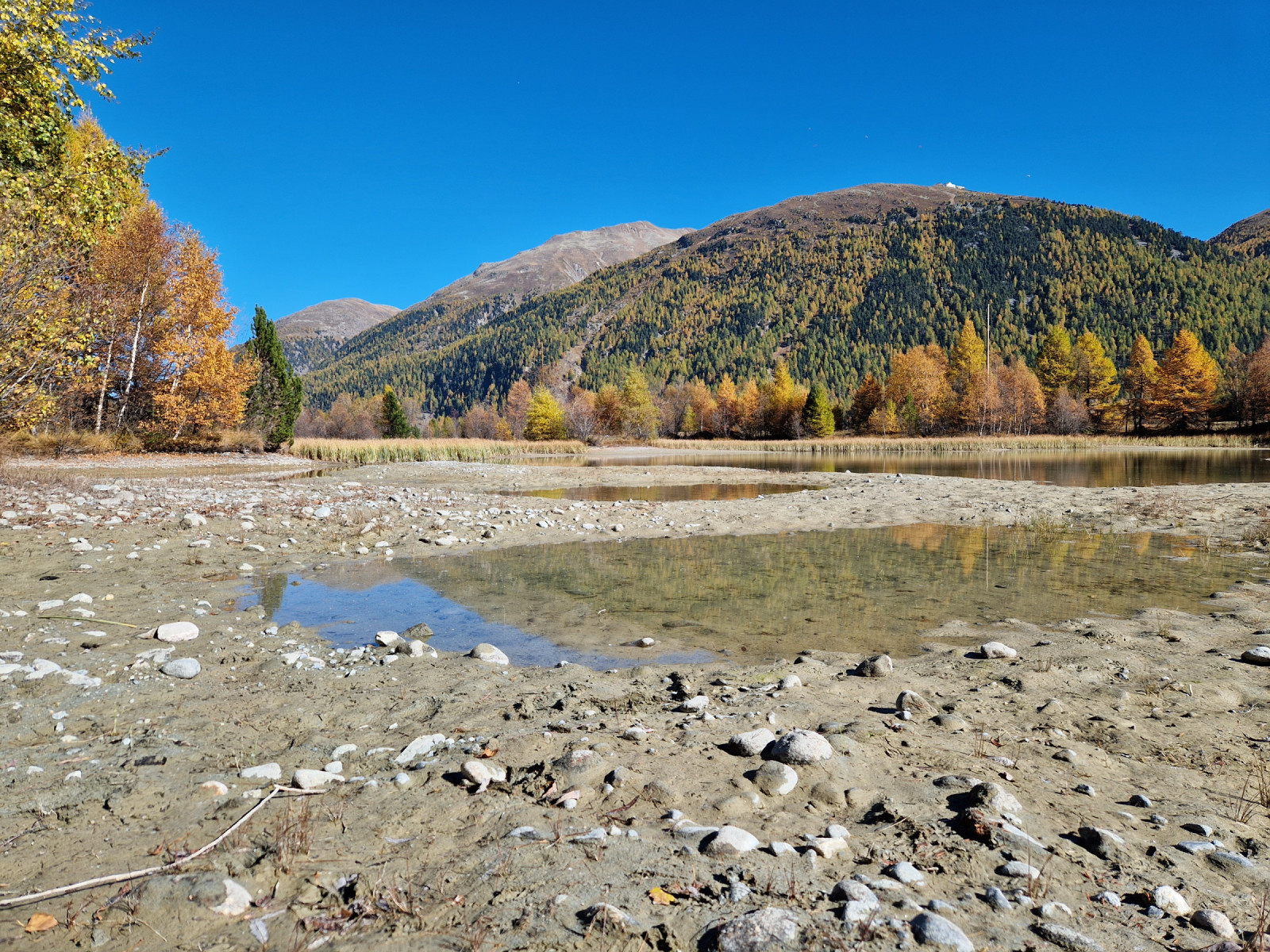
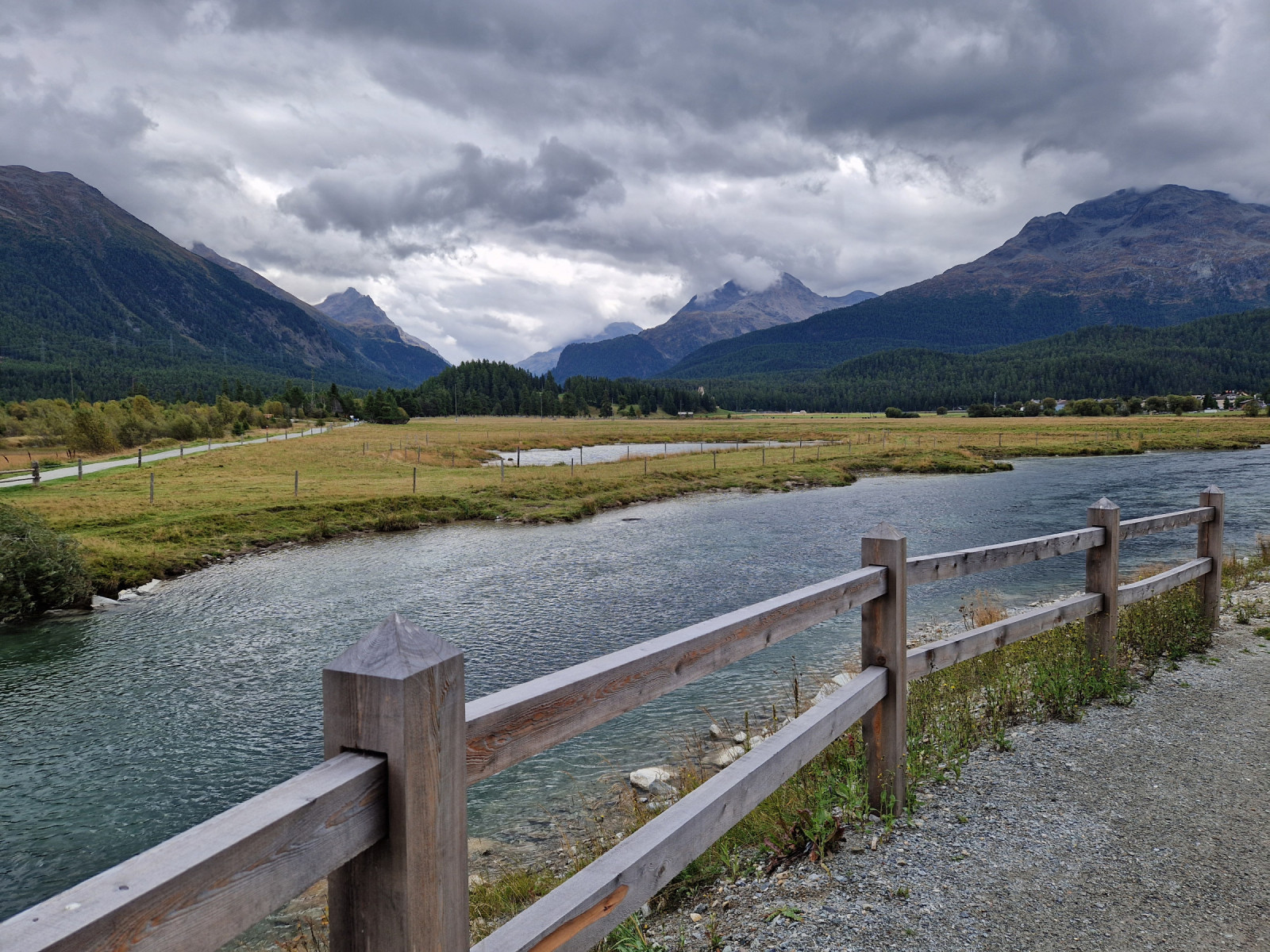
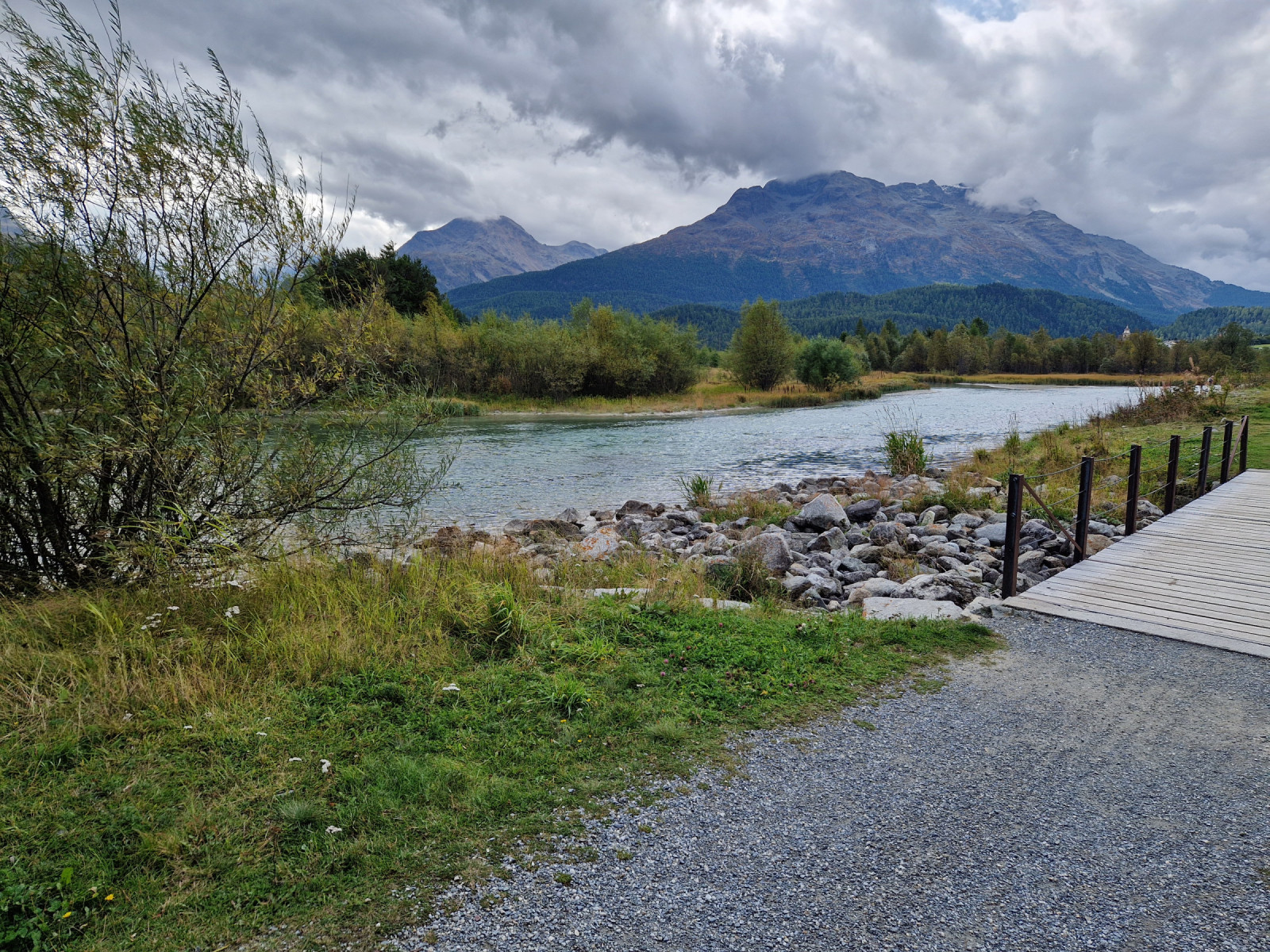
The route first leads through fields and a horse paddock dotted with trees (1). From the viewpoint, there’s a good view of the golf course—larger than the wetlands themselves—and it may be worth scanning briefly with a scope. Next come shallow ponds (2) where the Eisvogel often hunts, and where resting ducks and waders are likely to be found. The surrounding bushes offer stopover sites for songbirds. On the way back, ducks, Gebirgsstelze, and Wasseramsel can be observed along the Inn (3). Towards Samedan (4), the river’s varying flow speeds and oxbow channels form a mosaic of habitats with shallow and deep waters, sandbanks, and deadwood. The redesigned riverbanks serve as orientation landmarks for migrating songbirds.
The mix of trees, shrubs, and extensively grazed meadows provides breeding grounds for Alpenbirkenzeisig, Gartenrotschwanz, Neuntöter, Klappergrasmücke, and Braunkehlchen. The aquatic habitats are among the few in Switzerland where the Reiherente breeds. Wasseramsel, Wasserralle, and Zwergtaucher have also nested here.
Of the roughly 180 species recorded, most appear during migration. In spring, when bad weather hits the Alps, the trees and bushes fill with resting songbirds. Autumn also offers some opportunities. Nachtigall, Ortolan, and Blaukehlchen are seen occasionally, while the sighting of a Zwergschnäpper remains exceptional. Wiesenschafstelze and Wiesenpieper are noted regularly, and even a Rotkehlpieper once appeared. Among the foraging Rabenkrähe, a Nebelkrähe or hybrid may be spotted.
Regular waders include Bekassine, Kiebitz, and Waldwasserläufer, with Bruchwasserläufer and Kampfläufer more rarely. The record of a Doppelschnepfe shot in 1973 remains unique.
Other rarities include a Mantelmöwe shot in 1920, a Maurensteinschmätzer seen (and surviving the observation) in 1985, and more recent sightings of Schneeammer, Weißbart-Seeschwalbe, and Rötelschwalbe.
Details
Zugang
The area is best reached from Celerina train station, but can also be accessed from Samedan train station. It is also located on a popular bike trail.
A tip for train travellers from Celerina: the station has only one platform, and the train to St. Moritz usually arrives first. It then waits for the train to Chur to arrive. Only after the train to St. Moritz has departed can you cross the tracks to board the train to Chur.


 ) Tragen Sie die Vogelnamen in Ihrer Sprache ein. Sie werden automatisch für andere Nutzer übersetzt!