

Beschreibung
The area around Horn kyrka is a quite good site for geese with hundreds of Saatgans, Graugans, and Kanadagans found most years. Often with lesser amounts of Bläßgans, Tundrasaatgans, Kurzschnabelgans, and Weißwangengans interspersed. Ringelgans has been seen. Most geese are found by Rien (marked with a star on the map) in late Febuary and March.
During the spring Riens water overflow and large amounts of open water form. When this happens large amounts of Stockente (at most 200), and Krickente (at most 150) rest in the area. Among these ducks you can observe smaller amounts of Pfeifente, Schnatterente, Pfeifente, Spießente (uncommon), Löffelente (uncommon), and Knäkente (rare). Sometimes also some diving ducks. But since water levels vary each spring the amount and variation of ducks at Rien vary accordingly. The wetland at Hornebergs holds permanent water, and usually some dabbling ducks, but not in the same amount. Horn Marsh along with its ponds is also quite good for small amounts of different dabbling ducks.
Diving ducks are most usually found in Åsunden with Gänsesäger, Reiherente, Schellente being common, while Mittelsäger and Zwergsäger are uncommon. At Trossbonäs rare diving ducks like Trauerente, and Samtente can be found with luck in April. Even Eiderente and Bergente have been seen there.
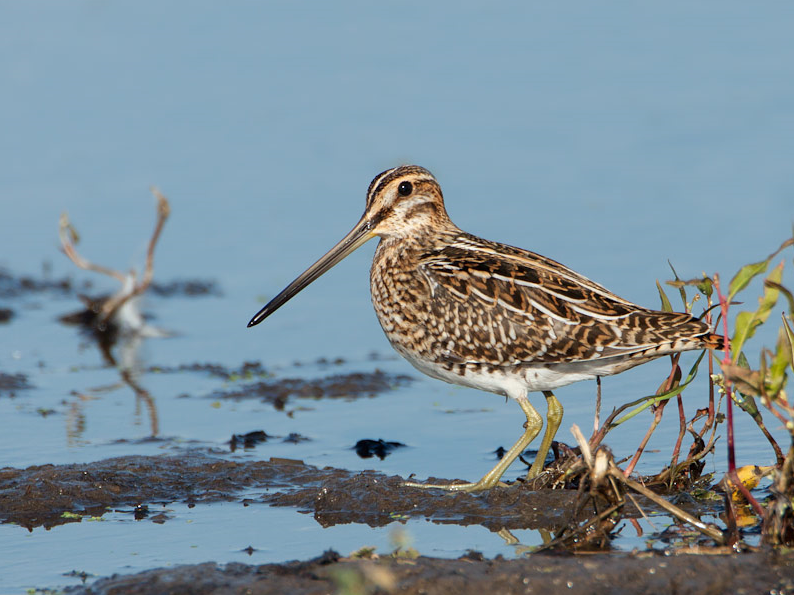
In spring if Rien has water in late April waders rest there. Bruchwasserläufer, Waldwasserläufer (at most 23), Kiebitz, and Bekassine (at most 100). On the fields Goldregenpfeifer, at Åsunden Flußuferläufer sing, and in the forests Waldschnepfe can be found. During heavy autumn rain Rien can gain enough water for waders such as Grünschenkel, Kampfläufer, Alpenstrandläufer, Großer Brachvogel, Sandregenpfeifer, and Sichelstrandläufer. The fields around Bränna and Västa eneby are pretty good areas for Zwergschnepfe in November.
Among predatory birds Turmfalke, Mäusebussard, Wespenbussard, Raufußbussard, Seeadler, Sperber, Habicht, Fischadler, Baumfalke and Kornweihe are all common. Steinadler, Merlin, Wanderfalke, and Schwarzmilan are all rare but seen some years. The best places for them are Bränna, Rien, and Åshorva.
Large amounts of passerine birds move along the fields around Horn, therefore large amounts of Bluthänfling, Wiesenpieper, Wiesenschafstelze and other common meadows birds are found along with other rare passerine birds like Blaukehlchen, Ringdrossel, Spornammer (very rare), Schneeammer, and Berghänfling. The best places for these are Bränna and Rien.
The wetland around Rien and Hornsberg have large amounts of reed and trees which make them excellent places for nightactive birds. All the common bird are found some years with Wachtelkönig, Wachtel, Buschrohrsänger, Schlagschwirl, Tüpfelsumpfhuhn, and Feldschwirl. Even Kleines Sumpfhuhn has been found.
Details
Zugang
Horn is located on the southern shores of lake Åsunden. No good parking spots can be found for most of these places but it is often possible to park alongside the road. The area is best explored with bike or car and perhaps not best suited to tourists because there are few facilities for visitors.



 ) Tragen Sie die Vogelnamen in Ihrer Sprache ein. Sie werden automatisch für andere Nutzer übersetzt!