


Beschreibung
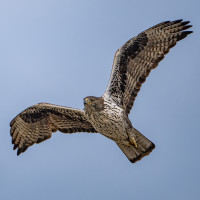
A long cycle route starts here but of more interest to birdwatchers is the convenient c4-5 km circular walk through pine woods to a ridge and back down to the main track. The woodlands hold Berglaubsänger and Haubenmeise, open areas have Zippammer, Zaunammer and Heidelerche and the low scrub a variety of ‘Sylvia’ warblers such as Dorngrasmücke, Samtkopf-Grasmücke and Provencegrasmücke. As with all footpaths beside the A 381 this is a good location to look for raptors particularly in spring and autumn when Zwergadler, Schwarzmilan, Wespenbussard and the odd Schmutzgeier (plus Schwarzstorch) pass through. Schlangenadler (spring-autumn), Gänsegeier , Sperber and Mäusebussard frequently appear but if you're lucky you may spot Habichtsadler or Habicht here. During passage periods expect Bienenfresser and pretty much any small passerine migrant.
Details
Zugang
Take Exit 66 off the A 381 and then the service road south for just under 2km and pull over on to a dirt track on your left to explore the signposted Sendero La Teja Park and follow the paths.
Terrain und Habitat
Wald , Vereinzelte Bäume und Büsche , BergBedingungen
GebirgigRundweg
JaIst ein Spektiv nützlich?
NeinGute Beobachtungszeit
Frühjahr , HerbstBeste Beobachtungszeit
Frühjahrszug , Frühjahr , Herbst , HerbstzugRoute
unbefestigte Straße , Schmaler PfadSchwierigkeitsgrad der Tour
Schwierig/anstrengendErreichbarkeit
zu Fuß , FahrradBeobachtungshütten oder -türme
NeinZusätzliche Informationen
The tracks here provide a variety of 'pan handle' walks from 4 km upwards allowing you to tailor your walk to your individual requirements most of the walks are fairly easy but there are several steep sections. Look out for various orchid species and the local Portuguese Sundew (Drosophyllum lusitanicum) which, unlike sundews in northern Europe, has attractive pale yellow flower making it easy to locate.



 ) Tragen Sie die Vogelnamen in Ihrer Sprache ein. Sie werden automatisch für andere Nutzer übersetzt!