Beschreibung
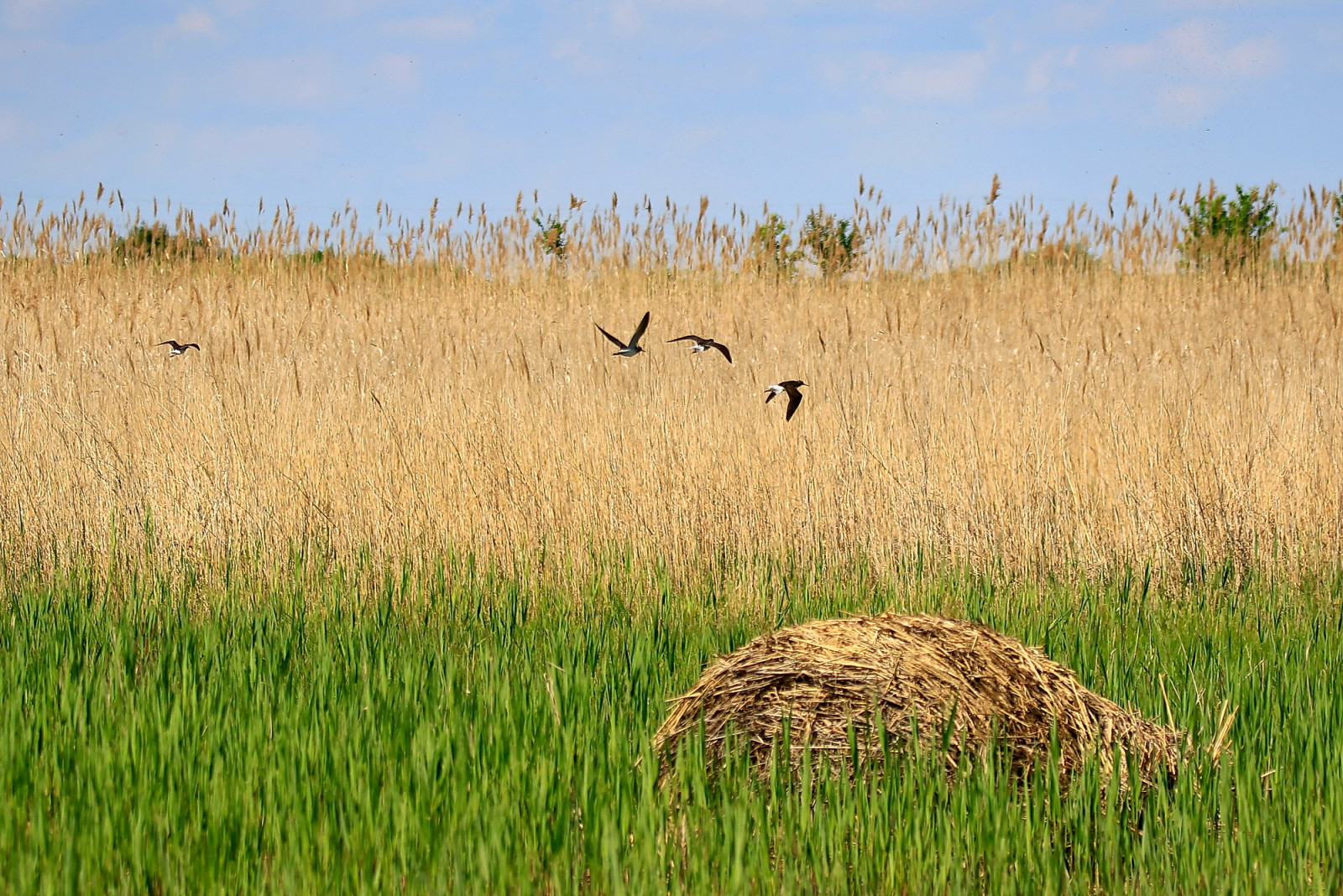
Apart from numerous Weißstorch (about 30 nests in a single village), other birds of include Blaukehlchen, Rohrschwirl, Mariskenrohrsänger (in March, before the arrival of other reed warblers), Feldschwirl, Beutelmeise, Bartmeise, Rohrammer, Neuntöter and Schwarzstirnwürger (in winter replaced by Raubwürger), Wiedehopf, Bienenfresser, Steinkauz, breeding Weißbart-Seeschwalbe (plus Trauerseeschwalbe and Weißflügel-Seeschwalbe on migration), Bruchwasserläufer , Grünschenkel , Dunkler Wasserläufer and other waders, Rohrdommel , Nachtreiher, Sichler, Kuhreiher, Löffler, Moorente.
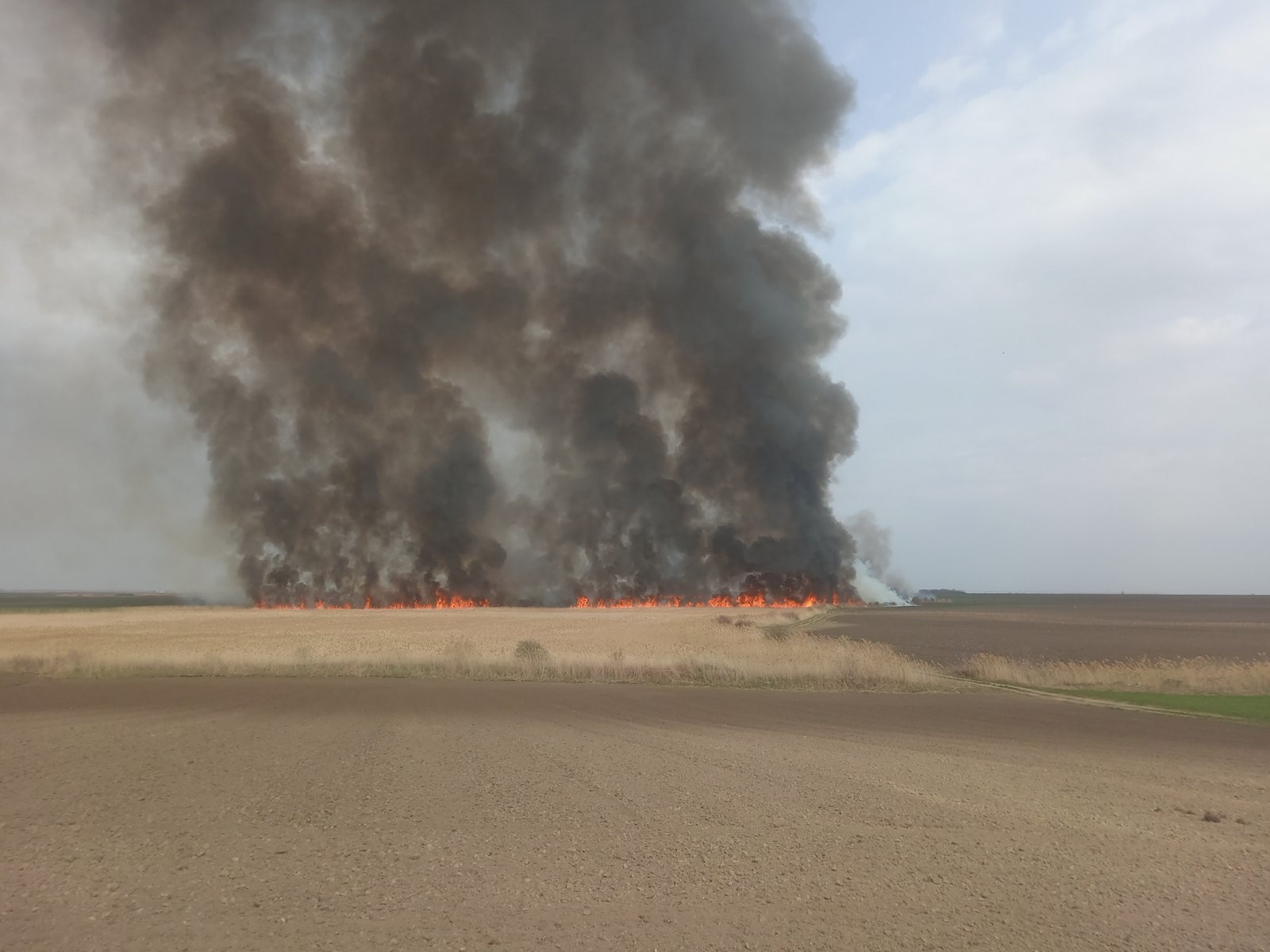
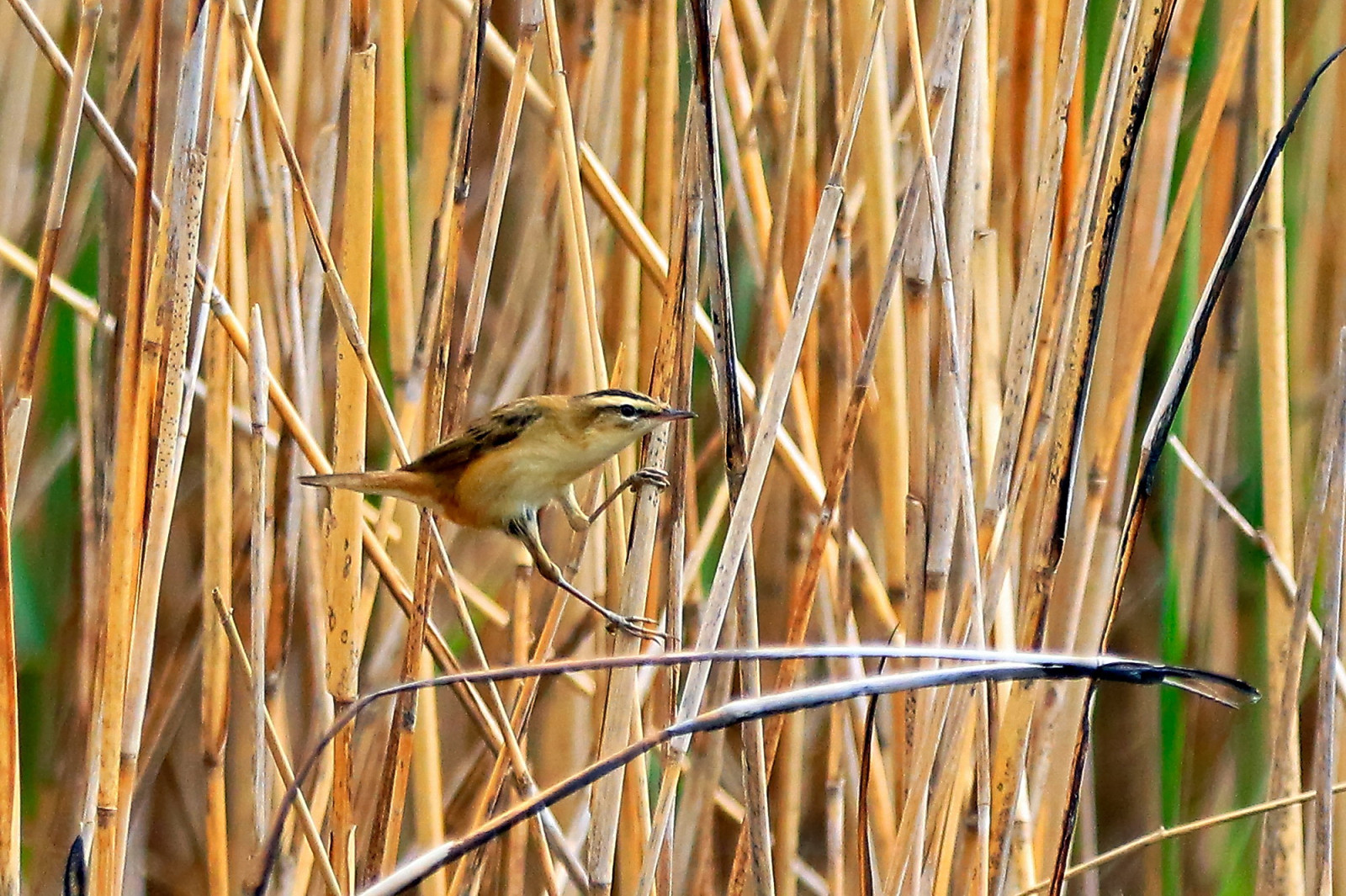
In March 2026, the reedbeds completely disappeared in flames. Only one Moustached Warbler remained singing from a surviving tussock of reeds, the only one. The locals claim that reeds are being burned intentionally because the terrain is being prepared for investment.
These salt marshes are threatened with conversion into a solar power plant! If the "development" plan were to come true, 3,800 hectares of rare salt marsh habitats would be permanently damaged. Over 200 strictly protected species of animals and plants, of which 185 species of birds, have been recorded in this area. Of the total recorded species of birds, 77 of them are in the Red Book of Birds of Serbia (Radišić et al., 2018), 29 are protected and further 153 are strictly protected species, 175 species are on the annexes of the Berne Convention, and 105 species are on the annexes of the Birds Directive.
Photos by Ceda Vuckovic, Josip Saric, Sever Nagulov, Aleksandar Topalov and Dragan Simic.
Details
Zugang
When you reach the main village junction in Baranda (1), marked by traffic lights, turn northeast and leave the village behind.
For the main lakes west of the road (2) you need permission from the fish farm manager; the management building is the last one on the right hand side (3). Lately, they do not seem very keen to see visitors. I hope that attitude will change, but that is the reason more to act responsibly.
But for the salt marshes east/right of the road (4) you are off the hook and may explore freely (carry plenty of water on hot days). The turn off (the southern "P") is not marked and can be hard to spot. It is in the first bend in the asphalt road north of Baranda, where a dirt track goes right between arable fields towards an ancient kurgan (the highest point in a flat landscape). For driving directions, zoom in on the map and click on the "P" (parking) sign.
The dirt track is rarely passable for ordinary cars, and the marshes are best seen on foot. Strategically erected at the best birding spot, the watchtower has no stairs but a very steep ladder.
Terrain und Habitat
Feuchtgebiet , See , Schlammflächen , Landwirtschaft , Schilfflächen , Vereinzelte Bäume und BüscheBedingungen
Flach , Kein Schatten , Offene Landschaft , StaubigRundweg
NeinIst ein Spektiv nützlich?
Möglicherweise hilfreichGute Beobachtungszeit
GanzjährigBeste Beobachtungszeit
Winter , Frühjahrszug , Herbstzug , FrühjahrRoute
Normaler Weg , unbefestigte StraßeSchwierigkeitsgrad der Tour
DurchschnittlichErreichbarkeit
zu FußBeobachtungshütten oder -türme
JaZusätzliche Informationen
Also, the salt marshes are “the hunting ground of the local hunting club. Therefore, primarily for your safety, and also so that the locals know that you are not poachers, in autumn/winter you must announce your arrival. If you arrive early in the morning or at dawn, announce your arrival the day before. The phone number is 060 0879805 (Aleksandar Veselinov).”


 ) Tragen Sie die Vogelnamen in Ihrer Sprache ein. Sie werden automatisch für andere Nutzer übersetzt!