.JPG)
.JPG)
.JPG)
Beschreibung
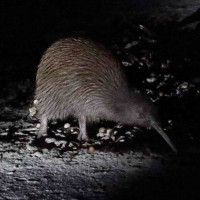
Mason Bay and its 14km long beach on the Western side of Rakiura is so scenice that even Southern Brown Kiwi ventures out during the day. Beautiful dunes and heathland, a small stream, nearby forest, and wetlands make this a truly special place.
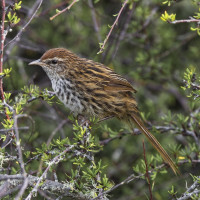
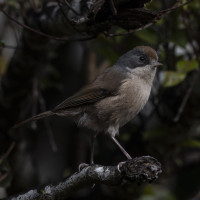
Both during the day and at night, you have good chances to see Southern Brown Kiwi around Mason Bay Hut, along the tracks, and even right on the beach. Rakiura is the last refuge of the Southern subspecies of the New Zealand Dotterel, which breeds only in the island's mountains. In the non-breeding season, especially from February to April, most of the small remaining population gathers at Mason Bay and the stonefields behind the dunes. So a trip to Mason Bay is your best chance to spot these little waders. Also typically present are Double-banded Plover and oystercatcher, and terns hunting over the bay, with seabirds visible offshore. The Stewart Island subspecies of the Mātātā New Zealand Fernbird is common in many areas around and you most certainly run into some if you take the track to Freshwater Bay.
Details
Zugang
Mason Bay is very remote on the Western side of Rakiura Stewart Island with access by small aircraft or multi-day hike. You can stay overnight at the Mason Bay Hut. One popular option is take a plane in from Invercargill or Oban, which lands on the beach, and then walk out to Freshwater Bay, where you can get picked up by boat (times are tide dependent). This can also be combined with a stay at Mason Bay Hut or you can get picked up at th. Another option is to fly in and out with an overnight stay at the hut.
Both the North West Circuit (10+ day hike) and the Southern Circuit (4-6 day hike) go via Mason Bay.
It is important to note that parts of the tracks can be flooded at any time of the year and mud is present year round regardless of recent rain levels.
 Dotterel - Charadrius obscurus.jpg)

 ) Tragen Sie die Vogelnamen in Ihrer Sprache ein. Sie werden automatisch für andere Nutzer übersetzt!