
Beschreibung
Kiesgrube Rehbach offers great observation possibilities because the lake contained in the gravel pit is sunken in and thus, the edges of the gravel pit are elevated.
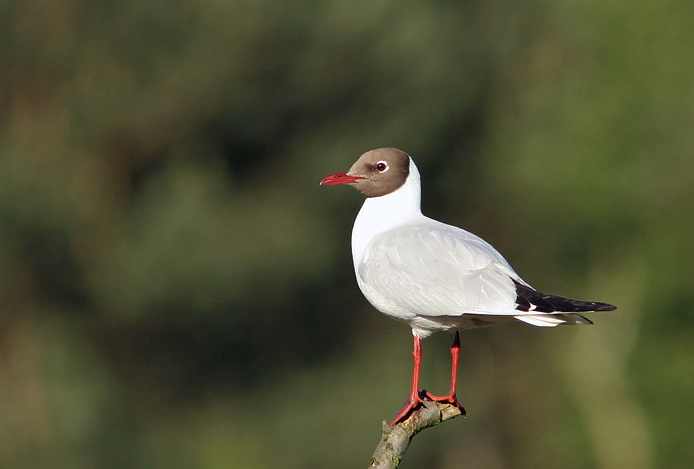
There are two islands within this lake that contain a large colony of Lachmöwe, often intermingled with a handful of Schwarzkopfmöwe during the breeding season. The lake is also home to a range of birds within the Laridae family such as Sturmmöwe, Flußseeschwalbe and Trauerseeschwalbe as well as waterfowl like Graugans, Nilgans, Kolbenente and Bläßhuhn. During the winter, the lake as well as the surrounding fields host large numbers of wintering geese like Bläßgans and Tundrasaatgans, and occasionally even rarer geese species such as Weißwangengans and Rothalsgans.
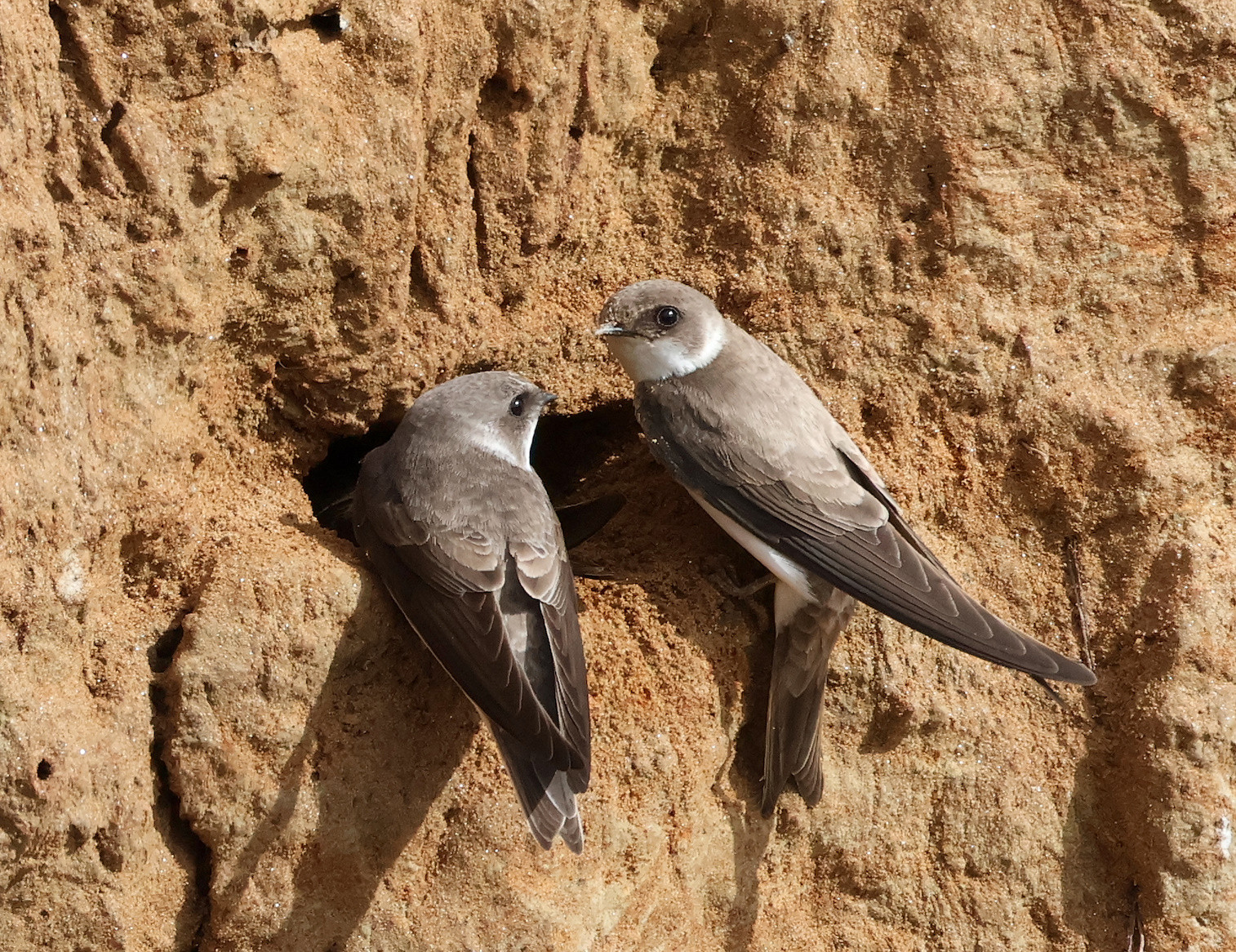
The walls of the gravel pit are home to a colony of Uferschwalbe.
Details
Zugang
Kiesgrube Rehbach is located just a few hundred meters south of the village of Rehbach (west of the Leipzig district of Knauthein). It is possible to get there by car and park at the entrance of the village. Press P on the map for directions to a parking. Note, however, that this particular parking spot only offers space for two or three cars. For this reason, and in general, it is recommended to come by bike (e.g. from Zwenkauer or Cospudener See, which also offer great birding opportunities). It is also possible to come here by bus (line 63 to "Rehbach (Leipzig)", but it just connects sporadically).
The main observation spot is at the Northern edge of the gravel pit. OPTIONALLY, it is also possible to walk down into the pit and take a short tour there and into an adjacent bushy and foresty area. If you decide to walk down there, it is recommended to wear sturdy shoes and to be good on your feet due to the steep and rocky descent (marked with a "1" on the map). Similarly, on the Eastern side, there is another steep descent, although more muddy than rocky (marked with a "2" on the map).
Terrain und Habitat
Wald , Vereinzelte Bäume und Büsche , Grasland, Wiesen , Plateau , SeeBedingungen
Flach , Hügelig , Kein SchattenRundweg
NeinIst ein Spektiv nützlich?
Möglicherweise hilfreichGute Beobachtungszeit
GanzjährigBeste Beobachtungszeit
Winter , Frühjahr , Frühjahrszug , HerbstzugRoute
Normaler WegSchwierigkeitsgrad der Tour
DurchschnittlichErreichbarkeit
zu Fuß , FahrradBeobachtungshütten oder -türme
NeinZusätzliche Informationen
Beware: this is an active gravel pit with the risk of breaking-off edges. The drop would be several meters (approximately 15-20 meters), so please be careful. This would of course not only be harmful to observers, but also to the colony of Uferschwalbe that nest at the Northern wall of the pit and potentially below the break-off.
And as mentioned above: If you decide to walk down into the pit, it is recommended to wear sturdy shoes and to be good on your feet due to the steep and rocky descent.



 ) Tragen Sie die Vogelnamen in Ihrer Sprache ein. Sie werden automatisch für andere Nutzer übersetzt!