

Beschreibung
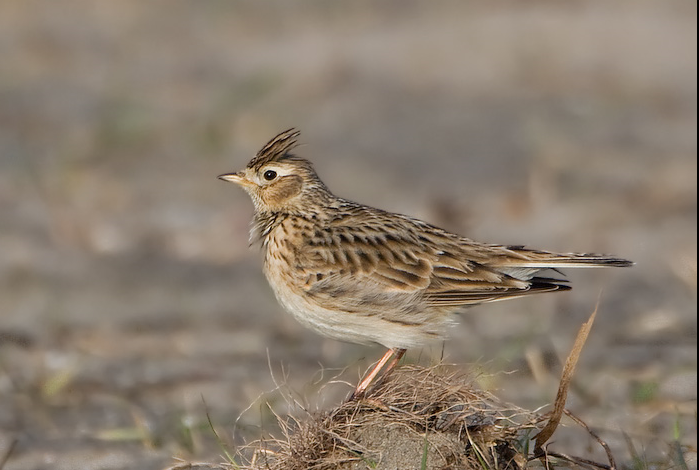
With its width the area offers an impressive contrast to the city landscape of Berlin. The nature reserve and its surroundings hold a good population of Steinschmätzer. In recent years also some pairs of Feldlerche, Dorngrasmücke and Bluthänfling were recorded. The increasing settlement pressure has probably led to the disappearance of Grauammer and Neuntöter as breeding birds but there are still regular records. Around the area of the campus to the south, there were still isolated territories of Haubenlerche and even Brachpieper in recent years.
Details
Zugang
The area can be circumnavigated in about one hour on an paved and elevated circular trail. There are parking spaces at various locations and the S-Bahn station Adlershof is within walking distance (about 20 minutes).
Terrain und Habitat
Vereinzelte Bäume und Büsche , Grasland, Wiesen , Ebene , Stadt/DorfBedingungen
Flach , Kein SchattenRundweg
JaIst ein Spektiv nützlich?
NeinGute Beobachtungszeit
FrühjahrRoute
Normaler WegSchwierigkeitsgrad der Tour
EinfachErreichbarkeit
Fahrrad , zu Fuß , RollstuhlBeobachtungshütten oder -türme
NeinZusätzliche Informationen
You should allow some time to stroll around the southern campus of the Humboldt University. Architecturally, the area around the Aerodynamic Park is particularly worth a visit; ornithologically, the ever decreasing open spaces are of particular interest. Keep an eye (and ear) open for Haubenlerche, Brachpieper, Grünspecht, Nachtigall or Dorngrasmücke.


 ) Tragen Sie die Vogelnamen in Ihrer Sprache ein. Sie werden automatisch für andere Nutzer übersetzt!