


Beschreibung
Måstrup Mose is an old peat extraction site that was particularly active in the first half of the 20th century. The area has since been converted into a natural area with forest, marshland, ponds, and meadows. The area is private forest, but there is public access. However, please note the signs with rules for access to the area (in Danish)! Access to the area is via paths and narrow trails. However, some trails can be quite overgrown, so not all parts of the area are equally accessible. There is also reed growth at the edge of some of the ponds. In addition to birds, mammals such as red deer, roe deer, and red foxes can be seen.
Overall, the area is a good place to observe waterfowl, birds of prey, and passerines. In and around the ponds, species such as Singschwan, Graugans, Brandgans, Schellente, Reiherente, Stockente, Krickente, Zwergtaucher, Wasserralle, Teichhuhn, Bläßhuhn, Waldwasserläufer, Bekassine, Graureiher, and Eisvogel can be seen.
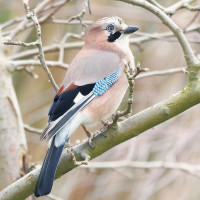
Other notable species in the area include Kranich, Waldschnepfe, Ziegenmelker, Sperber, Habicht, Rotmilan, Mäusebussard, Grünspecht, Buntspecht, Turmfalke, Neuntöter, Eichelhäher, Kolkrabe, Tannenmeise, Haubenmeise, Sumpfmeise, Heidelerche, Feldlerche, Sumpfrohrsänger, Waldlaubsänger, Fitis, Zilpzalp, Mönchsgrasmücke, Dorngrasmücke, Wintergoldhähnchen, Waldbaumläufer, thrushes, Baumpieper, Buchfink, Gimpel, Alpenbirkenzeisig, Fichtenkreuzschnabel, Erlenzeisig, Rohrammer, and Goldammer.
Details
Zugang
Måstrup Mose is located approximately 17 km northwest of Frederikshavn and approximately 18 km northeast of Hjørring. There are no designated parking spaces, so if you arrive by car, you will have to park at the side of the road. The same applies to bicycles. However, you can only enter the area on foot. The further you go into the area, the more overgrown the paths become, which means that not all areas are easily accessible.
Set aside a few hours for a visit, as the area can be difficult to navigate and you may risk getting a little lost. It is therefore recommended that you bring a navigation tool. The area is fantastic if you want a break from busier areas, as it is not particularly well-visited. The only sounds are those of nature around you.
Terrain und Habitat
Wald , Feuchtgebiet , TeichBedingungen
SumpfigRundweg
JaIst ein Spektiv nützlich?
NeinGute Beobachtungszeit
GanzjährigBeste Beobachtungszeit
Sommer , WinterRoute
Schmaler Pfad , Normaler WegSchwierigkeitsgrad der Tour
DurchschnittlichErreichbarkeit
zu FußBeobachtungshütten oder -türme
JaZusätzliche Informationen
Please pay attention to the signs with rules for access to the area (in Danish), as this is a private forest! The signs explain where you are allowed to walk, when you are allowed to be in the area, how close to private property you are allowed to go, how to respect flora and fauna, smoking rules, etc.
Access is at your own risk!
Furthermore, experience shows that the area is densely populated with ticks. If you want to avoid ticks as much as possible, stick to the paths that are less overgrown and wear clothing that covers as much of your body as possible. Regardless, be sure to thoroughly check your body for ticks after your visit.


 ) Tragen Sie die Vogelnamen in Ihrer Sprache ein. Sie werden automatisch für andere Nutzer übersetzt!