

Beschreibung
Lake McLarty, a freshwater lake, is an integral part of the Peel-Yalgorup System, and is included on the List of Wetlands of International Importance. It is a key birding location. Each year the lake fills in winter and gradually dries over summer resulting in an ever-changing suite of birds.
Unfortunately the lake's mudbeds are annually being encroached onto by grasses, making it a less attractive site for migratory shorebirds that had occasionally previously arrived in the 1000's. Nevertheless on a 'good day' Lake McLarty can be very productive.
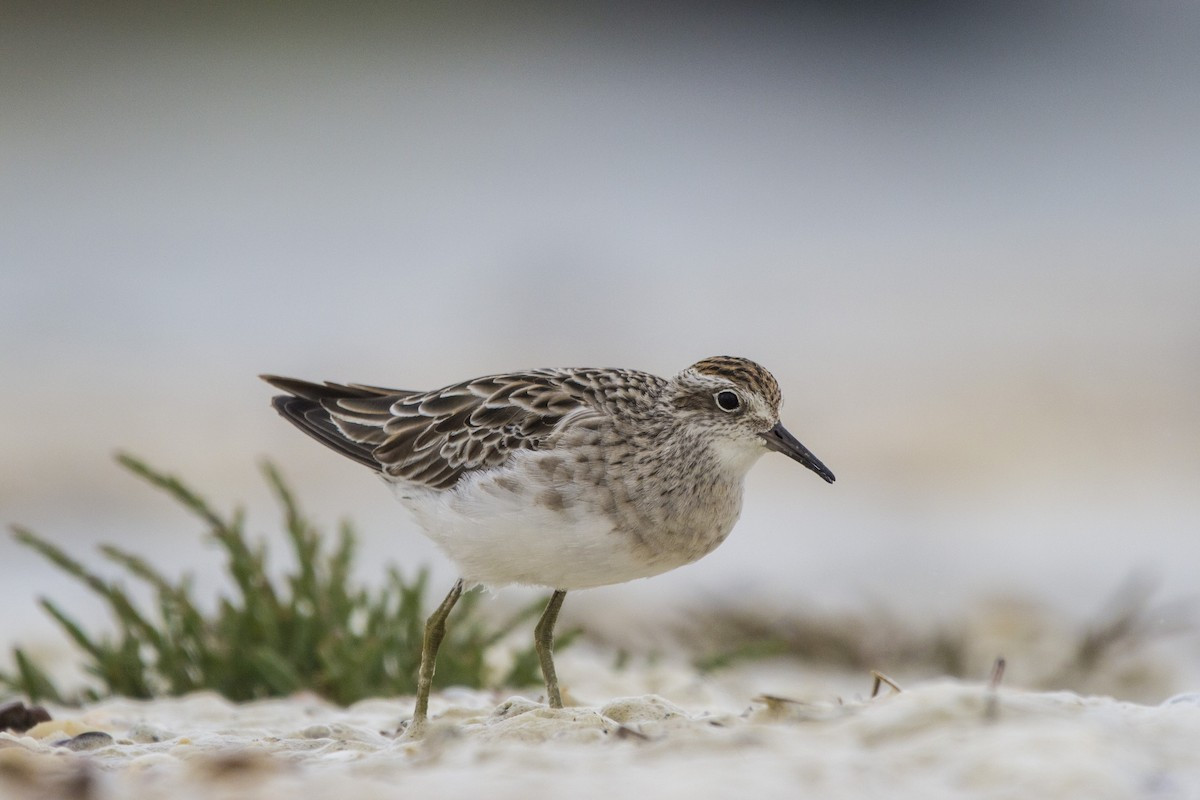
All three SW crakes can be found here; Spotless Crake, Australian Spotted Crake and Baillon's Crake. Migratory shorebirds include Sharp-tailed Sandpiper, Long-toed Stint and Marsh Sandpiper. Waterfowl will be in abundance during a good winter wet season and a good range of bushbirds is always present in the trees and bushes on the lake margins.
The lake also occasionally turns up rarities, which have included: Franklin's Gull, Eastern Yellow Wagtail, Ruff and Baird's Sandpiper.
Details
Zugang
From Perth travel 100 km south along the Kwinana Freeway and Forrest Highway to reach Mills Road. Turn east onto Mills Road for 5 km to reach Lake McLarty. Press P on the map to access Google mapping.
Lake McLarty is easily accessed on the west side via an unlocked gate. The entry point on the south side, off Mills Road, is less formal and requires a bit of scrambling - if you use this access take note of your entry point on to the lake as it may not be obvious when you return.
Rubber boots are usually essential in order to bird this site effectively.


 ) Tragen Sie die Vogelnamen in Ihrer Sprache ein. Sie werden automatisch für andere Nutzer übersetzt!