

Description
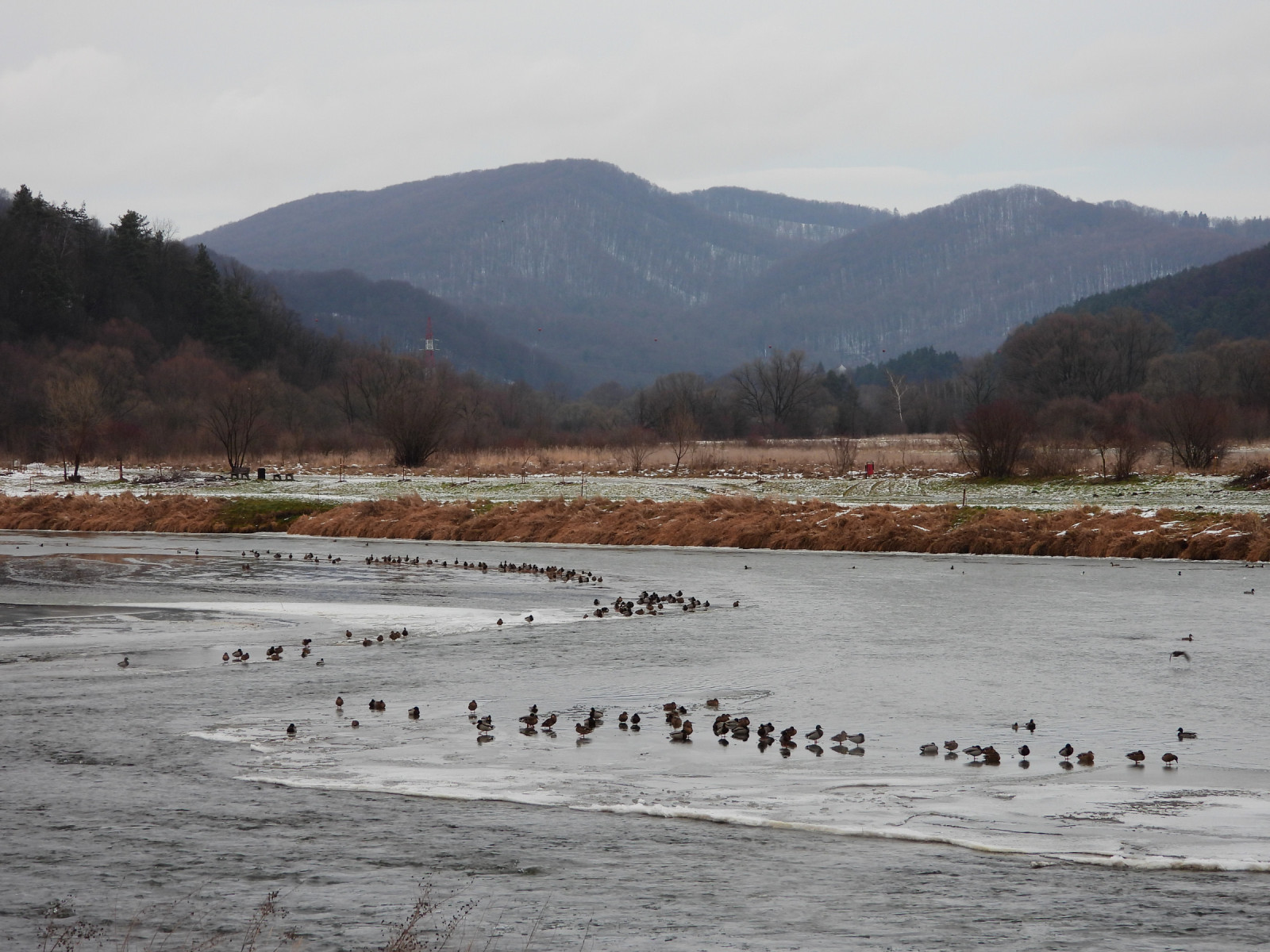
The San is one of the lesser-known rivers of Poland. Yet, it's one of those that haven't been changed and regulated as much as larger and more widely known rivers. It's home to ~30 species of fish (i.e. nase, common barbel, river trout) that provide sufficient diet base for many species of piscivorous birds.
In case of river/water biotope-dependant species, year-round, there can be found many Gråand,, Hættemåge, Kaspisk Måge, Isfugl, Fiskehejre and Sølvhejre. There is a good chance to see some Knopsvane, Krikand, Stor Skallesluger, Rørhøne, Blishøne, Lille Præstekrave, Mudderklire, Stormmåge, Fjordterne, Havørn, Hvid Vipstjert, Bjergvipstjert and Kærsanger during spring and summer.
Some species that can be seen time to time or during migrations are: Grågås, Atlingand, Skeand, Knarand, Pibeand, Spidsand, Taffeland, Hvidøjet And, Troldand, Hvinand, Lille Lappedykker, Toppet Lappedykker, Vandrikse, Vibe, Almindelig Ryle, Dobbeltbekkasin, Svaleklire, Hvidklire, Tinksmed, Rødben, Sortterne, Hvidskægget Terne, Rødstrubet Lom, Sortstrubet Lom, Sort Stork, Hvid Stork, Skarv, Dværghejre, Nathejre, Fiskeørn, Pungmejse and others.
It's worth to note wintering water-assiociated species diversity and numbers, especially in case of Stor Skallesluger, Hvinand and Knopsvane. Winter is also a great time to seek rare or generally uncommon in the area species, such as Bjergand, Lille Skallesluger, Toppet Skallesluger or loons/divers. Often, mixed groups of swans, ducks, grebes and gulls are found. Some predatory species that can be seen during migrations or flying by are: Fiskeørn, Hvepsevåge, Lille Skrigeørn, Kongeørn, Rørhøg, Blå Kærhøg, Hedehøg, Spurvehøg (also local), Duehøg, Sort Glente, Havørn (mainly local), Fjeldvåge, Musvåge, Tårnfalk (also local), Aftenfalk, Lærkefalk and Vandrefalk. There are also some local Natugle and Skovhornugle.
Banks are covered by trees in general, although quite "loosely". These woods are home to many species of passerines and other birds, such as: Klippedue, Ringdue, Tyrkerdue, Gøg, Mellemflagspætte, Stor Flagspætte, Lille Flagspætte, Gråspætte, Grønspætte, Sortspætte, Pirol, Skovskade, Husskade, Allike, Gråkrage, Ravn, Sortmejse, Sumpmejse, Fyrremejse, Blåmejse, Musvit, Gulbug, Løvsanger, Gransanger, Halemejse, Munk, Gærdesanger, Fuglekonge, Spætmejse, Træløber, Korttået Træløber, Gærdesmutte, Stær, Sangdrossel, Solsort, Sjagger, Grå Fluesnapper, Rødhals, Gråspurv, Skovspurv, Bogfinke, Kernebider, Grønirisk, Stillits and Gulirisk.
Details
Access
The San River near Sanok is easily accesible from city roads by car, although by foot from the Main Bus/Train Station it's a 20-30 minute walk. There are free car parks near supermarkets (Carrefour, Kaufland), near Rural Architecture Museum of Sanok (there's also a paid one - check first) or near MOSIR Sanok. Main Bus/Train Station can be accessed by buses from many large cities (Warsaw, Cracow, Rzeszów, but also other on long routes) and by trains (mainly from Cracow and Rzeszów).
It's adviced to explore banks of San River by foot - although bike is also an option in this case, even better if you want to scan larger portion of river at once. The river isn't accessible by path in some places - try to follow paths, be careful if going farther - sometimes the terrain can be more muddy/there may be a steep bank part.
Terrain and Habitat
River , Scattered trees and bushes , ParkConditions
Flat , High water possibleCircular trail
YesIs a telescope useful?
Can be usefulGood birding season
All year roundBest time to visit
WinterRoute
Narrow trail , Unpaved road , Paved road , Wide pathDifficulty walking trail
EasyAccessible by
Foot , BicycleBirdwatching hide / platform
NoExtra info
There are no species of birds that need to be audio stimulated - please avoid doing so.
Hazards: ticks, muddy terrain, steep bank parts, high water level.
Keep in mind the presence of other people (drivers on roads or car parks, tourists, cyclists, skateboarders, runners, wanderers, dog owners, children, etc.).


 ) to insert bird names in your own language. The birdnames will automatically be translated for other users!